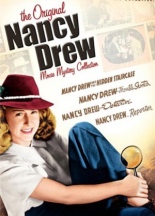

Nancy Drew and the Hidden Staircase (1939)

Being the most pure mystery of the bunch, Nancy Drew and the Hidden Staircase is arguably the most enjoyable entry of the four-film franchise, even if the leads’ antics are entirely rote by now. The important thing is, they still amuse, and go out on a high note. It’s kind of a shame there weren’t more.

In this adventure, two sister spinsters announce plans to donate their estate to a children’s hospital. The catch is their father once upon a time designated they must live in it every night for 20 consecutive years, and now, they have roughly two weeks to go. When their chauffeur turns up dead, it’s obvious to us someone’s trying to scare them away by murdering the man and, thus, foil the old maids’ good intentions.
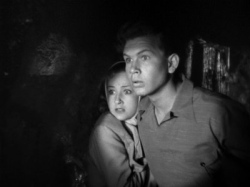
To the loony, incompetent authorities, however, led by Capt. Tweedy (Frank Orth, The Lost Weekend), it’s a long jump to a conclusion of suicide. Luckily, Nancy (Bonita Granville) and platonic pal Ted (Frankie Thomas, whose lower register suggests dropped testicles post-Nancy Drew … Trouble Shooter) appear on the crime scene to fiddle with pieces of evidence and plant a false one. Oh, kids!

When Nancy learns the twist — the one we get from the start because, oh, y’know, it’s in the title — she exclaims, “Boy, isn’t this a pancake!” And that sums up the clean-behind-the-ears appeal of this picture, strengthened by anachronistic plot devices as ice delivery and telegrams. At an hour long, Staircase is hardly taxing. To borrow another two dated exclamations that could sub as a review, “Swell!” and “Hot diggity!” —Rod Lott

Buy it at Amazon.

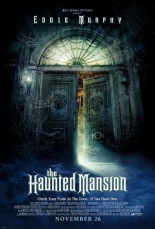
The Haunted Mansion (2003)

Remember when Eddie Murphy used to be funny and he did that routine about how Hollywood doesn’t make horror movies with black people because they’d leave a haunted house at the first sign of suspicious goings-on? Well, now that Murphy is no longer funny, they made that movie. And he must no longer be black, either, because he goes in and stays in that haunted house.
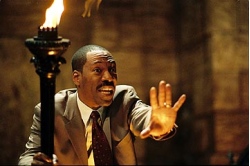
Based on the Disneyland ride, The Haunted Mansion casts Murphy as a real-estate salesman hoping to score big when the opportunity arises to put a multimillion Louisiana mansion on the market. En route to their vacation, Murphy and his clan check the place out. It’s inhabited by butler Terence Stamp and — zikes! — ghosts!

Skeletons come alive, apparitions appear everywhere, Jennifer Tilly’s disembodied head resides in a crystal ball, and yet nothing of significance happens in the entire hour and a half. Nothing but ass-numbing, migraine-inducing pain. This one makes any of the nonsensical Pirates of the Caribbean look like Best Picture material. This also makes Murphy look like the world’s biggest sellout.
Poorly written and utterly soulless, it’s not fun, not funny and not worth a single minute of your time. —Rod Lott

Buy it at Amazon.

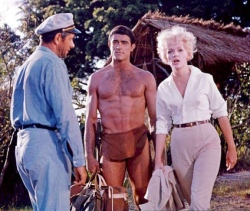
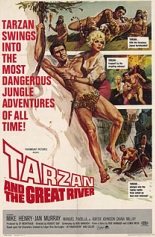
Tarzan and the Great River (1967)

Tarzan and the Valley of Gold wasn’t the last Tarzan movie to be influenced by the ’60s James Bond phenomenon. Coming two years later, the series’ next entry, Tarzan and the Great River, also stars Mike Henry and opens with a groovy spy feel, but adds The African Queen and Apocalypse Now to its mix. The latter wouldn’t come along for another 12 years, so it’s probably more accurate to cite Joseph Conrad’s Heart of Darkness.

Either way, Tarzan takes a trip up a mysterious river to confront the mad, god-like ruler of a deadly cult. His ride is on a boat owned by Charlie Allnut-lookalike Sam Bishop (comedian Jan Murray) and his boy sidekick Pepe (Manuel Padilla Jr., who was also in Valley of Gold, but as a different character). There’s also a nurse (Diana Millay from TV’s Dark Shadows) who’s trying to get some medicine to a remote village that’s under attack by a jaguar cult and its leader, Barcuna (Olympic decathlon champion Rafer Johnson).

The Great River isn’t as over-the-top and sexy as Valley of Gold, but that’s what makes it so endearing. It has a different feel from its predecessor, mostly focused on the relationships between the travelers and their various reasons for going up river. There’s a great final battle between Tarzan and Barcuna, but what sticks with you is the movie’s humor and charm.

Boys may sleep with Valley of Gold, but they marry Great River. —Michael May

Buy it at Amazon.

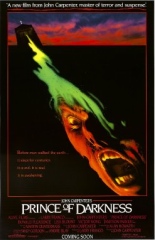
Prince of Darkness (1987)

There are seven reasons why John Carpenter’s Prince of Darkness is awesome:
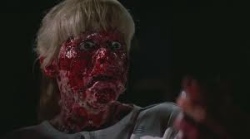
1. The plot revolves around an aged container of sickly green liquid that contains Satan himself. “A life form is growing out of pre-biotic fluids. It’s not winding down into disorder, it’s self-organizing.” The idea is so ridiculous, it’s awe-inspiring.

2. This is auteur John Carpenter at his most unfettered, working with extremely low budgets and unconstrained by the dictates of producers. Yes, some effects are dodgy, the acting is rough, and this ain’t a suspense classic like Halloween or a monster epic like The Thing. But when vested in the material, Carpenter works the creepy like few can. The dream sequences gave me daymares for weeks.

3. Right smack in the middle, a religious tome reveals that Jesus Christ was an extra-terrestrial who tried to warn humans about the dangers inherent in the liquid, and no one bats an eye. That is some cold analytical shit happening right there.

4. Carpenter wrote the screenplay as Martin Quatermass, after the hero of the British Quatermass films, and their influence is obvious. Technobabble such as “Say goodbye to classical reality, because our logic collapses on the subatomic level … into ghosts and shadows” does epic battle with theological nonsense: “It’s your disbelief that powers him. Your stubborn faith in, in … common sense. He lives in the smallest parts of it.”

5. The soundtrack is a classic Carpenter synth score.

6. Donald Pleasence! Victor Wong! An unlikely odd couple who debate Carpenter’s absurd science-vs.-religion dialogues with grace and aplomb.

7. Can we get a little love for the lesser Simon? Yes, we all dig Major Dad, but dammit, Jameson Parker needs some respect! And he rocks the ‘stache! —Corey Redekop

Buy it at Amazon.

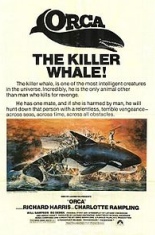
Orca (1977)

It’s impossible to watch Orca without thinking of Jaws. Hell, director Michael Anderson (Logan’s Run) won’t let you! Ennio Morricone’s score borrows a cue or two from John Williams, shots of the fin are like a constant visual reminder, and — let’s be honest — producer Dino De Laurentiis never would’ve made this project had Jaws not eaten up box-office records. Given Dino’s Kong-sized ego, the killer-whale film even acts like it’s out to top the Great White, opening with a scene in which a shark is turned to bloody chum by a whale, as if to say, “You’ve been pwned, Spielberg!”

He wasn’t. Not just a flop, but a real slog, Orca stars Richard Harris (Gladiator) as the possibly insane Capt. Nolan, who’s out to hunt down the “most powerful animal in the world,” according to a marine biologist (Charlotte Rampling, Zardoz). That angers her, and so does Nolan’s interest in her, prompting her to diss him with a curt, “You’re a sensitive bore.” (Oh, no, you di’n’t!)

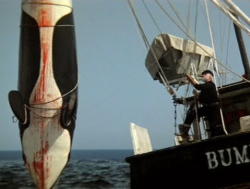
Nolan hooks a female killer whale, not knowing the beast was pregnant. When he hoses its expelled fetus back into the deep, the father whale (Orca, I guess) makes it his life’s work to follow them across the ocean and take ’em out. When Orca makes off with a character’s leg, Nolan channels his inner Ahab and clunkily vows, “I’ll fight you, you revengeful son of a bitch!” The last five or so minutes provide the thrills and atmosphere missing all along.

Among the supporting cast, One Flew Over the Cuckoo’s Nest‘s Will Sampson plays the Native American no one listens to, and soon-to-be-sex-symbol Bo Derek makes her film debut as the girl who seemingly cannot blink. Orca is played by himself; he’s a talented whale, somehow capable of screaming underwater. —Rod Lott

Buy it at Amazon.

Random Genre & Cult Movie Reviews