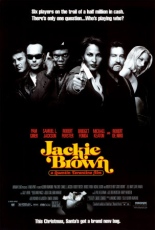
 First impressions can be deceiving. I first saw Jackie Brown during its theatrical release and, coming three years after Quentin Tarantino’s revelatory Pulp Fiction, this two-and-a-half-hour follow-up seemed indulgent and sluggish. Even Tarantino’s agent at the time reportedly griped to Miramax execs after the premiere, “There’s the ultimate case for not giving the director final cut.”
But, like the two protagonists at the film’s crux, Jackie Brown improves greatly with age. Viewed far from the imposing shadow of Pulp Fiction, it stands as perhaps Tarantino’s most emotionally meaty work, as soulful as The Delfonics and Bobby Womack songs that punctuate its soundtrack.
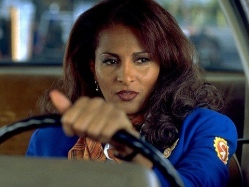 That doesn’t mean it isn’t also a hell of a lot of fun, brimming with dark humor, film-geek references, show-off set pieces and Tarantino’s patently quirky dialogue. Most notable, however, is that the writer/director snags outstanding performances from two beloved icons of 1970s B movies: Pam Grier and Robert Forster.
Based on Elmore Leonard’s Rum Punch, the crime thriller takes off when L.A. baddie Ordell Robbie (Samuel L. Jackson in full-on badass mode) whacks an underling (a mercifully quick appearance by Chris Tucker) before the guy can turn informant. A series of circumstances leads to Jackie Brown (Grier), a down-on-her-luck flight attendant who is one of Ordell’s smugglers. All this and Robert De Niro taking bong hits with Bridget Fonda’s leggy surfer girl.
Grier is smart, sexy and dangerous in the title role, but for my money, it’s Forster who damn near steals the picture as Max Cherry, a world-weary bail bondsman whose fate bumps into Ordell and Jackie. Forster makes plain, no-frills decency seem downright cool, and his performance — even-keeled, relaxed, laconic — is pitch perfect. —Phil Bacharach

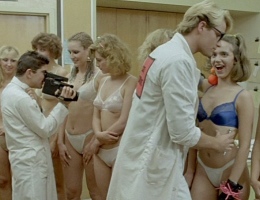 Both films conclude with the four plucky young assholes coming together to unclothe the objects of their desire in front of large audiences. In the first film, they use magnets; in the second, an unspecified gaseous aphrodisiac.
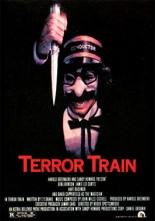
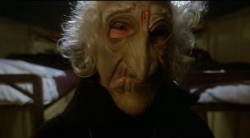
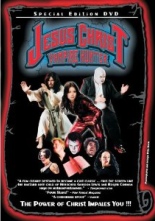
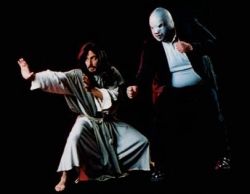 Billed as a “kung-fu action/comedy/horror/musical about the second coming,” JCVH is one for the (rock of) ages. Directed by Lee Demarbre, the picture can’t be accused of having low production values because it has no production values at all. Non-actor Phil Caracas has the title role, and if Jesus ever looked down from his Throne of Gold at people on Earth and laughingly mumbled “you assholes,” he was probably catching a midnight screening of this movie.