
Amityville: The Evil Escapes (1989)

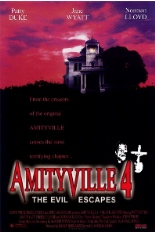
After Amityville 3-D bombed big at the 1983 box office, the Amityville Horror franchise retreated to network television for the fourth entry, Amityville: The Evil Escapes. Ironically, this first nontheatrical foray at least had the foresight to bring back original screenwriter Sandor Stern, who also stepped into the bound-to-be-thankless job of directing it.

Recently widowed, Nancy Evans (Patty Duke, Valley of the Dolls) has no choice but to pack up her three kids and go live with her uptight biddy of a mother, Alice (Jane Wyatt, Star Trek IV: The Voyage Home), in California. Waiting for Nancy at the stately home is a birthday present shipped from her sister, Helen (Peggy McKay, UFOria): one fugly lamp purchased for $100 at a Long Island yard sale as a gag gift. The gag backfires on Helen, who cuts her finger on this gaudy piece of furniture — imagine Sesame Street’s iconic lamppost as constructed by The Wicker Man’s villagers — and gets tetanus and dies, failing to realize she thrifted among the cursed contents at the cursed Amityville house.
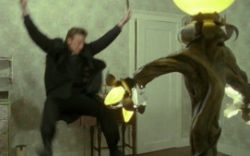
At Alice’s home, the lamp throws everything into disarray. At first, the disturbances are nothing a tube of Neosporin couldn’t solve, then they leap into the sinister with the discovery of Alice’s parrot in the toaster oven (which is probably the title of a Jimmy Buffett song). Other incidents include an out-of-control chainsaw, a sink disposal hand-mauling and strangulation by supernatural extension cord, all culminating in the possession of Nancy’s youngest child (Brandy Gold, Wildcats) and an attic-set showdown pitting a priest (Fredric Lehne, Terror Tract) against, well, the lamp of the damned.

For the virtually bloodless telefilm, Stern brings back several of his 1979 screenplay’s greatest hits: the flies, the red eyes, the sludge, the priest unable to communicate by telephone. Unfortunately, earnest attempts at scares are doomed by mood-killing bright colors, presumably dictated by NBC for prime-time readiness, as Evil Escapes is shot like any of the webs’ disease-of-the-week pics of that era. If made for theaters and aptly cast, with all else being equal, this material could have clicked.

After this, the Amityville sequels were straight to video. Incidentally, the estate sale in the prologue sets up three of them, each following a different object: a clock (Amityville 1992: It’s About Time), a mirror (Amityville: A New Generation) and a dollhouse (uh, Amityville Dollhouse). Producers never got around to all the other items glimpsed, but I’d like to think that an abandoned treatment for The Amityville Thermos sits in a desk somewhere. —Rod Lott
Get it at Amazon.

Reading Material: Short Ends 10/26/19

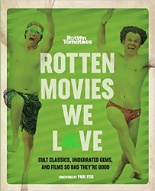
Let’s get something straight: The Rotten Tomatoes website is a tool of evil. And yet, its editors sure have put together one helluva fun book in Rotten Movies We Love: Cult Classics, Underrated Gems, and Films So Bad They’re Good. Its cover is a good place to start this discussion, too, because what’s wrong with Step Brothers? Not one damn thing, and that’s entirely the point. See, for the most part, this Running Press release is not a nose-thumbing, Medved-style coal-raker, but an affection-overflowing celebration of movies the public embraced, even if critics failed to. Therefore, across all genres, prep for spirited defenses of members of the maligned, such as Dr. Giggles, MacGruber, Event Horizon, San Andreas and Bela Lugosi Meets a Brooklyn Gorilla, the latter from guest scribe Leonard Maltin. An absolute pleasure to read, it’s a keeper worth revisiting. More ’maters, please.

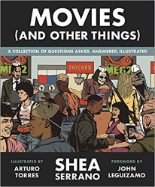
After penning a bestselling book about basketball (and other things), Shea Serrano follows it up with the similarly structured Movies (and Other Things). Published by Twelve, the colorful hardback finds Serrano posing 30 geekily theoretical questions (“Who gets it the worst in Kill Bill?”), each of which he answers in a sly, intelligent, knows-his-shit way, supplemented by charts, graphs and/or Arturo Torres illustrations. I only wished I were more willing to take part in the conversation. It’s not unlike Ryan Britt’s Luke Skywalker Can’t Read, but each essay tends to wear out its welcome before Serrano reaches his conclusion. With discussions of Denzel Washington, Booksmart, Kevin Costner, Selena, movie dogs, the Marvel Cinematic Universe and so much more, this book is destined to be beloved; I fully admit knowing my lukewarm response resides in the minority.

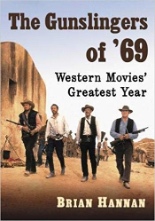
While 1939 and 1999 are often bandied about as the best years for movies, Brian Hannan makes the case for 1969 marking cowboy cinema’s sweet spot, in The Gunslingers of ’69: Western Movies’ Greatest Year. It’s hard to argue against that when you consider the staggering amount of masterpieces made, including The Wild Bunch, Butch Cassidy and the Sundance Kid and Once Upon a Time in the West. And there are 40 more Westerns where those came from (even the X-rated), with Hannan offering an inviting and well-balanced mix of history and criticism as he covers each film in a broad overview of what was perhaps the genre’s most transformative time: when revisionism hopped in the saddle. If you enjoy classic Westerns, this comes recommended, as does Hannan’s The Making of The Magnificent Seven (also published by McFarland & Company) from a few years ago.

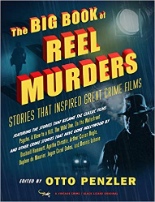
Following similar genre-celebratory collections on vampires, zombies, ghosts, adventurers and pulp heroes (all from Vintage Crime’s Black Lizard line), anthologist extraordinaire Otto Penzler rounds up more than 60 pieces of short fiction for The Big Book of Reel Murders: Stories That Inspired Great Crime Films. Simply put, this hefty trade paperback is just that, with Ian Fleming’s “A View to a Kill,” Agatha Christie’s “The Witness for the Prosecution,” Richard Connell’s “The Most Dangerous Game,” Daphne du Maurier’s “Don’t Look Now,” Edgar Allan Poe’s “The Murders in the Rue Morgue.” Straddling the genres of mystery, thrillers, horror and more, Reel Murders also showcases Arthur Conan Doyle, Dashiell Hammett, Dennis Lehane, Edgar Wallace, Jack Finney, Joyce Carol Oates, Robert Louis Stevenson — not a single one to sneeze at. Whether you like to read source material of films you’ve seen or crime fiction in general, this bang-for-your-buck collection should be right up your shadow-strewn alley. —Rod Lott

Get them at Amazon.

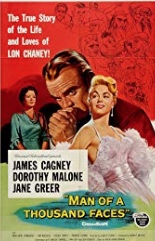
Man of a Thousand Faces (1957)

WTFWho, we may ask, was Lon Chaney?

The classic Universal biopic Man of a Thousand Faces starring James Cagney tries most nobly to answer that question, but does so with such a press release-approved veneer of old Hollywood that, instead, it’s far easier to view this entertaining flick as more of a fictionalized take rather than a mildly hard-hitting expose on the life of a horror legend.

What’s most surprising about this movie, I think, is how surprisingly pro-deaf it is; apparently, in the first half of the 20th century, people with lack of hearing abilities were treated like monstrous abominations. When people learn that Chaney’s parents were deaf, they typically offer glareful glances and snarled lips; Chaney’s first wife, Cleva (Dorothy Malone), practically turns into an alcoholic shrew when she meets his parents on Christmas Eve, running from the dinner table screaming.

Still, despite this soundless adversity, Chaney’s path to greatness continues on, going from the halcyon days of vaudeville to the latest invention of moving pictures, working steadily as an extra alongside brutal Asian and Indigenous stereotypes. Using his incredible makeup skills, Chaney’s even able to take their meager roles away in various bit parts. Hollywood!

As Chaney works his way up the ladder of success, Cleva drinks a bottle of acid on stage and their son, the unfortunately named Creighton, is put in foster care. Using this as a catalyst, Chaney goes on to become the biggest star in Tinseltown, unafraid to place himself under tons of makeup and prosthetics, earning himself the nickname of the “man of a thousand faces.”

He soon dies of bronchial lung cancer for his troubles.

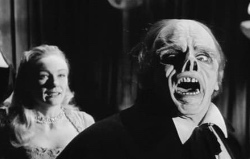
Directed with a well-earned heavy hand by Joseph Pevney, Man of a Thousand Faces is, like much of Chaney’s work, most enjoyable when Cagney is behind the wonderfully redesigned makeup himself, allowing the actor to emote behind the various masks. Sadly, much of the film — practically an hour and a half — is instead dedicated to Chaney’s war with his wife, which really kind of reeks of cinematic revenge porn.

But, you know, when I say it out loud, “porno revenger” is a role that I’m sure Chaney could have made his own as well. —Louis Fowler

Get it at Amazon.

Trapped Alive (1988)

Made in the dead of a Wisconsin winter, Trapped Alive (or simply Trapped to some) begins as a crime thriller, ends as a subterranean slasher, and fails to fully succeed at either. It’s not for a lack of trying.

Late on Christmas Eve, three felons break out of prison. Led by the port-wine-stained Face (Alex Kubik, Stunts), the trio hijacks a car driven by two young ladies, Monica (Laura Kalison) and Robin (Sullivan Hester), on their way to a party and takes them hostage. All five fall into a nearby mine, which plays home to — what else? — a mutant cannibal (Paul Dean, Annabelle Comes Home). You can guess what happens from there, as long as you think to throw in a sheriff’s deputy (Randolph Powell, National Lampoon’s Class Reunion) who looks like Will Forte.

Being a regional horror film, Trapped Alive is to be approached with lowered expectations, as the clumsy direction by Leszek Burzynski (who wrote the previous year’s Tiny Tim vehicle, Blood Harvest) screams “first feature” as loudly as the actors’ overwrought performances. Nowhere are these deficiencies more apparent when Burzynski has Mindwarp’s Elizabeth Kent deliver a multiple-page monologue in one unbroken take from Exposition City.

Still, the movie gets some things right. What little money Burzynski had at his disposal appears to have been applied wisely to three spots: an impressive mine set, the serviceable monster makeup and the extended cameo by Flick Attack all-star Cameron Mitchell, who, as Robin’s widowed father, has little more to do than drink and fret over her whereabouts. Perhaps he has reason to be worried, with Robin forced to strip to her bra and panties in a contrivance almost the equal of Carrie Fisher losing her dress to a sword-slinging Nazi Munchkin in Under the Rainbow. —Rod Lott

Get it at Amazon.

The Jigsaw Murders (1989)

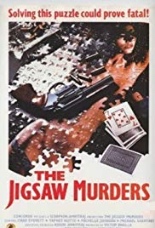
A woman’s leg turns up in a dumpster. Her arm, in a mailbox. Her head, on the beach. And so on. Because the first discovered limb bears a unique snake tattoo matching a model’s photograph on a pornographic puzzle, L.A.’s finest go neck-deep to investigate The Jigsaw Murders.
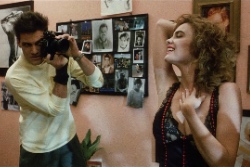
Leading the charge is Sgt. DaVonzo (Chad Everett, Airplane II: The Sequel), a veteran cop and veteran alcoholic, and his young-pup partner, Detective Greenfield (Michael Sabatino, Immortal Combat). Their sights soon zero in on slimy shutterbug Ace Mosley (Eli Rich, MurderLust), who — it just so happens — has shot nudes of DaVonzo’s wannabe-actress daughter (the Sharpie-eyebrowed Michelle Johnson, Blame It on Rio) … and she might just be his next target.

One of those mainstays in the VHS rental peak, The Jigsaw Murders comes from Roger Corman’s Concorde Pictures; as such, it hits the right blend of sleaze and stupidity. It also works in spite of itself, coasting on Everett’s extremely easygoing TV-star charm and the mentor/mentee relationship between DaVonzo and Greenfield. Although hardly original, their buddy-cop pairing is so likable, it merits a series and mitigates the movie’s short-lived status as a mystery. To be clear, we only get the latter. But we also get a chase-cum-shootout on a miniature golf course.

The movie represents a transition film of sorts for writer/director Jag Mundhra, as it bridges his horror roots (Open House and Hack-O-Lantern) and the erotic thriller genre he helped ignite (Night Eyes, Last Call, Wild Cactus, et al.) the very next year. B-movie enthusiasts should look for short bits from Yaphet Kotto, Michelle Bauer and Brinke Stevens, only one of whom plays a sandwich-eating coroner with clothes. —Rod Lott

Get it at Amazon.

Random Genre & Cult Movie Reviews