

Category Archives: Mystery

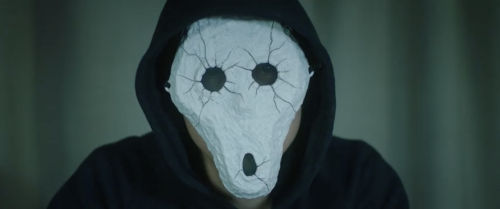
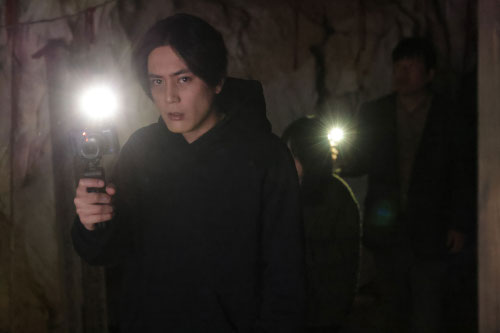
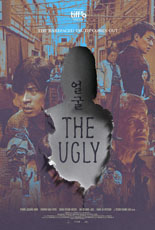
The Ugly (2025)

If beauty is in the eye of the beholder, where does that leave the blind? Im Yeong-gyu (Kwon Hae-hyo, Train to Busan Presents: Peninsula), a sightless stamp engraver in his twilight years, found love with a garment worker he married. It vanished when she abandoned her husband and infant son 40 years prior.

Now an adult, son Dong-hwan (Park Jeong-min, Decision to Leave) receives unexpected news from the police: Not only have his mother’s remains been found, but she didn’t disappear as assumed; she was murdered. This news arrives amid a crew shooting a documentary about the elder Im, so the producer (Shin Hyeon-bin, Beasts Clawing at Straws) helps Dong-hwan discovered what happened to the woman he never knew.

What they find on the surface is unimaginable cruelty from greedy relatives and asshole co-workers who nicknamed her “Dung Ogre.” All insist she was so hideous-looking — hence the film’s title of The Ugly — no photos exist. Most barbarous is the treatment from her piggish employer (Im Sung-jae, Emergency Declaration). Dong-hwan’s father sums it up with “What we see as beautiful, we respect; the opposite, we scorn.

The Ugly represents a departure for filmmaker Yeon Sang-ho, the creative conductor behind the Train to Busan franchise. Not particularly knotty in plotting, his film solves its mystery through simple sequential peeling of layers. With each successive interview, Dong-hwan grows further torn between wanting to know and afraid what he might learn next. Both leads are marvelous, but especially Park. In his incredible final shot, Sang-ho doesn’t leave us with a spinning top, but delivers the closure we need, only to rip open a whole new line of questioning. —Rod Lott

Get it at Amazon.

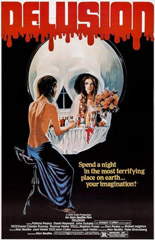
Delusion (1981)

No sooner has live-in nurse Meredith Stone (Patricia Pearcy, Squirm) joined the payroll of cranky old paraplegic inventor Mr. Langrock (Joseph Cotten, Shadow of a Doubt) than she’s told only a single room of his estate is off-limits. Specifically, the one that’s locked up. The same one she spotted someone in, standing at its window, upon her arrival via Yellow Cab. The one she should never, ever enter under any circumstances whatsoever. 

“Ooh, how Gothic: a locked room!” coos a minor character played by Death Race 2000’s Simone Griffeth, and she’s not wrong. But whereas most movies of this ilk would spin such a setup across three dark and stormy acts, Delusion unlocks that riddle in its first 15 minutes, which is to say of course Meredith enters the room.

The real mystery kicks in after Mr. Langrock’s teen grandson (Jaws 2’s John Dukakis, son of Michael) arrives from being raised on a commune. That’s when people at the estate start to die, in classic whodunit fashion. Certainly a kid so far removed from society that he doesn’t recognize a skateboard must be the culprit, right?

Unassuming in nature (especially when shorn of its alternate, oxymoronic title, The House Where Death Lives), Delusion is two-thirds Agatha Christie, one-third Michael Myers and all-around quietly nifty, marking a promising debut for director Alan Beattie. However, some of its advantages might be accidental. For example, the abode’s small doorways lend a discomforting, cramped feel … but that’s how the house was built. For another, the main actors’ unfamiliarity to viewers (the legendary Cotten excepted) mean audiences’ preconceived notions can’t apply … likely a budgetary necessity than a calculated play.

Supporting my theory, the only other movie Beattie helmed, Stand Alone, is as formulaic as you’d expect from a mid-’80s Death Wish imitation. That sophomore slump lacks the well-constructed script first-timer Jack Viertel delivered for Delusion: tense and peculiar, with the kind of kink Brian De Palma would’ve maximized for a field day of a film. Strange that Viertel never wrote another movie, abandoning La-La Land for enormous success on the Great White Way.

Most cruelly, Pearcy doesn’t waste her leading-lady opportunity, yet her face hasn’t graced a screen any larger than a television — a mystery in itself. —Rod Lott

Get it at Amazon.

A Hyena in the Safe (1968)

In the Italian film A Hyena in the Safe, various international criminals responsible for a massive diamond heist meet at their late boss’ castle to divvy up shares of the kitty. As ironclad insurance, the loot sits in a safe not only kept underwater, but requires six keys to open and, to prevent drilling, contains a layer of radioactive uranium.

Each crook has brought his or her key … but the arrogant addict Albert (Sandro Pizzochero, The Slasher … Is the Sex Maniac!) suddenly can’t find his. Smelling a put-on, the others even tear the clothes off Albert’s fiancée (Cristina Gaioni, Flesh for Frankenstein) to make sure she’s not hiding the metal key — you know, with all its sharp, jagged edges — in her supple lady parts.

The next morning, one of the gathered robbers dies. Was it suicide or murder? You can guess, because the corpses keep on comin’ until the pic more or less becomes And Then There Were Nessuno.

Cesare Canevari (The Gestapo’s Last Orgy) directs with an unusual level of panache. He gets away clean with a slew of wildly exaggerated shots in part because the script he and Alberto Penna wrote calls for such a treatment, what with the castle’s secret passages, hidden features and occasionally Bedazzled widow. She’s played by the lovely and lascivious Marie Luise Greisberger, who somehow has no other acting credits — a crime in itself.

With a Gian Piero Reverberi theme that sounds like Herb Alpert on an all-expense-paid vacation to Carnival, A Hyena in the Safe does something I’ve never seen another movie attempt: Let a shapeless yellow blob throb in the lower-left corner of the frame for two minutes until it morphs into the parting word “FINE.” If you wish to read “FINE” as English, just know the movie is much more than merely that. —Rod Lott

Get it at Amazon.

The Return of Dr. Mabuse (1961)

Criminal mastermind Dr. Mabuse isn’t the only one who returns in, well, The Return of Dr. Mabuse. So does Gert Fröbe, Goldfinger himself, as Inspector Lohmann. Having to cancel a fishing trip he was looking forward to so much that he patted his wife’s prodigious rear, Lohmann investigates the murder of a man to keep incriminating evidence from coming to light.

It should surprise no one that Mabuse (Wolfgang Preiss, Mill of the Stone Women) is behind it all. The pro villain is also behind a new narcotic that, when injected, turns prisoners into hypno-slaves — all the better to overtake the local atomic power plant. If only Lohmann can stop him! It should surprise no one that Lohmann can, albeit with the assistance of an FBI agent (Lex Barker, after five swings as Tarzan) and a comely photographer (Daliah Lavi, 1965’s Ten Little Indians).

More fun than the previous film, Fritz Lang’s The Thousand Eyes of Dr. Mabuse, Harald Reinl’s mean franchise debut with Return boasts a bevy of exploitable elements, from rudimentary car chases to a runaway train. You might think the highlight of this lean and kinda Eurocrime pic is the blind man meeting his end between a brick wall and a truck grill, but you’d be wrong. That honor goes to the floozy who gets flambéd by a flamethrower — in front of the Bimbo Bar, no less! —Rod Lott

Get it at Amazon.

Isaac Asimov’s Robots (1988)

As anyone who read ol’ muttonchops Isaac Asimov knows, precious little of his classic I, Robot collection made into the Will Smith sci-fi blockbuster of the same name. Anyone hoping for a semi-faithful adaptation should either keep waiting or hunt down Isaac Asimov’s Robots. Frankly, since the latter option is a “VCR Mystery Game,” you may be better off letting time idle. 

The Eastman Kodak production stars Stephen Rowe (Cyber-Tracker 2) as New York City ace police detective Elijah Baley, a head shorter than everyone else. He’s partnered with a walking, talking, trash can-looking robot named Sammy (Richard Levine, Silent Night, Deadly Night Part 2) to solve the attempted murder of a Spacertown roboticist (John Henry Cox, Bridge of Spies) in 24 hours or less.

As Baley stumbles upon vital clues to crack the case, he addresses the camera about evidence he’s submitting, prompting viewers to draw a card from the game’s deck. Or something like that. Watching the bush-league acting of Robots for its 45 minutes is rough enough; I can’t imagine having to play the accompanying game, too. What I can imagine is children so bored, they begged to go do homework instead.

One of Asimov’s celebrated Three Laws of Robotics is do no harm to humans, which the mere of existence of Isaac Asimov’s Robots contradicts. The drab whodunit looks as cheap as the video on which it was shot, seemingly made on Sesame Street sets. It plays like TV’s Alien Nation were retooled as a sitcom, but mistakenly beamed for broadcast minus a laugh track. —Rod Lott

Get it at Amazon.