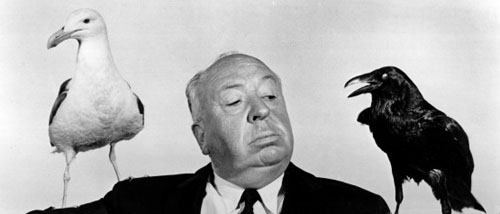
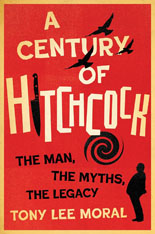

If not for the centennial yielding such a tidy title, I suspect Tony Lee Moral might want his latest to be called Go to Hell, Donald Spoto: And You, Too, Tippi! From University Press of Kentucky, A Century of Hitchcock: The Man, the Myths, the Legacy seeks to restore Alfred Hitchcock’s reputation as the Master of Suspense rather than a posthumous #MeToo casualty. To that end, it’s concentrated on the making of The Birds and Marnie more than any masterwork, casting aspersions on Hedren’s harassment claims by outright disproving them or presenting statements from other present parties (including a contradictory Hedren herself). Later, Moral grants a peek into how the seminal Hitchcock/Truffaut came to be, charts Hitch’s physical decline and examines 2012’s pair of biopics (HBO’s The Girl and Fox Searchlight’s Hitchcock). Moral’s Century is not Just Another Hitchcock Biography, but a keen mix of reportage and criticism that ultimately succeeds at its author’s rather ambitious goal.
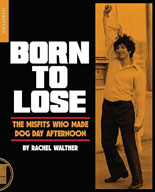
In telling the making of Dog Day Afternoon, Rachel Walther leans heavily on the real-life events inspiring the film. One of the people involved is described as “pleasant, spunky, a little crazy, and up front about his high sex drive.” I believe the same could be said about Walther’s Headpress book, Born to Lose: The Misfits Who Made Dog Day Afternoon. It grabbed me immediately with the story of Sidney Lumet, Frank Pierson, Al Pacino and others crafting the all-time crime classic, then surprised me with how intoxicating the true tale of bank robber John Wojtowicz and his transgender lover, Liz Eden, is. Although the lover is present in the film (via Chris Sarandon), the volatile relationship between John and Liz Eden was fraught with so much tension and turmoil, it quite frankly deserves a movie all its own. Lastly, Walther ties the fact-based and factual narratives together by examining the legacy both bear even today. At around 150 pages, Born to Lose may be fairly slim, yet it makes a large impact. Attica! Attica!
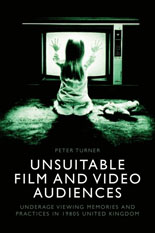
Although growing up in America, I suffered my own Video Nasties battle; my Mary Whitehouse was my mother, so overprotective she deemed Grease 2 off-limits. So horror movies? Verboten! Although clearly British-focused, Peter Turner’s Unsuitable Film and Video Audiences: Underage Viewing Memories and Practices in 1980s United Kingdom translates well to my own cross-the-pond memories. That includes investigating the now-lost experience of the video store; the adjacent VHS culture, bootlegs included; and the uneasy, yet exhilarating feeling of “I shouldn’t be seeing this,” which was often literal in the UK’s case and extends from gory horror to T&A comedies. Taken page to page, Unsuitable Film is largely stodgy, despite the subject matter, so I often found myself skipping the academic passages to get to the next quoted recollection from study participants — not unlike fast-forwarding to “the good parts.” —Rod Lott