
Category Archives: Documentary

Perdida (2009)

As a boy, I would’ve loved to have grown up in a family of naked women, robot monsters, Aztec mummies and masked wrestlers. But I’m not Viviana García-Besné.

In Perdida, whose title translates to “lost,” the filmmaker documents three years of learning about — and then coming to grips with — her grandfather and great uncles’ involvement in arguably some of Mexico’s worst movies ever made. That suspect group includes a subgenre known as “ficheras”: raunchy, cabaret-set comedies featuring voluptuous women in various stages of disrobing. They made a fortune, were branded as “pornography,” and then killed the country’s film industry. Go figure.

Through interviews with surviving family members of the Calderón film dynasty, she attempts to ferret fact from fiction; dusty home movies and handwritten letters help fill in the gaps, as does a third-act raid of a film vault.

From theater owners to full-fledged moviemakers beginning in the 1930s, the Calderón brothers’ story is one of rags to riches to rags. The riches come after the men discover the inherent value of female nudity, both to fill seats and to create controversy to fill more seats. The profits proved as substantial as the bosoms.
The brothers’ crooked, oft-controversial path is paved with acts of monopoly, infidelity and forgery, involving personalities like the revolutionary Pancho Villa, actress Lupe Vélez, mambo king Perez Prado, Fantasy Island’s Ricardo Montalban and the pope.

Unsavory cinema aside, the Calderón name also appeared on many entries in horror, science fiction and just plain bizarre. B-movie enthusiasts are likely to know many of the titles Perdida discusses, from the bargain-basement Aztec Mummy trilogy and 1959’s notorious Santa Claus to a franchise starring the silver-masked luchador Santo.

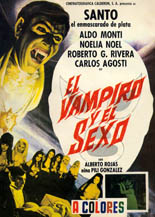
A high point occurs with García-Besné’s search for a then-lost Calderón film, El Vampiro y El Sexo, aka Santo in the Treasure of Dracula. That’s about as dramatic as Perdida gets; her documentary is personal and lo-fi, so it’s stripped of traditional storytelling structure, but its interest to film buffs — especially those with tastes toward the psychotronic — is undeniable. —Rod Lott

Spaceship Earth (2020)

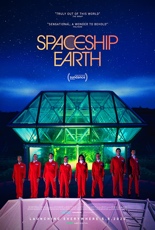
In 1991, in the appropriately named Arizona city of Oracle, eight people thought they were stepping into a massive vivarium for a two-year, 24/7 science project. And they were. But they failed to realize what else they were stepping into: a shitstorm. Known as Biosphere 2, the “prefab paradise,” as dubbed by Diane Sawyer, soon became a magnet for controversy, including allegations of cults and charlatans.

And that’s only part of the story, decades in the making, told by documentarian Matt Wolf (Recorder: The Marion Stokes Project) in Spaceship Earth.

With $250 million backing and inspiration from the sci-fi oddity Silent Running, Biosphere 2 was the dream project of John P. Allen, a nomadic Oklahoma native who took a left-of-left turn after Harvard and assembled a countercultural theater troupe whose members then built themselves a self-sustaining ranch community, and after that, a seafaring research vessel, just because, hey, why not? Honestly, from there, an artificial ecological system doesn’t seem like a stretch.

Aided tremendously by copious home movies capturing seemingly every move of Allen and his crew, Wolf’s can-do New Age tale of wonder and might restores the credibility the brave and bold experiment initially had, until public curiosity beget a media circus, which in turn beget a controversy with no real stakes.

Whatever your stance, Biosphere 2 was a big deal when it opened — and then closed, hermetically speaking — but memories of it have fallen away. (And yet, the mindless comedy it inspired, the Pauly Shore vehicle Bio-Dome — unacknowledged by the doc, for the record — is retroactively regarded as a “classic” by people who clearly saw it too young, before they developed taste.) The only thing more surprising than Spaceship Earth’s Rue McClanahan cameo is that of multishirted serpent Steve Bannon, but every good story needs a villain. —Rod Lott

Get it at Amazon.

Blood & Flesh: The Reel Life & Ghastly Death of Al Adamson (2019)

Having been a cult-film cutthroat for most of my life, Al Adamson is a brand name that fans of filmic trash have come to know and adore. Having rented titles like Satan’s Sadists, Dracula vs. Frankenstein and I Spit on Your Corpse as a teenager from the local video joint, I knew that as dirt-cheap as his flicks usually were, you were at least guaranteed a good time of breasts, blood and beasts.

What I didn’t know about Adamson, however, is the lurid way that, at 65 years of age, he was ruthlessly murdered by a conman. Yikes.

The son of an Australian Western star, Adamson became famous in America’s grindhouse theaters and rural drive-ins, pumping out outrageous titles and usually making more than a few bucks on them. The documentary Blood & Flesh: The Reel Life & Ghastly Death of Al Adamson goes into great detail, with hard-boiled talking heads like Greydon Clark, John “Bud” Cardos and Fred Olen Ray coming together to tell tales of low-budget excitement in cinema’s gory days.

Adamson’s life, however, took at dark turn in the 1980s when, after having directed a lost “docudrama” in Australia about unidentified flying objects, he allowed a drifter named Fred Fulford to work on a couple of his houses; Fulford would eventually take over Adamson’s life, stealing his money and then burying him under 6 feet of concrete in the basement.

Director David Gregory — who did the equally great Lost Soul: The Doomed Journey of Richard Stanley’s Island of Dr. Moreau a few years back — crafts this film as if it were one of Adamson’s double-bill shockers: one half a rip-roaring action flick and the second half a true crime mystery. Despite the terrible ending, I think Adamson would have been proud. —Louis Fowler

Get it at Amazon.

Tread (2020)

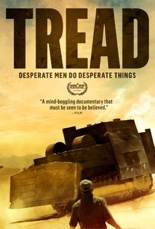
On June 4, 2004, Colorado resident Marvin Heemeyer was mad as hell and was not going to take this anymore. After years of sparring with the “good ol’ boys” town hall and Granby city court over a sewer line dispute at his muffler shop, the middle-aged welder fought back in the only way he felt he had left: with a bulldozer he had secretly modified with enough concrete, steel and fully loaded rifles to become a homemade tank.

It’s quite a story. Although it sounds like Guns & Ammo fanfic, Tread is not pretend. It’s a documentary detailing the whole sordid story as a man-vs.-government squabble in a town of less than 2,000 people boils into worldwide headlines.

Tread spends about an hour interviewing the principals to get both sides of the story. Then we get a third: the truth, with footage of Heemeyer’s two-hour rampage of unbridled property destruction and threats to lives. As it unfolds, director Paul Solet draws upon his background in horror films (including Grace and a segment of Tales of Halloween) to ratchet up a considerable amount of tension and sustain it, even if Heemeyer’s real-life Killdozer moves at a mere 2 mph. —Rod Lott

Get it at Amazon.

Mystify: Michael Hutchence (2019)

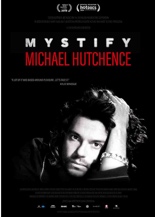
Growing up in the late ’80s, it was impossible to turn on the radio without hearing the voice of Michael Hutchence cooing an unseen paramour in tunes like “Need You Tonight” and “Devil Inside.”

It was a power that I, even as a 10-year-old, wanted desperately to possess, so much so that I even dressed up as Hutchence when my rural Texas school had a “come as your favorite celebrity” day. It was almost as good as the previous year’s George Michael costume.

A longtime INXS fan, I’ll admit that I have always had trouble reckoning the final years of Hutchence’s life, when he seemingly transformed from a likable cipher to a pretentious buffoon, more interesting for his problematic personal life than the music that had made him a vaunted superstar the world over.

It’s something that director Richard Lowenstein explores in-depth in the seductive documentary Mystify: Michael Hutchence; while the hits with his Australian band are casually mentioned, the film primarily seeks to explore the life of Hutchence outside of music, to great effect. Although it skips output like Dogs in Space for a bit too much about side project Max Q, for example, it’s a film of marked choices, most of which adds a surprising layer of humanity to the long-locked frontman.

What truly shocked me, however, was learning about Hutchence’s head injury in the early ’90s that apparently severed nerves and left him a different person, wildly erratic and often depressed. It’s this injury that is believed to have led to his 1997 suicide.

As mortifying as it all sounds, it’s really not all doom and gloom, as ultimately, Mystify is more a celebration of Hutchence as his family and friends remember him and want him to be remembered. It’s the way I want to remember him, too. —Louis Fowler

Get it at Amazon.