Category Archives: Documentary

From the Beyond: High Strangeness in the Bennington Triangle (2026)

What do a man-absorbing rock, electrocuted cattle and a fucked-up compass have in common? A 36-square-mile area in South Vermont known as the Bennington Triangle, according to From the Beyond: High Strangeness in the Bennington Triangle, a Small Town Monsters documentary.

Between 1945 and 1950, five people disappeared from its unmarked borders without explanation. Per narrator Mark Matzke, “The facts are few; the stories are many.”

And how! Interviewees talk of floating orbs, haunted homes, the sound of crying babies in the forest, ancient stone structures and a teleportation vortex. They also talk of UFOs, shadow people and a Bigfoot “built like a brick shithouse.” Covering so many ascribed theories in a short amount of time, it’s a veritable paranormalpalooza!

As always, director Seth Breedlove turns in a well-researched, well-made and largely well-oiled hour or so that explores a ton of questions to leave unanswered. High Strangeness feels more skeptical than his previous efforts I’ve seen, in that Breedlove seems more game to explicitly acknowledge the existence of what his core audience likely doesn’t want: plausible explanations and, quoting Matzke, “how rumor becomes record.”

That said, Breedlove saves the most outlandish Bennington Triangle encounter for last, as composer and vegetable farmer Robert Singley tells of his experience there, when time and distance suddenly became malleable. One of his lines could double as the Small Town Monsters motto: “That don’t make no sense.” —Rod Lott

Get it at Amazon.

Everyone Is Lying to You for Money (2025)

Where trust exists, scammers scurry ’round to exploit it. Case in point, as Ben McKenzie proves several times over in his first feature as writer and director: crypto. The erstwhile star of Fox’s The O.C. and Gotham turns “undercover econ nerd” with Everyone Is Lying to You for Money, a highly engaging plunge into Bitcoin and all its suspect siblings.

“This is a film about a thing called cryptocurrency,” he says straight to camera in the prologue. “It’s pretty stupid.”

He means the topic, of course, not the documentary (based on his 2024 book with Jacob Silverman, Easy Money). When an investment tip from a college friend leads him down the crypto rabbit hole, McKenzie doesn’t like what he finds. In fact, he smells a scam — a Ponzi scheme, to be clear — and possibly a cult. His investigation into what’s legit and what’s bluster begins in El Salvador’s much-ballyhooed “Bitcoin City” and ends with him testifying before Congress in Washington, D.C.

In between, we get glimpses of his home life with wife Morena Baccarin — must be rough. In London, he visits her on the set of Greenland 2, where Gerard Butler shares crypto has served his wallet well. It’s the only scene I wish he’d left out, because it’s staged for laughs.

If this acting thing doesn’t pan out, McKenzie’s side hustle as a Michael Moore-style documentarian — but with GQ looks — is now all but assured. He more than holds his own interviewing Celsius CEO Alex Mashinsky and FTX founder Sam Bankman-Fried. That both men since have become convicted fraudsters is not a spoiler for the film, but a testament to McKenzie’s bullshit detector, shoe-leather reporting and, yes, bravery.

Who knew this former teen idol was going to be one of this year’s American heroes? Great job, Ben. Now do AI! —Rod Lott

Opens Friday, April 17.

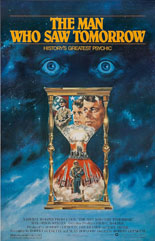
The Man Who Saw Tomorrow (1981)

Of all the outré mysteries of the unknowable, the prophecies of 16th-century mystic seer Michel de Nostredame — or, as we now call him, Nostradamus — fascinate me. Mostly, I was a weird kid about him. 

In sixth grade. I wrote a book report on the translated The Prophecies in Nostradamus’ lauded quatrain style. Getting an A- on it did me no favors in the “cool” department of my class, making it longer even until I got a kiss from a girl or a 1500s prognosticator.

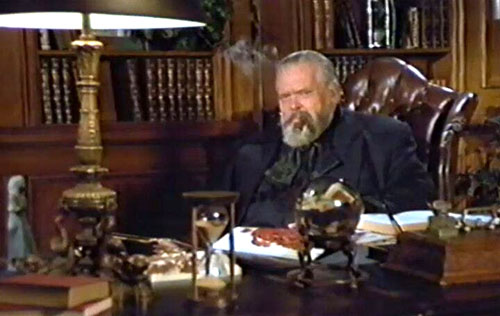
I got into Nostradamus after seeing the “documentary” The Man Who Saw Tomorrow at 3 a.m. on cable, only to rediscover it on VHS at my local library, like a sign from a prognosticator’s divine divining bowl. With tensions overflowing in Iran and the Middle East at this very moment, it’s been reintroduced into my life by YouTube. Bloatedly narrated by Orson Welles and four decades later, it’s pretty terrible. How did this movie scare me for so long?

Much like those unexplained docs from Rod Serling and the Schick Sunn Classics people, Tomorrow starts with three 1700s “skeptics” drinking from Nostradamus’s skull, which apparently was cursed. Fair enough, but it’s not brought up again. Drunk on wine and smoking a cigar, Welles says Nostradamus “mystified scholars” as he studied the intrinsic  kabbalah, braved the plague and, in his spare time, wrote the prophecies that are kind of vague, but in context, also totally accurate … right?

Most people know Nostradamus’s prophecies about Napoleon, Hitler (also called “Hister” in the movie) and the JFK assassination. But what about those of the future in 1981? Well, here’s the highlight reel:
• 1986: Worldwide Famine!
• 1988: Earthquake Will Decimate Los Angeles!
• 1994: World War III Begins!
• 1999: The King of the Mongols Is Revealed to Be the Third Antichrist!

When that final date passed over us, a small discharge of prophetic relief came over me, letting me know it was going to be okay. The Man Who Saw Tomorrow movie is a cultural oddity, when lots were cast and such things were left to the passing of time and phew, it’s all hokem.

Except it’s not anymore. It’s now playing out like Nostradamus and Welles said it would, with one exception: The Antichrist wears a blue suit and red tie. Or maybe this movie was a quick and easy way to make money by making people scared. I guess we’ll soon find out. Or maybe we won’t. —Louis Fowler

Get it at Amazon.

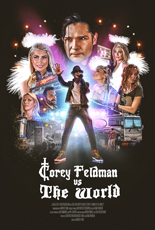
Corey Feldman vs. the World (2025)

No doubt as a child of Hollywood, Corey Feldman has seen some shit and experienced no shortage of shit. But for someone who professes a desire to rise above that shit, Feldman sure can’t help himself from stirring it.

Marcie Hume’s fascinating all-access documentary, Corey Feldman vs. the World, shows her (in)famous subject as a bundle of contradictions, the least of which is being in his mid-50s yet still dressed for a Tiger Beat shoot. He believes people are out to scam him, yet guests at his third wedding are asked to pitch in $40 apiece for the food. He accuses others of riding his coattails, yet opens his concerts with a hype video listing every A-list musician he’s seemingly ever shared a room with. The same video prominently features clips of frequent co-star Corey Haim, an awkward nightly spotlight to grant one’s sexual abuser, as Feldman claims the late Haim was.

Perhaps Feldman’s most incongruous element on display is that despite his undeniable skill and likability as an actor (see 2004’s The Birthday for proof from this millennium), the doc finds the erstwhile Goonie pursuing rock-musician stardom. To garner attention, he’s backed by an all-female band in cheap costumes that Spirit Halloween might market as “Sexy Angel.” Like Hugh Hefner minus the mansion, Feldman lets the ladies live with him, his wife and “their” girlfriend, a scenario he presents to interviewers as so noble, you’d think he was appealing to the United Nations. Never mind some of Corey’s Angels have zero experience playing an instrument before embarking on a 10-city tour, because he’s just helping malleable young women achieve their dreams — well, provided they meet his standards of beauty.

As anyone who’s witnessed Feldman trot out his Michael Jackson simulacrum act since his Dream a Little Dream era knows, singing is not among his talents. However, manipulation and narcissism appear to come to him naturally. I’m not saying Hume’s fly-on-wall camera captures Feldman running a cult in between sad concerts, but he certainly exhibits cult-like behaviors, from comparing himself to the Messiah to seeing everything as a conspiracy against him (hence, the movie’s title). The tour bus breaks down; it has to be the bus company trying to make more money. His show gets a bad review; the journalist must belong to “the dark media.” If that weren’t enough, his home is a shrine to himself, right down to the vinyl Barnes & Noble book signing banner.

Corey Feldman vs. the World gives the man every opportunity to set the record straight and rehabilitate his parasitic image. Like everything else he’s been given or earned over the years, he squanders that potential. It’s a shame, because you want to see him succeed. In his explanations (or attempts at such) for transgressions, one recognizes the bullshit-laden patter of someone so high on their own supply, they’re unable to atone, but have deflection down pat. Feldman is his own worst enemy; having cried wolf so many times in the past — several within these engrossing 98 minutes, and its public coda especially — he continues to deplete any built-up reserve of credibility. As a result, he’s the most unreliable narrator of his life — one he sees as an epic poem, if not a revered classic of world literature. Why don’t you recognize his genius? —Rod Lott

Tulsa Terrors (2023)

As a born-and-bred Oklahoman, I’ve long been proud, baffled and entranced by the city of Tulsa’s right-time-right-place role as ground zero of the 1980s’ made-for-home-video horror revolution. So much so, in 2014, I started interviewing players for a massive article on it.

Then overnight, I found myself facing a divorce I didn’t see coming. All creative endeavors, like the 20-year marriage, died on the vine.

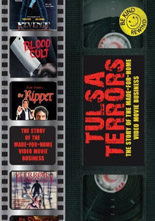
That was then, this is now. John Wooley and Bryan Crain give us Tulsa Terrors, a feature-length documentary about the 918 area code’s foray into VHS frights. Wooley’s the ideal person for the job, having covered the low-budget productions from the front line as a newspaper journalist (and later, in his 2011 book Shot in Oklahoma).

Naturally, Terrors’ initial chunk focuses on Christopher Lewis’ Blood Cult, the 1985 slasher that Started It All. Taking advantage of the movie fever lingering in T-Town from Francis Ford Coppola’s one-two punch of The Outsiders and Rumble Fish, Lewis turned $27,000 and a lousy script called The Sorority House Murders into a nationwide video-store smash.

Lewis quickly followed with the generically titled sequel, Revenge, as well as the Tom Savini-starring The Ripper. Crain and Wooley close their documentary with another threesome of slashers, all from Southern firecracker Darla Enlow: Toe Tags, Branded and The Stitcher.

In between, Tulsa Terrors turns its neck to gawk at others who picked up the camcorder torch — albeit to lesser returns, if any. For example, today you can find DVDs of 1986’s Mutilations (with its cattle killings charmingly rendered in stop-motion animation). On the other hand, IMDb-less pics like Bio-Kill (a sci-fi actioner with a hovercraft) and Curse from the Mummy’s Tomb (a Poverty Row tribute with a $75 price tag) remain elusive, other than the glimpses you get here. And to speak again of slaughtered livestock, Vigilante Blood disappeared immediately after premiering at a local Outback Steakhouse.

In a giant leap up from playing as background noise to patrons enjoying a Bloomin’ Onion, Tulsa Terrors debuted on a public university TV channel before hitting video. That’s not a slam, but more of a barometer for setting your expectations, as this isn’t polished or propulsive like Mark Hartley’s hard-charging retrospectives. While entertaining, the doc is nearly as lo-fi as the treasures it fetishizes. Naturally, the more affection you hold for shot-on-video cinema, the more you’ll get out of it; this is not the type of project designed to convert newcomers.

I do wish Crain and Wooley had widened their scope to the whole of the Sooner State. That way, they could include the likes of Offerings, Blood Lake and Alien Zone; because they saw the light of day, they all enjoy far larger profiles than any movie here that’s not Lewis’. Also missing is Terror at Tenkiller, despite being pictured on the poster. —Rod Lott

Get it at Amazon.