Category Archives: Documentary

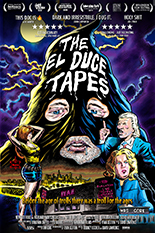
The El Duce Tapes (2019)

Sometimes, a great project falls into your lap. Less often, it falls into your bushes.

Yet such was the case for struggling actor Ryan Sexton (The Toxic Avenger) when, outside his apartment, he found one Eldon Wayne Hoke blackout-drunk. As Sexton soon discovered, Hoke was not only better known as El Duce, leader of shock-rock band The Mentors, but also quite a character whose wayward, doomed-for-brevity life was worthy of chronicling with a camcorder. Some two dozen VHS cassettes later, shot between 1990 and ’91, the resulting shenanigans and conversations live on as the documentary The El Duce Tapes.

Whipped into fine narrative shape by directors Rodney Ascher (Room 237) and David Lawrence, who also edits the film, The El Duce Tapes begins with a crash course in the executioner-hooded Mentors and the bald, bearded, bulky frontman who proudly salutes Hitler and more proudly brands their music as “rape rock.” His lyrics are simple yet juvenile rhymes one would expect from drunken high schoolers — to wit, “My woman from Sodom / Lets me fuck her in the bottom.”
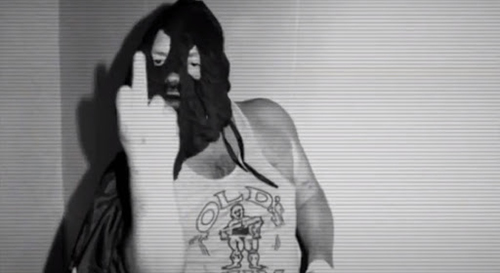
His zeal for misogyny and white supremacy is matched by perpetual homelessness and full-blown alcoholism, resulting in not just a warts-and-all doc, but an all-warts look at the raucous L.A. club scene and the sad reality awaiting Hoke between gigs, from which he tried his best to numb. A product of abuse, Hoke admittedly spits back the kind of hatred he received growing up. While not exactly smart, he was certainly shrewd, knowing how to push PC buttons and slam them into disrepair.

Judged from a standpoint of “any publicity is good publicity,” his antics worked, landing him on the hostile stage of The Jerry Springer Show and, his lyrics, decried in U.S. Senate hearings of Tipper Gore’s Parents Music Resource Center. A decade later, with major-label backing, the likes of Marilyn Manson rode a similar strategy all the way to the bank; El Duce got no further than the welfare line. (That’s not a metaphor, either; visits to pick up his government handout are in the film.)

Although The El Duce Tapes isn’t the only documentary on this ever-colorful character and his awfully patient bandmates, Sexton strikes something akin to gold with the unfiltered rawness of his subject. It’s as if a particularly vile segment of Penelope Spheeris’ Decline of Western Civilization trilogy were spun off into a full, free-standing case study of the anthropologic and anarchic. On its own, Sexton’s footage would be captivating, but Ascher and Lawrence amplify it with clips of Hoke’s influences — everything from Walking Tall to Herb Alpert & the Tijuana Brass (!) — and his cultural environment, informing or reminding viewers of what was in the water — or cesspool — at the time. In the closing moments, the line they draw from Hoke to, well, today is staggering. —Rod Lott
Get it at Amazon.

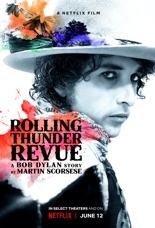
Rolling Thunder Revue: A Bob Dylan Story by Martin Scorsese (2019)

Undoubtedly one of the oddest tours of all time — at least until the 1980s, that is — much of the Rolling Thunder Revue was seen in the 1978 Bob Dylan flick Renaldo and Clara. As watchable as that four-hour movie is to only the biggest of fans — and yes, I’m one of them — much of what was billed as a freewheelin’ variety show has been distilled to about two and a half hours here, thanks to director Martin Scorsese.

In Rolling Thunder Revue: A Bob Dylan Story by Martin Scorsese, Marty recounts the Rolling Thunder tour with a music fan’s eye, while Dylan recounts the matter with the acerbic tongue of a wealthy dowager. We find Dylan back in the mid-’70s, driving the magical mystery tour bus on a musical journey across America and, I guess, Canada, leading his troupe of semi-professionals and hitting on a very young Sharon Stone in between all the musical interludes.

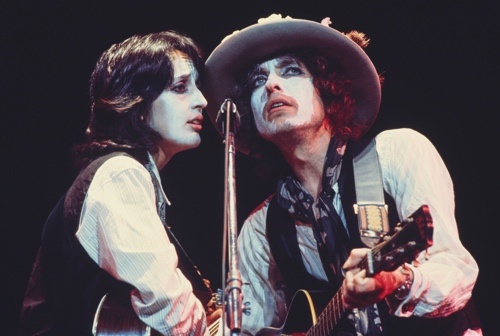
Clad in his shocking-white pancake makeup, the death mask of Dylan took to the smaller stages of many areas usually without such big concerts, oftentimes with singing stagehands and spiritual schlockers such as Joan Baez, Allen Ginsberg and Joni Mitchell, mostly there to keep this train of tra-la-las a-rollin’.

Sure, it might seem like the kind of tragic thing that wouldn’t make it to the next town, but somehow Dylan and crew kept it going, which is especially triumphant considering he was spending far more than he made with each stop. Even though it wasn’t earning anything, the tour gained plenty of ground and earned Dylan plenty of fans. Still, in the end, this is a Scorsese flick and he manages to make a great documentary out of another man’s canister-rotting film. Besides, how else was anyone going to see it? —Louis Fowler

Get it at Amazon.

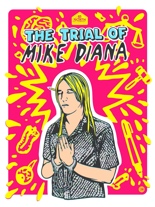
Boiled Angels: The Trial of Mike Diana (2018)

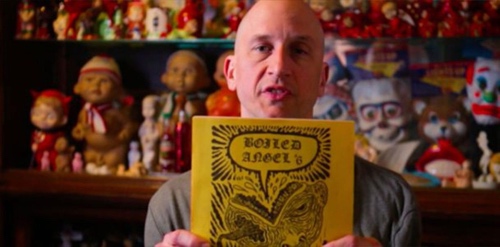
I was smack dab in the middle of the so-called zine revolution, writing and publishing my work on an irregular basis. As a contributor to the scene, I was clinically obsessed with the trade publication of the amateur industry, Factsheet 5. It was there where I first learned about Mike Diana, the publisher of Boiled Angel, a badly drawn comic featuring some of the most socially deviant acts of satanic sex.

At the time, I thought he was an attention-seeking sociopath who, like many zinesters, was looking for that big break into the mainstream. And, after viewing this documentary, it looks as though, for the most part, I was right and he definitely got it.

Helmed by Basket Case auteur Frank Henenlotter, Boiled Angels: The Trial of Mike Diana tells the tale of a man and his zine, a grotty little manifesto that got him in trouble with Florida law, mostly for his cartoons of rotten cannibalism, hardcore sex and other acts of salacious storytelling.

While I would have (should have?) purchased it at the time and just forgotten about it, instead the trashiest state in the union decided to punish him for the immoral zine, causing him to become a hero in the eyes of those who independently published even lesser material. And I’ll admit it: I was one of them. While Diana is very much a troubled soul who should have been left by the wayside the way most zine publishers were, I guess the movement needed a hero and he was, whether he wanted to be, it.

Judging on what he was publishing, I guess it was somewhat worth it, although I don’t think he was mentally prepared for it. If I’m being honest, neither were any of the zinesters at the time, with most of us finally knowing the true story of Diana and Boiled Angel thanks to this documentary; as they say, knowing is half the battle. So while I can’t say Diana is a personal hero, to those of us doing zines, he was definitely on the far right — or is it left? — of the heroic scale. —Louis Fowler

Get it at Amazon.

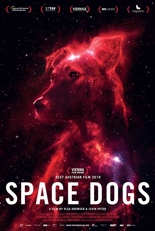
Space Dogs (2019)

Two films bear the cute and cuddly title Space Dogs. Incidentally, both are Russian; their similarities end there. One is an 2010 animated movie your preschoolers are likely to love.

The other is a documentary that will traumatize them for life. And perhaps you, too.

I chose to be enchanted. Co-directors Elsa Kremser and Levin Peter posit that the dilapidated streets of Moscow are haunted by the ghost of Laika, the stray dog that became the superstar of the Soviet Union’s space program when launched into an ill-fated orbit in 1957. To that end, their camera follows current-day strays going about their business, which entails a lot of sitting (and results in some beautifully composed shots) and scavenging for food. In one of the film’s more memorable and disturbing scenes, hungry canines murder a cat for a daytime snack.

Interspersed with this you-are-there “story” is historical footage of Laika’s mission — not just her launch, either, but the preparation the poor mongrel had to endure. Let’s just say it’s surgical and leave it at that.
With the sparsest of narration, Space Dogs is not your “normal” documentary. Lyrical and meditative, it sits snugly alongside experimental docs as 2012’s Leviathan or Godfrey Reggio’s 1982 masterwork, Koyaanisqatsi. While I remain unsure of Kremser and Peter’s ultimate point, the richness of their visuals is too striking to ignore, especially those frames shot at that time of year when the night sky takes on a purplish haze as the city lights dilute the darkness. Never has ugliness looked so beautiful. —Rod Lott

Mondo Balordo (1964)

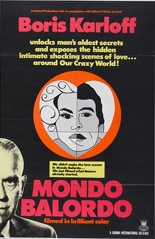
Following closely to the perversely entertaining Mondo Cane and with a title that roughly translates to “crazy world,” Mondo Balordo is one of the earliest exploitative travelogues to offer shocking glimpses of the misbegotten world of 1964 that was only really brandished about in the nudie-est of men’s magazines.

Hosted by the effortlessly charming Boris Karloff, we’re taken to a large swath of Europe to see sexy transvestite Spaniards on stage, the smoking-hot German lesbian scene, stuffy British bankers dancing like penguins, and Italian strong men throwing fake boulders on a film set — it’s a crazy world!

Meanwhile, in America, women raise money for the pyramids of Luxor by having their own pyramids of flesh judged and rated; an elderly man is married by a lady of the night and is then dumped at an old folks’ home; and a sexualized little person is taken to the abandoned back seat of a car parked in an alley and illicitly made love to — it’s a crazy world!

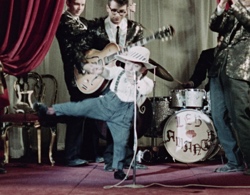
In India, hungry fisherman pull giant turtles out of the sea and tear them apart flipper to flipper; a little person sings terrible rock ’n’ roll on stage; and some random crooner tries to recapture the success of Cane’s “More” by singing a ballad that rationalizes all that is about to visually scar you in this film — it’s a crazy world!

With terrifying trips to an opium den, a ladies’ balloon-wresting ring and plenty of dirty streets filled with a mix of three-legged dogs and one-legged humans, all directed by Robert Bianchi Montero (of Sexy Nudo fame, of course), Mondo Balordo, like many of the mondo flicks of this era, is an acquired taste of delicate putridity that will willingly seduce any less-traveled pervert after 3 a.m. After all, it’s a crazy world! —Louis Fowler

Get it at Amazon.