
Category Archives: Documentary

Häxan (1922)

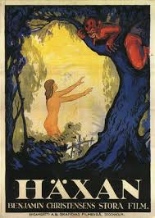
Certain films feel more like a devilish fever dream than an actual movie made by human hands; the silent film Häxan is definitely one of those wholly unholy flicks.

Filled with the most satanic of imagery this side of heaven, this Swedish silent film — purported to be a historical study of witchcraft — opens with at least two full acts of drawings and woodcuts as the title cards tell the malicious tale of fiendish covens that gather in the middle of the darkest night to give Beelzebub a gentle kiss on his pert bottom, as well as other diabolically sexy goings-on.

And, as interesting as all of that is, Häxan earns its demonic name from the spooky reenactments that feature, of course, ol’ Nick Scratch and his dirty little pranks on poor humans, such as dumping gold coins all over an impoverished woman’s bed. What a dick!
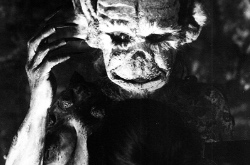
But really, it’s the story of the Inquisition and the holy men who led it that is perhaps the most frightening part of this film. Like a malevolent game of telephone, the trail of witches and their accusers is as long as the Prince of Darkness’ curled tail; the various medieval torture techniques are also displayed here to cringeworthy effect, many looking far too real.

With the Dark Lord essayed by director Benjamin Christensen himself, he seems to have cast the most destitute and elderly of Sweden as the tortured fools of the tumultuous time, bleary-eyed, scab-covered and missing most of their teeth. It’s a haunting recitation of evil — or what they, at that moment, thought was evil, including the woefully disturbed and sadly handicapped.

If you are averse to silent films, however, in 1968 Häxan was re-released as Witchcraft Through the Ages, an edited version which manages to be even creepier, thanks to William S. Burroughs’ cronish narration and an absolutely unsettling score by Jean-Luc Ponty. Now you can’t tell me that the archfiend didn’t have a hand in that … —Louis Fowler

Get it at Amazon.

The Quiet One (2019)

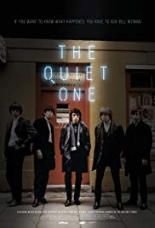
The Rolling Stones, while being indisputably one of the greatest bands of the rock era, are, for the most part, an unattractive group of dudes. But, for some reason, former bassist Bill Wyman is the one that the media singled out from day one, dubbing him the slightly rude “Stone Face.”

Wyman, featured in the documentary The Quiet One, at least has a good sense of humor about most of it as he not only narrates the flick but opens up his vast archive of near-obsessive Stones (and Stones-related) memorabilia — from childhood pictures to backstage films — much of which has never been seen before, mostly because only a few people knew it even existed.

I guess at age 82, Wyman figured it’s now or never to tell his story before one of the other Stones (read: Mick or Keith) characteristically bad-mouths him in place of a meaningful pull quote. And while it would be well within Wyman’s rights to beat them to the punch, instead, he does it for himself, giving us (what I’m assuming are) truthful accounts of his good and bad years with the Stones.

All the stories you want to hear are here: guitarist Brian Jones’ death, the tragedy at Altamont and the disastrous recording of Dirty Work. But Wyman even goes into a few tales that were formerly thought of as taboo, like his notorious sexual attraction to a 13-year-old girl in 1983, and shooting the hideous music video for the funky solo hit “(Si Si) Je Suis Un Rock Star.”

Hey, at least it was better than She’s the Boss.

Currently touring with his band, the Rhythm Kings, Wyman comes off as probably the most “normal” Stone — the jury’s still out on Charlie Watts, though — and The Quiet One works hard to make him a warm-enough grandfather type who, you know, lived the demonic rock ’n’ roll lifestyle while probably being all up inside your coked-up mom backstage on the Stones’ ’72 Tour of the Americas. —Louis Fowler

Get it at Amazon.

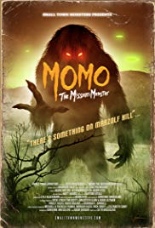
Momo: The Missouri Monster (2019)

After helming nine documentaries on Bigfoot, Mothman and other cryptids, director Seth Breedlove finds a novel approach to investigate the creature that terrorized the small town of Louisiana, Missouri, in 1971 and ’72. Instead of using recreations of events, he lets footage from a heretofore-lost, low-budget, Boggy Creek-style film dramatizing the sightings carry that workload. The trick is that unearthed B-movie doesn’t exist — at least not until Breedlove and his merry band of co-conspirators made it, as part of the end result, Momo: The Missouri Monster.

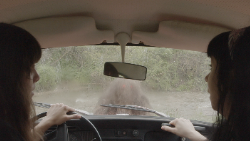
Momo was a hairy, smelly, three-toed monster who, as one character in the faux footage relays, “looked like a bear mated with Jerry Garcia.” Subsisting on an all-dog diet, the biped was believed to be from outer space, further straining credibility. Cowboy-hatted host Lyle Blackburn (author of Rue Morgue magazine’s Monstro Bizarro) interviews the townspeople about the history and hubbub surrounding the creature. In between, he cedes the floor to hokey scenes from the supposed Momo movie, which depict encounters had by two picnicking young women, a couple of brothers playing outside and a Pentecostal prayer group interrupted midworship.

Breedlove’s print-the-legend conceit deteriorates from initial draw to tiresome gimmick, mostly because the film within the film’s acting is awful. Because the documentary portions are so earnest and nonjudgmental, I am unable to tell whether the “old” footage — treated to resemble a ropey, real-deal grindhouse print — is intended to be as cringingly amateurish as it plays.

With clips from Curse of Bigfoot, UFO: Target Earth and Snowbeast (a made-for-TV movie incorrectly categorized as a theatrical feature), the doc does a good job of luring in those whose believe in the American drive-in, but Momo: The Missouri Monster is really for those whose love of the cryptozoological courses through their veins at a breakbeat-level BPM. Viewers on that wavelength will want in on this hunt no matter what. —Rod Lott

Get it at Amazon.

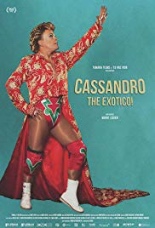
Cassandro, the Exotico! (2018)

Like many aging luchadors, Saúl Armendáriz — better known as Cassandro el Exotico — has to begrudgingly deal with the constant pain of his body being bruised and battered on a daily basis, the nightly toll of the fame and fans his jaw-dropping flips and superhero-like leaps in the ring have brought him.

For over 25 years, Cassandro has been a world champion of Mexican wrestling and, now, an elder statesman of lucha libre, training new athletes of the sport in Mexico and Texas. But what makes Cassandro’s story all the more appealing is that he is also an out and proud gay man, something that has brought him equal parts heaven and hell.

As a Latino, I can easily admit that, especially in a sport like lucha libre, the macho blustering of many a male fan can come out in surprisingly vitriolic ways — except for in the case of Cassandro, it seems. While he’s had his problems in the past, now he’s considered an icon of the sport, a testament to Mexico’s growing “live and let live” culture, something that America could do well to learn from.

Still, in the documentary Cassandro, the Exotico!, Marie Losier’s 16 mm camera goes deep into the legend of Mexican wrestling as it plays now, a world that is nothing like the WWF spectacle of pomp and pyro that we’ve come to expect; many of the these current luchadors go through life without so much as health insurance, each local match getting them one step closer to either low-rent obscurity or forced retirement.

Losier goes beyond the typical fandom and, instead, takes us into Cassandro’s surprising life, where one minute he’s the uncle we all wish we had and the next a powerhouse of pulverizing agility in the ring. And even though the film does end on a bittersweet note with Cassandro losing his lush mane in his most recent fight, he’s always an upbeat character it’s impossible not to cheer for.  —Louis Fowler

Get it at Amazon.

[Censored] (2018)

They say one man’s trash is another man’s treasure. Make that other man a woman — specifically, Down Under filmmaker Sari Braithwaite — and the treasure is [Censored], a documentary constructed solely of film footage once banned by the Australian Censorship Board and now culled from the Australian National Archives. Over the course of 63 minutes, excitement over her find not only fades, but flips, as she narrates each step of a crisis of conscience.

Making up the tarnished treasure are those excised portions from 1,991 movies between 1958 and 1971, organized from A to Z — er, Zed. The clips run the gamut of genre and budget, from melodrama to mondo, from cowboys to aliens. In this, her first feature — an outgrowth of her 2015 short, Smut Hounds — Braithwaite considers being confronted this “state-sanctioned spank bank” and wonders, “How do I tell a story with all these scraps?”

She more than makes do. The displaced frames find a home as she initially sets out to examine and decry her homeland’s history of censorship, grouping the cuts thematically and presenting them with a modicum of context. We get a montage of screen kisses — chaste to erotic, consensual to forced, hetero- to homosexual — and think little of it. Young men then brandish knives, and their serrated machismo strikes the viewer of silly, if nothing else.

Then come the slaps — hard, as men backhand wives, girlfriends, mistresses, whores, whomever. Not any one slap bothers on its own, but the cumulative effect of violence is jarring and uncomfortable. As a result, Braithwaite’s thesis comes into focus — and grows sharper with subsequent sequences concerning Peeping Toms, acts of striptease and the act of rape. (Incidentally, the most nerve-wracking scene of all isn’t among these: an extended and unflinchingly graphic childbirth, with more liquid-expelling orifices onscreen at once than your pick of David Cronenberg pictures.)

To acknowledge her point does not mean the audience is required to co-sign. Even those who disagree with her ultimate view can appreciate her journey for its inherent historical value; the documentary is inadvertently star-studded, featuring legends Kirk Douglas, Clint Eastwood, Dean Martin, Steve McQueen and Bob Dylan, who argues over broken glass. The directors represented are no slouch, either, as they include Agnes Varda, Ingmar Bergman and Jean-Luc Godard.

And yet, [Censored] ultimately works not because of them, but because of Braithwaite and her creative collaborators. Primary among them are two who work in tandem here: post-rock outfit The End, whose potent instrumental score helps fuel the considerable tension crafted by editor James Arneman. —Rod Lott