
Category Archives: Documentary

Startup.com (2001)

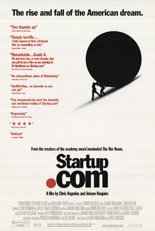
On one internet company’s rapid rise and speedier fall, the documentary Startup.com would be more fun if its subjects didn’t come off as such egotistical assholes.

Friends since their high school days, Tom Herman and Kaleil Isaza Tuzman decide to chase fortune by staking their claim in the lawlessness of the World Wide Web with a site called govWorks.com, a public-to-government facilitator — in other words, you could pay your parking tickets online. As many did in the dot-com boom, Herman and Tuzman start believing this idea will reap millions upon millions.
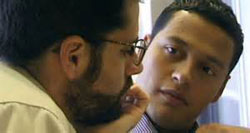
We watch their heads balloon as their head count balloons from under a dozen employees to more than 200, thanks to venture capital, all before even having a legitimate product. When their site finally goes live, mishaps not only follow, but march in time; their Gordon Gekko-level greed so clouds their judgment, they fail to recognize their massive shortcomings, not the least of which is not having a fucking clue what they’re doing. It’s rather amazing they allowed co-directors Chris Hegedus (The War Room) and Jehane Noujaim (Control Room) to let cameras capture their abhorrent, self-fellating behavior.

After witnessing this pair of douchey hotheads do douchey hothead things — like Tuzman irreparably damaging their friendship by firing Herman via form letter — their downfall is the icing on Startup.com’s cake. To be honest, as engaging as the film is, I wanted to see even more failure, as we are told karma dictates. Real life eventually (read: in 2017) gave us what the movie could not, with Tuzman found guilty in federal court for schemes of widespread financial fraud. —Rod Lott
Get it at Amazon.

The Great Buster: A Celebration (2018)

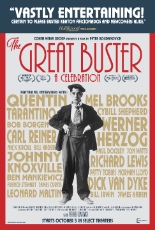
One can see why ’70s hotshot director Peter Bogdanovich chose to make a documentary feature on the legendary silent-film comedian Buster Keaton. The two share parallels across Hollywood’s classic three-act structure:
1. heralded as a genius for early successes
2. career collapse marred by personal tragedy
3. respect regained late in life

For Keaton, redemption arrived as an honorary Academy Award and international fêtes, while Bogdanovich has settled nicely into an elder-statesman role as a bona fide film historian, and The Great Buster: A Celebration his latest document, one of pure delight.

Bogdanovich narrates, interspersing clips of his subject with excerpted interviews from gushing admirers, including Mel Brooks, Bill Hader, Carl Reiner, Leonard Maltin and Dick Van Dyke. Among other participants, Jackass Johnny Knoxville comes off as more knowledgeable and insightful than Quentin Tarantino, and the only thing stranger than the head-scratching presence of Cybill Shepherd is the surreality of Werner Herzog’s, which I gladly take.

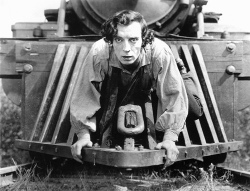
After one hour of sharing Keaton’s cradle-to-grave story, The Great Buster spends its final third more closely examining his 10-movie run made with zero studio interference and infinite creativity. The stunts and set pieces — still influential today, most notably in the work of Jackie Chan — flat-out amaze with their bravado and inventiveness. If the AIP Beach flicks of the 1960s didn’t exactly make the best use of Keaton among their crowded casts, at least he wasn’t being forgotten.

With his doc, Bogdanovich aims not only to ensure Keaton is remembered, but to restore luster. It’s a nobel pursuit, worth each and every perfect pratfall. —Rod Lott

Get it at Amazon.

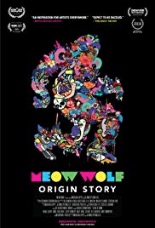
Meow Wolf: Origin Story (2018)

When the Santa Fe renegade art collective known as Meow Wolf opened the doors to its immersive funhouse in 2016, one of its key creatives worried that visitors might write the permanent installation off as “a bunch of fuckin’ masturbatory bullshit.” Obviously, the public did not, or the documentary Meow Wolf: Origin Story wouldn’t exist to give that quote a lasting home.

Co-directed by Jilann Spitzmiller (Still Dreaming) and first-timer Morgan Capps, the doc essentially functions as a feature-length commercial for the group’s burgeoning empire, but also to audiences’ benefit as a warts-aplenty family portrait of an American Gen X/millennial success story. In other words, it’s not only a bunch of fuckin’ masturbatory bullshit.

In a proverbial nutshell, the film tracks how Meow Wolf evolved from several hipsters (all of whom my dad would roll his eyes at) partying in a shared hovel to the collaborative powerhouse they are today, with a little bit of luck, a lot of fundraising and a lot more of patron saint George R.R. Martin. Other than CEO Vince Kadlubek, you don’t get much of a rounded feel of the various founders and first-gen artists, which also sets up — perhaps unintentionally — a portent of animosity: Kadlubek speaks of his desire to turn Meow Wolf into a billion-dollar company, while others claim potentially fatal allergies to any Disney-fication. (Perhaps someday, Meow Wolf: Conclusion will tell that fractious tale.)

The Monkees-style shenanigans of the group early in the film grate like nails on a chalkboard. But once they start building the whacked-out abode for which they’ll always be known, Origin Story comes alive as an inspiring paean to the creative spirit … and the necessary evil of deep pockets. —Rod Lott

Get it at Amazon.

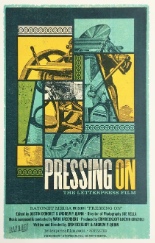
Pressing On: The Letterpress Film (2016)

Not terribly long ago, vinyl was considered a dead medium. Then hipsters discovered it and made it viable again. The same could happen (or at least should) to letterpress printing — that is, the near-lost art of pressing inked blocks of metal type onto paper. Created by Gutenberg (not Steve), this process — the Xerox of centuries long ago — may be archaic in these days of instant gratification, but it remains achingly beautiful.

So, too, initially, is Pressing On: The Letterpress Film, an indie documentary that serves as a clarion call for the technique’s continued life. Clearly letterpress fanatics themselves, first-time feature directors Erin Beckloff and Andrew P. Quinn do a fine job of conveying its enduring appeal, with an emphasis on its tactile pleasures, from selecting the type and slotting their blocks together like a puzzle to rolling out the finished product on a gloriously textured sheet of paper. The process can be slow and tedious, but so is cooking, with the end result of both satisfying multiple senses of the human body — in this case, touch, sight and, yes, smell.

With a history lesson and a mechanics tutorial, the doc covers the bases of backstory, but the emphasis is on the personalities and places (and even college programs) keeping letterpress alive, most notably Nashville’s famed Hatch Show Print. Lovingly told, Pressing On could be better organized and more concise; the main points are repeatedly hammer-struck, but Beckloff and Quinn are so kindhearted, I cannot imagine anyone wishing the film ill will.

I also cannot imagine anyone not already attracted to typography and design seeking it out. Like the proverbial pastor preaching to the choir, Pressing On is made — and Kickstarter-backed — by a passionate community speaking to a passionate community, with considerable overlap. Hopefully, its goodwill can engender a few more members. —Rod Lott

Get it at Amazon.

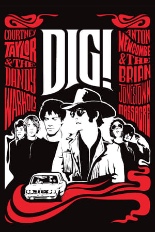
Dig! (2004)

• Number of albums by The Dandy Warhols I have owned: 3
• Number of albums by The Brian Jonestown Massacre I have owned: 0

And in part, the reason can be found in the scrappy rockumentary Dig!, a funny, sad, warts-and-all, good-cop/bad-cop portrait of two bands on the rise — and one’s fall — over seven years’ time and captured by the camera of Ondi Timoner (We Live in Public).

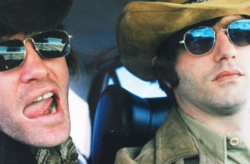
In the mid-’90s, our nation had not heard of The Dandy Warhols or The Brian Jonestown Massacre, no matter how hard those puns tried. But that was soon to change. What begins as a friendly rivalry between the bands’ respective leaders (Courtney Taylor and Anton Newcombe) devolves into outright jealousy on the Massacre’s part when the Warhols taste some major-label success — and, to their credit, apparently with relative levelheadedness.

Newcombe, meanwhile — due to either mental illness, drug addiction or just plain stupidity — sabotages each and every chance of his band achieving the same. By the film’s midpoint, he seems to expend more energy trying to badmouth or crash the Warhols than he does working on his own music. And perhaps that’s because he keeps beating them — and the occasional audience member — up during shows, some of which become riots.

Personally, The Brian Jonestown Massacre’s music never has done anything to perk my ears, while several of The Dandy Warhols’ power-pop cuts stuck in my brain like spilled soda — and this was before knowing the backstory of either. But as one watches Dig!, which is entertaining even when your heart aches for Newcombe’s ravaged soul, it becomes clear that Newcombe has talent. It’s just buried under a lifetime of painful memories, self-destructive behavior and a general unwillingness to do something about it, making this tale all the more tragic. —Rod Lott

Get it at Amazon.