Can you guess what movie or TV show we’re watching? We’ve turned on subtitles (when available) not to give you a clue, but to enhance that WTF effect! Leave your best guess in the comments to prove your true Flick Attackosity!
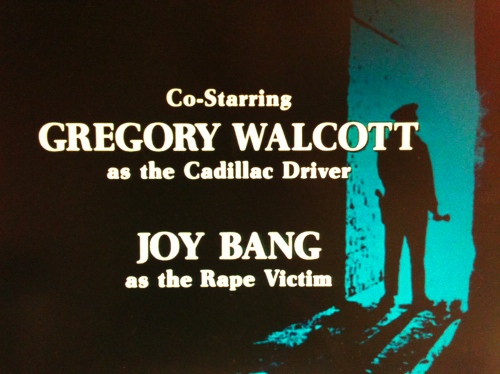

Can you guess what movie or TV show we’re watching? We’ve turned on subtitles (when available) not to give you a clue, but to enhance that WTF effect! Leave your best guess in the comments to prove your true Flick Attackosity!
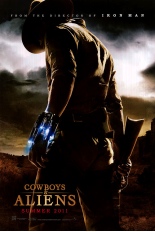
 Cowboy (Daniel Craig). Cowboys. Cowboys. Pow-pow-pow! Cowboys. Hot Indian (Olivia Wilde). Cowboys. Cowboy (Harrison Ford). Cowboys. Cowboys. Aliens! Pow-pow-pow! Zap-zap-zap! Aliens! Zap-zap-zap! Cowboys. Cowboys. Cowboys. Aliens! Pow-pow-pow! Zap-zap-zap!
Cowboys. Cowboys. Cowboys. Pow-pow-pow! Cowboys. Cowboys. Cowboys. Cowboys. Aliens! Zap-zap-zap! Zap-zap-zap! Splash! Aliens! Cowboys. Cowboys. Indians! Cowboys. Aliens. Cowboys. Aliens. Cowboys.
 Cowboys. Cowboys. Aliens. Cowboys. Indians. Cowboys. Cowboys. Dynamite. Kaboom! Aliens! Zap-zap-zap! Zap-zap-zap! Aliens! Dead horses. Zap-zap-zap! Cowboys. Aliens! Zap-zap-zap! Zap-zap-zap! Pow! Cowboys. Cowboys. Indians. Aliens! Pow-pow-pow! Cowboys. Aliens! Aliens! Holy shit, aliens! Zap-zap-zap! Zap-zap-zap! Zap-zap-zap! Zap-zap-zap! Blast off! KA-BLOOEY!
Cowboys. Boredom. —Rod Lott
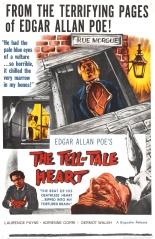
 A good (albeit loose) adaptation of Edgar Allan Poe’s classic story, this Tell-Tale Heart finds a foppish nerd named Edgar (Laurence Payne, Vampire Circus) obsessing over Betty (Adrienne Corri, A Clockwork Orange), the hot babe who works at the flower shop. An utter loser, he asks his friend Carl (Dermot Walsh, TV’s Richard the Lionheart) how to land such a foxy chick. He takes Carl’s advice and asks Betty out to dinner, which goes well until he attempts a full-throat French kiss afterward.
From then on, she turns her affections (and ultimately, her pelvis) toward Carl, leading the hopeless and heartbroken Edgar to kill his pal and bury him in the floorboards. Soon, he’s haunted by the sound of Carl’s beating heart, so Edgar cuts it out of the corpse. But even after that, the sound plagues him, and it’s neither a dripping faucet nor ticking clock.
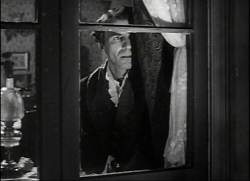 Whether you’ve read the original story or not, you know how it goes from there, and that’s why the movie holds no suspense. But it’s made well, in a crisp, buttoned-up, British style, co-written by Brian Clemens, who brought equal class to so many Avengers episodes. More thrillered up than Poe intended, director Ernest Morris’ film comes with a “surprise” ending. —Rod Lott
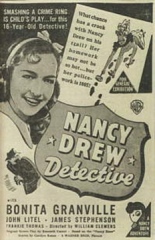
 In her first screen outing, Nancy Drew — Detective, Carolyn Keene’s all-American teen she-Sherlock (Bonita Granville) is out to solve the sudden disappearance of an old biddy who was due to donate a bundle of cash to the local girls’ club to build a swimming pool. And Nancy sure as shit wants that swimming pool!
Getting no help from “that conceited tweet-tweet” police Capt. Tweedy (Frank Orth), Nancy enlists the help of platonic pal Ned Nickerson (Frankie Thomas), the clumsy neighbor boy with the side-swirly haircut and propensity to drop tools on his toes. He’s also a dud in overall social skills, according to Nancy: “You’re about as chivalrous as an oyster!”
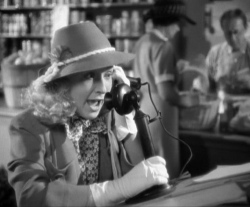 In the climax, Nancy threatens the bad guys with a gun, holding it with disgust as if it were a penis.
The squeaky-clean, super-efficient mystery involves chasing a pigeon carrying a secret message; slapstick with a wrench; dressing Ned in drag, disguised as a nurse; and communicating via the cutting-edge technology of Morse code. Speaking of dated, the flick is filled with now-odd slang, like “Aw, stop disturbin’ the molecules!” Even when presented in context, that made no sense to me, but like the rest of the hour-long adventure, I sure did enjoy it. —Rod Lott
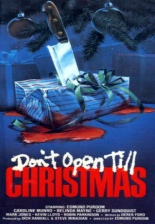
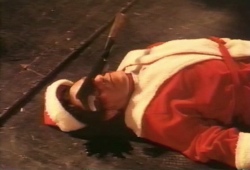
 Who is killing all of London’s drunken bums dressed as Santa Claus? Whoever it is is wildly inconsistent in his methods, using a straight razor, a garrote, a spear and even a broken beer bottle, all the better to gouge Kris Kringle’s eye with. The result is Don’t Open Till Christmas, which is as if Pieces were a Christmas special, and all because some kid saw Daddy in a Santa suit screwing someone who wasn’t Mommy. (A similar sight lights the fuse of 1980’s also-recommended Christmas Evil.)
Pieces vet Edmund Purdom partially directs and stars as Inspector Harris, hot on the trail of the masked maniac slaying the aforementioned hobos and the occasional blonde sex worker. Frustrated at the lack of clues are a victim’s daughter (Alien 2: On Earth‘s Belinda Mayne, who cries, “My father’s just been murdered. I can’t concentrate!”) and her boyfriend (Gerry Sundquist, Boarding School), a street-corner flutist who comes under suspicion.
 Scream queen Caroline Munro appears in one scene as herself, singing a synthy-sweet pop number onstage while caressing her inviting curves in a slinky, sequined red dress that sparkles as bright as her bedroom eyes. (Er, please excuse me for a couple of minutes. … Okay, I’m back.)
Consider this 86-minute exercise in holiday horror a gift from schlock producer Dick Randall. Like his earlier Pieces, the slasher is a mess about messes, bearing his distinctive stamp of delightful but highly watchable incompetence that rolls around in nonsense scripting, gory violence and gratuitous nudity. We’ll call it the bow on top. —Rod Lott