

 In 1997, Jonathan Norman was so enamored of Steven Spielberg that he planned to rape him, and the result was a guilty conviction and a 25-year prison sentence.
In 2011, J.J. Abrams settled for consensual reach-around, and the result was Super 8 and a $127 million domestic gross.
Super 8 is so rooted in such early Spielbergian fare as Close Encounters, E.T. and The Goonies that one almost could take issue with it being credited as Abrams’ first film as director not based on an existing property, following his hits with Mission: Impossible III and the Star Trek reboot. It throws in every element in the Spielberg playbook, from the single-parent family to looking up at the sky in awe, mouth properly agape.
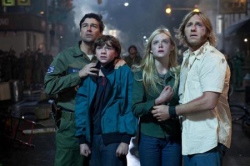 Not that that’s a bad thing, when it’s done this well. A group of kids shooting a zombie epic on Super 8 film witnesses a spectacular midnight train wreck during the summer of 1979. Said wreck unleashes a spider-like alien that proceeds to wreck their tiny town, taking all the microwave ovens and sending all the dogs fleeing to surrounding counties.
With hardly a clear glimpse of the creature from another planet, Super 8 is best when it’s barely concerned with the beast. The film’s “scares” are more feel-good than frightening (think Gremlins). And contrary to the belief of Abrams’ unflinching cultists, there’s no mystery to the picture, except why Ron Eldard agreed to wear the Gérard Depardieu wig the entire time. —Rod Lott
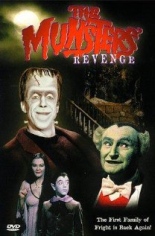
 In
In 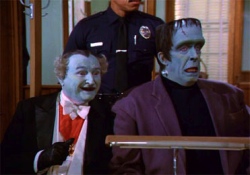 After the city is terrorized, Herman (Fred Gwynne) and Grandpa (Al Lewis) are wrongly accused and thrown in jail. Their cellmate (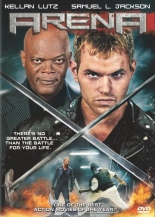
 Grieving over the accidental death of his preggo wife (Nina Dobrev, TV’s
  Lutz’s big emotional scene is hysterical, partly because of the bits of corn hanging out of his overstuffed mouth. Not that I think he can act; he can’t. The guy is all scowl. By contrast, we know Jackson can act; he just chooses not to. He’s clearly in his “whore for a paycheck” mode.
 True to its title,
  Pretty quickly, Fulci goes mad as the felonious behavior of his films seeps into his daily life and he experiences disturbing visions, like the slaying of a whore in broad daylight (and a nipple-muncher under the cloak of darkness), and an orgy in which a billiards player redefines “corner pocket” with the nude woman draped across the pool table. Many, many clips from his previous films — from