
All posts by Rod Lott

The Legend of Hillbilly John (1972)

Hedges Capers sounds like two items on a country club Karen’s list of things to complain to the help about. In actuality, Hedges Capers is the obscure folksinger who somehow scored the lead role of the weirdo backwoods fantasy The Legend of Hillbilly John. There’s a reason you’ve never seen him onscreen before or since: He’s no actor. Yet out of many, many songs he sings here, the best is the one Capers doesn’t warble, with vocal duties outsourced to Hoyt Axton, whose throat kicks ass.  

In the Appalachian Mountains of North Carolina, Hillbilly John is a balladeer. That’s just a nice way of saying “guy who never stops playing his guitar, even in public.” After Grandpappy (Denver Pyle, TV’s The Dukes of Hazzard) is smote by the devil, John vows vengeance with the only weapon he has: vicious halitosis bluegrass tunes strummed-de-dummed on guitar strings made of pure silver. 

Who knew 100% silver was Satan’s green Kryptonite? Heck, who knew Satan resided in the Appalachians? (Insert Hillbilly Elegy joke here.) 

Originally (mis)titled Who Fears the Devil, the flick draws from a pair of Manly Wade Wellman short stories — and sure feels like it. From meeting a witch (Susan Strasberg, The Delta Force) to fighting a giant prehistoric bird (animated via stop-motion) whose feathers sizzle like acid, our hero and his hound dog saunter from one self-contained adventure to the next. The script by Melvin Levy (The Cry Baby Killer) neglects connective tissue, except for the common denominator of “goddamn mountain superstition” (as Murder at 1600’s Harris Yulin puts it). 

Too bad so little of Legend is fun. Getting acquainted with the movie’s world — one of “salt pork” and “tarnation” — teases viewers into thinking they’re in for a barn-buster, only to drag. Best known as host of TV’s One Step Beyond anthology, John Newland manages to pull off a couple of interesting touches from his director’s chair. One is questionable: tinting a voodoo sequence entirely in yellow. The other is inarguably terrific: having the film violently leap off its sprockets as the devil kills Grandpappy. The whole of Legend cries for such ingenuity, primarily when elongated spells of the film prompt snores. 

The final shot isn’t quite Planet of the Apes, but it’s something of a surprise — and more Billy Jack than Hillbilly John. If you watch this movie, you’re in for a unique experience; just remember that uniqueness does not guarantee success. If you’re allergic to banjos and/or action verbs with dropped Gs, take your Benadryl beforehand, lest ye break out in hives. —Rod Lott

Get it at Amazon.

The Damned (2024)

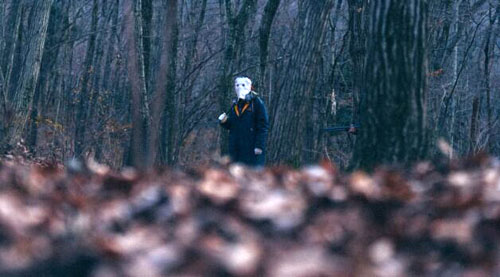
It’s a hazy shade of winter at the Icelandic fishing station of The Damned. With their meager shelter snowed under ’til spring, no one’s going anywhere, despite dwindling provisions.

But when widower Eva (Odessa Young, HBO’s The Staircase) spots a sinking ship in the distance, she convinces the men to row, row, row their boat toward the wreck. The rescue mission goes tits up, and misery follows them back to shore, haunting and taunting thereafter.

Without revealing details, the plot of this 19th-century story draws from a pair of John Carpenter ’80s classics: The Fog and The Thing. From the former, it takes the harrowing shape of a threat whose identity is obscured by weather; from the latter, burgeoning paranoia and distrust of those sharing a confined space. As one of the fishermen tells Eva, “The only thing I know is that the living are always more dangerous than the dead.” 

Just as the villagers of The Damned attempt to navigate through a storm to safety, only to be thwarted at each turn, the film itself forever stands on the precipice of getting somewhere. Long on atmosphere, this superstition-steeped slow-burner doesn’t build upon initial pressure so much as re-build it in the next sequence — and without surpassing the previously established mark. As a result, by the time it finally escalates toward a payoff, we’re no longer invested.

Like Robert Eggers’ Nosferatu, another horror period piece currently in theaters, Thordur Palsson’s first film is visually first-rate. The difference here is the devotion to craft doesn’t compensate for stretches of monotony. —Rod Lott

Get it at Amazon.

The Funny Farm (1983)

For a movie about stand-up comedians, not to mention from a frequent Mel Brooks collaborator, The Funny Farm is stunningly unfunny. Ron Clark’s Farm withers in such a laughter drought, Willie Nelson could stage a benefit concert. It’s also not to be confused with the 1988 Chevy Chase vehicle Funny Farm, but should you accidentally stumble on that instead of this, good on you.

Our alleged protagonist, 20-year-old Mark (Miles Chapin, French Postcards), leaves home to chase fame and fortune in the titular L.A. comedy club. Actually shot in Canada, the pic never lets you forget his Midwest origins. Like a frickin’ psychopath, the beady-eyed Mark approaches strangers throughout the film with an extended hand and a hearty “Mark Champlin! Cleveland, Ohio!” On the street, in parking lots, inside places of business, he does this to everybody. Honestly, he’d be more effective selling Amway than trying his hand at the mic. 

You’ll find him annoying as soon as he unleashes his Groucho Marx impression with no warning, invisible cigar and all; this happens in the first true scene. That dislike will increase with each groaner that passes his lips: “You’ve heard of Best Western? I’m at Worst Western!” By the time he charms the club’s clumsy waitress (Tracey E. Bregman, Happy Birthday to Me) into bed with the words “boppo sock ’em,” you may want to die.

Because The Funny Farm thinks itself to be a ribald bundle of high jinks, it needs a villain. That falls to Private Benjamin’s Eileen Brennan as the tight-fisted club manager. Assumedly a Mitzi Shore analogue, she’s (mis)treated as an ersatz Dean Wormer. On and off the Funny Farm stage, we’re asked to root for its roster of comics, including Howie Mandel, Peter Aykroyd and Maurice LaMarche, yet none of them are funny. Worse, these guys are never not performing. They won’t shut up.

Undaunted, Clark leans hard on showcasing their sets at length because he’s got to will this thing into theaters. Several bits he chooses to spotlight had to smell past their expiration date even at the time, from Richard Nixon and Howard Cosell to Fantasy Island and Midnight Express. Nonetheless, constant cutaways to Mark’s amazed mug try to convince us the punchlines are golden. What they really are is something of a horror show, befitting of producer Pierre David, the money man behind the Scanners franchise—Rod Lott

Get it at Amazon.

Listen Carefully (2024)

Listen Carefully is one of those indier-than-indie productions in which the creator’s name appears 10 times in the end-credits crawl — not out of ego, but sheer necessity. The problem that poses is often twofold: That person spreads himself too thin or simply isn’t proficient enough to handle their own assignments. 

Ryan Barton-Grimley is neither. The multihyphenate proves dexterous on all sides of the camera, including front-and-center as Andy, a harried assistant bank manager at home with his infant daughter while his wife (Barton-Grimley’s real-life spouse, Simone) enjoys an evening out. When Andy awakes from a few accidental Zs, his baby has vanished from her crib. She’s been kidnapped, and the voice (Ari Schneider of his boss’ Hawk and Rev: Vampire Slayers) beaming through the baby monitor demands a cash ransom of $250,000 — from as many ATMs around Santa Clarita as it takes. 

Like the most memorable “one crazy night” movies, from After Hours to Miracle Mile, the movie thrives on an ability to relay tension straight to the viewer. Listen Carefully does just that, as Andy undergoes every parent’s worst nightmare. Although siring children is hardly a prerequisite to enjoy this thriller, I felt Andy’s frustration exacerbated with the peculiar insecurities of a first-time father.

Although I wish Listen Carefully provided a wider range of crazy characters for Andy’s encounters, Barton-Grimley isn’t interested in dark humor as much as he is elements of sleep-deprived horror. His protagonist’s Kafkaesque ordeal is wound tight enough to resemble a Gordian knot. In a way, it is one, since Barton-Grimley’s script takes an out versus delivers an end. Still, the steps to get there form a nerve-rattled journey alive with the energy and danger of the night. It’s a can’t-miss premise, so don’t! —Rod Lott

Get it at Amazon.

Jane and the Lost City (1987)

Unlike the umpteen matinee-style pulp adventures whipped into production by Raiders of the Lost Ark’s runaway success, Jane and the Lost City had genuine pulp origins: as a newspaper comic. Norman Pett’s strip ran for more than 25 years in the UK’s Daily Mirror; Terry Marcel’s feature adaptation ran for, oh, 93 minutes on precious few theater screens.

Although built with a World War II plot, this cheeky British film’s first order of business is staying true to its source material: the accidental undressing of its plucky, pulchritudinous heroine, Jane (Kirsten Hughes). Half a dozen times in oft-ridiculous ways (one via capuchin monkey), Jane’s clothes are torn from her body, leaving her near-starkers, if not for the same pair of silk knickers and bra to match — somewhat remarkable for a PG-rated picture. It’s a childish sight gag and yet, goo-goo gaga. When I first saw it at age 16, I confess a lot of fast-forwarding involved.

On orders from Churchill (Richard Huggett, Slipstream), Jane accompanies a military colonel (Robin Bailey, Screamtime) and his derby-hatted servant (Graham Stark, Bloodbath at the House of Death) to beat the Nazis to locate the titular African jungle, riddled with diamonds and double entendres. Aiding them is toothy good guy Jungle Jack Buck (Flash Gordon himself, Sam J. Jones). Attempting to kill them are SS ballbuster Lola Pagola (Octopussy herself, Maud Adams) and her leopard beret-wearing henchman (comedian Jasper Carrott, The Secret Policeman’s Other Ball). Replete with Perils of Pauline energy, none of it is to be taken seriously.

Jane and the Lost City boasts the same production team as Hawk the Slayer, not that you’d notice. That 1980 fantasy is hardly gold, but it has action, whereas the frothy Jane is all reaction. Here, our heroes survive a plane crash, roaring rapids and an erupting volcano — just don’t expect to see any of that onscreen. Marcel appears to be working with a bottom line as thrifty as the threading of his leading lady’s dress. In that racy spirit, however, the sexy Hughes is her own special effect.

The mediocre New World Pictures affair is a study of contrasts: deliberately old-fashioned yet hopelessly out of touch; at once charmingly innocent and undeniably horny. You won’t love it, but you might not mind it. —Rod Lott

Get it at Amazon.