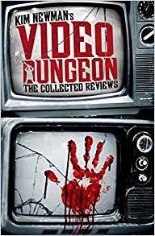
 Damn, who knew there were so many Z-budget found-footage films and direct-to-sewage shark movies? Kim Newman, obvs. Culled from the pages of his long-running column in Empire, the UK movie magazine, Kim Newman’s Video Dungeon: The Collected Reviews gives the what’s-what on 500-plus what-the-fuck flicks you’re better off not watching (at least those from The Asylum, the quality-deprived suppliers of Sharknado and other shit shows). Ever the professional, Newman calls ’em like he sees ’em — and he has seen a lot of ’em. Although the real pleasure of time spent in the Dungeon is witnessing the author’s wit of evisceration, that’s not to say good films are not to be found. Thanks to sections on dangerous games, serial killers and spies, I emerged with a healthy to-see list I’ll likely never complete, making this 2-pound guide essential. Note that the subtitle’s operative word of “collected,” not “complete”; here’s hoping Titan Books issues an equally meaty sequel posthaste!
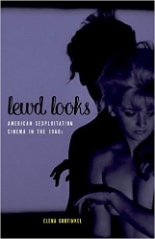 From Radley Metzger to Russ Meyer, Elena Gorfinkel recounts how economic and legal shifts (among others) permitted the emergence of Lewd Looks: American Sexploitation Cinema in the 1960s. Initially, the book is an interesting recounting of court cases involving such now-quaint films as The Garden of Eden; Not Tonite, Henry!; Barry Mahon’s faux compilation doc, Censored; and Meyer’s own Vixen, which attracted the hypocritical wrath of future federal fraudster Charles Keating. Ironically, these legal victories eventually snowballed into an avalanche that allowed for the hardcore likes of Deep Throat to put the soft stuff out of business. Dry in parts (no pun intended), the University of Minnesota Press release nonetheless proves to be a crucial sexploitation study for what no longer is a short shelf.
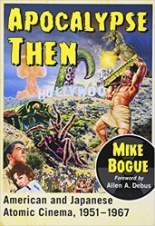 Following other recent radiated-and-related McFarland & Company texts as Giant Creatures in Our World and The Kaiju Film to shelves is Apocalypse Then: American and Japanese Atomic Cinema, 1951-1967. Penned by Mike Bogue, the paperback is a fond critical review of genre pics that exploited Cold War fears, directly or otherwise, from AIP to Zero (as in Panic in Year). Separated into alliterative-friendly sections on mutants, monsters and mushroom clouds, the films are covered chronologically and dived into with a surprising amount of depth. Just as you don’t have to be a member of the “Duck and Cover” crowd to appreciate those films, same goes for Bogue’s judiciously illustrated book. (But it sure as hell won’t hurt!) —Rod Lott
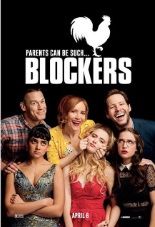
 Many a 1980s teen comedy chronicled the wacky lengths to which horny teens would go on their quest to lose their virginity. Today, those boys and girls — and the real-life boys and girls who viewed those movies on HBO and VHS, often surreptitiously — are adults and have become parents of their own sex-crazed children, so it makes sense for 21st-century Hollywood to turn the well-worn trope on its, um, head. In fact, Blockers may be the first film to focus on Mom and Dad’s efforts to rein in the young ones’ genitalia.
 Intercepting the girls’ emoji-laden group text of penetration plans, their respective parents (
 Shot in Oklahoma City,