
15 Cameras (2023)

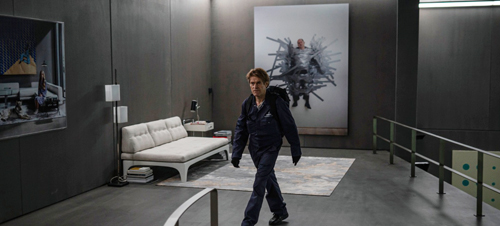
Of the myriad horror franchises alive and kicking today, I consider the 13 Cameras trilogy as the Little Franchise That Could. It’s so under the radar, you may not have realized the 2015 original birthed a sequel, let alone a pair now. Heck, it’s so under the radar, it brushes shoulders with the fighter pilots in Top Gun: Maverick whose planes hug the desert floor to sneak up on bombing the bad guys’ uranium plant, if the speed and gravitational pull don’t kill them first.

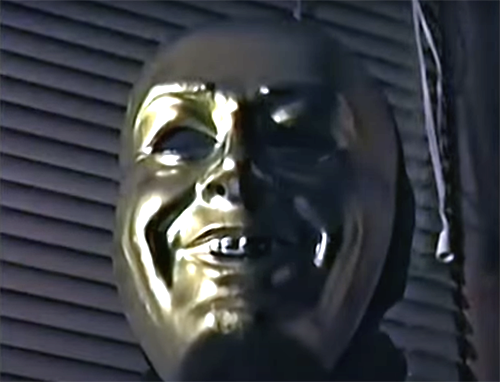
And if those things don’t, well, you know the peeping, pernicious Slumlord sure will try. Yep, like all serial killers worth their salt, the sweaty, antisocial Gerald now carries a media-friendly moniker. He’s also now played by James Babson (Ghost Team One) as a reasonable facsimile of Neville Archambault, who died way too young last year (and to whose memory this unexpected second sequel is dedicated).

If 14 Cameras took the linear route in continuing 13’s story, but from a differing vantage point, 15 Cameras takes an off-ramp to explore our nation’s current obsessions with true crime and social media. Closely intertwined, both essentially operate as extensions of the voyeurism in which the Slumlord specializes.

Cool girl Sky (Angela Wong Carbone, 2022’s Resurrection) is utterly, completely fascinated with the Slumlord’s still-raging reign of terror, as depicted on a Netflix-style documentary series. A large part of her inability to look away is because her new residence was one of his hidey-hole homes of homicide. Sky’s slacker husband, Cam (Will Madden, The Beta Test), seems immune to her morbid thrill of association … until he finds a secret room the cops somehow missed, with Gerald’s surveillance system across every corner of the duplex still fully operational.

Suddenly able to peep on his sister-in-law (Hilty Bowen, Mike and Dave Need Wedding Dates), Cam — oh, the irony of that name! — is equally transfixed. And when two hot college girls move in next door? You bet he’s binge-watching that livestream.

With this setup, director Danny Madden (Beast Beast) and writer PJ McCabe (who starred in 13 Cameras) make us complicit in Cam’s crimes. As viewers, we know Cam’s eye-in-the-sky (and -shower) actions are wrong — in bold, italics and all caps — yet there we are, wanting to witness every flickering, low-res frame as his eyeballs. Guilty, your honor!

Rather than merely rehash, the film builds on the previous chapters with clever turns, committed performances, tangible suspense and cameos from 13’s surviving victims (Brianne Moncrief and Jim Cummings). 15 Cameras culminates in an über-gruesome driller-killer of a scene that’ll leave horror enthusiasts happy and hopeful for a 16 Cameras. Logicless nomenclature aside, I’ll be ready to move in, provided the creative powers that be find yet another, um, angle from which to gaze. –Rod Lott

Get it at Amazon.

Hit List (1989)

If William Lustig has a B-movie masterpiece, it’s neither Maniac nor Maniac Cop. I nominate his forgotten Hit List, a pulpy crime pic of economical gangster warfare in present-day, not-at-all-confidential L.A. With one of the tallest stacked character-actor casts a limited amount of money can buy, the coastal change does Lustig good.

Aging federal agent Mitchum (Charles Napier, 1997’s Steel) is on his requisite Last Case: babysitting greasy mobster Frank DeSalvo (Leo Rossi, 1981’s Halloween II) under protective custody before testifying in a grand jury against Teflon-coated heroin importer Vic Luca (Rip Torn, A Stranger Is Watching). DeSalvo’s child, Frank Jr., is none too pleased at having to hide at the safe house: “Dad, all dey got is microwave pancakes,” da kid sez like a pint-sized Pesci in training. “But dey ain’t got no microwave.”

Flapjacks excepted, DeSalvo’s biggest worry is the target on his head. See, Luca’s hired someone named Caleek, which sounds like the Wonder Twins’ monkey sidekick, to ice DeSalvo before court. As played by Lance Henriksen in a performance more bonkers than his Stone Cold turn, Caleek is a cat-burglin’ karate-chop assassin so badass, he brazenly drives a van with a “1 KILLR” vanity plate.

Caleek makes a big boo-boo in entering not the safe house, but the one across the street. Thus, unable to locate Frank, he kidnaps who he thinks is Frank Jr., but the child actually belongs to family man Jack Collins (Jan-Michael Vincent, Vigilante Force). In a flash, Collins shifts into Not Without My Alcohol Daughter mode, except with, y’know, a son.

With Collins forcing DeSalvo to join forces to get his kid back, Hit List shifts into a rip-roaring, Rip Torning buddy actioner without even bothering to push the clutch. Their shootout with Luca’s goons within a game of laser tag makes for an ingenious highlight, what with the underaged running around with imaginary zappers.

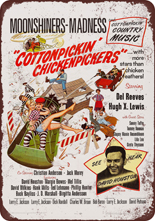
Video store customers at the time might recall Hit List for its car-crawler cover art, so incredible it practically drove off the rental shelves and into your heart. Unlike so many misleading VHS boxes, the scene shown actually appears in the movie. Lustig not only stages that scene, but showcases as it the climax in a parking garage as Collins attempts to flee Caleek, who climbs all over the moving car like a certain Teutonic cyborg. It’s a stellar action sequence, ending with a sick joke so obvious, yet so, so Lustig. —Rod Lott

Get it at Amazon.

The Exorcist: Believer (2023)

It’s hard to believe in David Gordon Green, let alone any follow-up to William Friedkin’s traumatizing classic. Unlike horror franchises with a gratuitously marketable villain — like Halloween, Friday the 13th or C.H.U.D.The Exorcist has to make do with a concept. And you can’t exactly trademark demonic possession, hence the wave of exorcism films that erode the legacy of the original. (Hell, just Google “the exorcism of” and you’ll stumble upon so many uninspired films, you’ll question why it took until 2021 for someone to finally produce The Exorcism of God.)

Even though The Exorcist influenced a heap of bargain-bin fillers, you also could argue it’s responsible for iconic flicks like Hereditary, The Evil Dead and Amityville Karen. It makes sense The Exorcist series persists. What doesn’t make sense, however, is putting Green at the helm of its revival — even more so after the director proved his recent Halloween trilogy should’ve ended before we endured two half-baked sequels. Unfortunately, The Exorcist: Believer doesn’t rid Green of whatever curse haunts him.

Thirteen years after his wife’s death, Victor (Leslie Odom Jr., Glass Onion) struggles to raise his daughter, Angela (Lidya Jewett, Black Panther), in a secular household. At the same time, devout Baptists Miranda (Sugarland vocalist Jennifer Nettles) and Tony (Norbert Leo Butz, 2010’s Fair Play) prepare for the baptism of their daughter, Katherine (newcomer Olivia Marcum). The week before the ceremony, Angela and Katherine disappear for three days when they ditch school to try and commune with Angela’s mother. Once found, the two act out by wetting their beds, masturbating during a Sunday service and psychically levitating furniture. (You know, teen stuff.)

Notice anything missing from that premise? Maybe, I don’t know, an exorcist? Ann (Ann Dowd, Compliance), a would-be nun turned nurse, plays the new Damien Karras. She even has a compelling background, as the shame of an abortion before her confirmation sets her up for a redemption arc. Tragically, Green makes no conscious effort to explore this beyond rushed exposition dumps.

What the filmmaker misses — and will probably keep missing — is what most imitators fail to capture, too. The Exorcist doesn’t earn its staying power through the gratuitous and demonic possession, but with compelling characters. In Believer, Green and co. almost get it with Victor and Ann’s background, but they repeatedly avoid exploring people in favor of cheap thrills and frankly boring sequences. At the same time, they reaffirm the idea of faith (specifically, Christianity) so much, there’s no room for doubt to emerge as a meaningful theme.

Beyond revenue, it’s hard to imagine what gave Green (or anyone involved with this garbage fire) the confidence to move forward with Believer. It’s as if the demon of boring horror requels — let’s call it “Pasnoozu” — has grown more powerful.

Granted, Believer is so bad, it might make the rest of the trilogy better by extension. After all, when the bar’s so low it’s basically in hell, 2025’s The Exorcist: Deceiver can’t be worse, right? Right?! —Daniel Bokemper

Get it at Amazon.

The Goldsmith (2022)

Italy’s The Goldsmith has a story so simple, it could be told within the span of a trailer. And it is.

A home invasion thriller with torture porn quietly hiding in the guest bedroom while the adults talk, Vincenzo Ricchiuto’s directorial debut centers on three ne’er-do-wells who plot to rob the titular kind, elderly jeweler, Antonio (Giuseppe Pambieri, The Legend of Sea Wolf). They’re tipped off that Antonio keeps a pricey lab in the remote abode he shares with his equally kind, equally elderly wife (Stefania Casini, 1977’s Suspiria).

As the criminals discover, the cats become the mice when Antonio trips an alarm, sealing them inside the room they so maliciously plundered moments before. Via A/V magic, the goldsmith teases and turns the felons against one another. And then a hidden door is discovered, revealing stairs leading down. What lies beneath? It’s not exactly Barbarian.

But like cubic zirconia trying to pass itself off as a diamond, enough of a resemblance is there. Bearing a touch of the brothers Grimm, it might work wonders as an episode of Tales from the Crypt, but prolonged arguments in an enclosed space don’t always make for great cinema. Many unnecessary scenes pad the length, like when a character explains (via flashbacks) what we as viewers already have surmised.

Ricchiuto has an eye for this sort of thing, giving it an all-pro visual polish. His script with Eaters’ Germano Tarricone, however, could rely on fewer clichés; three times, it pulls the ol’ trick of a tormented person conveniently within reach of a weapon their oppressor fails to notice. —Rod Lott

Get it at Amazon.

Moonage Daydream (2022)

Of all the notable deaths in the past decade, I still haven’t got over the demise of David Bowie. Even though his corporal body was given to a higher power — whatever that power is — his true testament is the art he created for the world, be it music, film or, as we soon learn, paintings.

A cinematic obituary wasn’t enough for Bowie, but director Brett Morgen’s Moonage Daydream deliberately tries and, in the end, virtually succeeds in giving the world a succinct portrait of the man and the many different masks he wore, starting with a true space oddity.

Bowie’s sound and vision collide in the electronic dirge of “Hallo Spaceboy” and working from here, there and anywhere; apparently, there is no linear time in this cinematic pool. With beakers and test tubes swirling around him, the androgynous facade makes its way into the dawn of Ziggy Stardust and beyond. And like an ever-changing spider from Mars, he slithers and recoils past the Thin White Duke, later emboldened with the junkie Kraftwerk periods, with a little man who fell to Earth in between. Blue, blue, electric blue, surrounded with his coke spoons and heroin drips, the late ’70s are a complete haze of sobriety.

With his schizophrenic brother and sleepy mother in their well-tooled coffins, riffs of lilting heroes (we can be them, you know) placate the creation of plastic pop that devolved into the 1980s and the great isolation that same with it. But, after a few years of intense solitude, he became an industrial icon and well-rounded artist well into his death in 2016.

I have purchased this documentary on two separate occasions: once, after my debilitating stroke, and now, as part of the Criterion Collection. After each and every screening, it plays more like a masterwork of one man’s life, with layers of complexity that take the good and the bad, with no narration or talking heads. Even though we will never truly know Bowie, Morgen gives us the whole kinetic picture, albeit covered in spacey debris.

Truly remarkable in its dreamlike way, Moonage Daydream is an open-curtain, open-air market to the life of this artist, with every persona, character and alter ego cataloged for further inspection. —Louis Fowler

Get it at Amazon.

Random Genre & Cult Movie Reviews