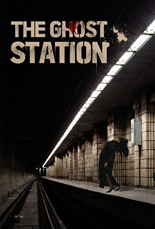
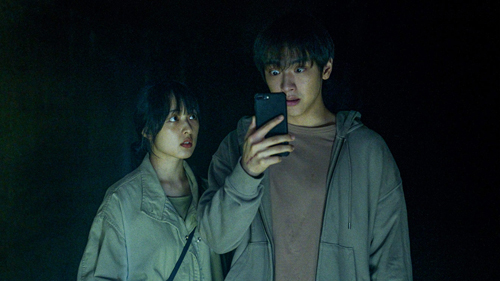
Young web journalist Kim (Kim Bo-ra, Ghost Mansion) is in dire need of a scoop that’ll rake in the clicks and likes. She finds it in a subway train accident, when her friend Woo-won (Kim Jae-Hyun), who works security at Korea Metro, tells her about the ghost of a little girl spotted hiding in the rails of Oksu station.
Strangely, the ghost girl isn’t the only spirit hanging around Oksu. Stranger still, they all spout four-digit numbers when asked for their names. The more Kim digs, the more she uncovers, like how everyone who’s died at that platform in the last three decades bears deep scratches on their arms. Then there’s the matter of one of Kim’s sources committing suicide … before the two spoke!
The Ghost Station marks director Jeong Yong-Ki’s return to horror since his 2004 debut, The Doll Master. Unfortunately, it’s your standard Korean fright fare — substandard, even, if you’ve seen more of these things than the average bear. As if “ghost children” didn’t already drive the point home, it doesn’t tread new territory as much as repeat the familiar tropes by rote. Co-screenwriter Takahashi Hiroshi, best-known for the J-horror classic Ringu (aka The Ring) even has the gall to include a well. A well! With trapped kids! Thus creating, to use the movie’s own words, a grudge! And a curse to pass on, which Kim totally girlbosses.
Shouldn’t some blame land on the unimonikered Horang, on whose webcomic the film is based? No, since his source material is adapted in whole for the prologue. Other than establishing the subway setting, the standalone scene shares nothing with the mélange of jump scares that follows. —Rod Lott
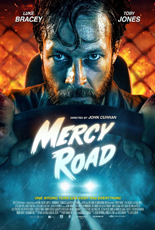
As Steven Knight proved a decade ago with the Tom Hardy vehicle Locke, viewers can be riveted by a feature film set entirely within a moving car at night. Now, Mercy Road gives that concept an Aussie spin. It’s a real change of pace for John Curran, heretofore known for directing tony, buttoned-up awards bait like The Painted Veil and Stone. Here, he loosens the collar and tells the world to eat his dust.
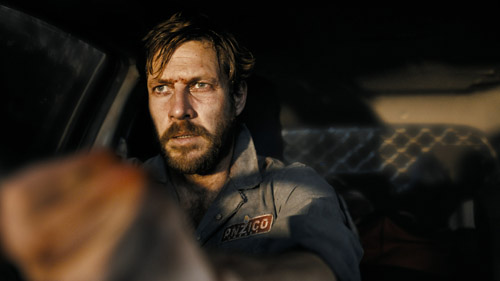
Hardy’s luxury car is downgraded to a dirty work truck driven by Tom (Luke Bracey, 2015’s Point Break remake), who’s fleeing the site of where something bad just happened. I’ll let you learn the “what”s and “why”s as Curran intends, with hints dropped a quarter-mile at a time; suffice to say, Tom’s searching frantically for his 12-year-old daughter, who isn’t answering her phone. According to an ominous caller identifying himself as “an associate” (Toby Jones, Berberian Sound Studio), Tom has exactly 60 minutes to find her.
As the clock ticks, so does your pulse. With a recurring cameo from one of those notorious Australian spiders and Curran’s own intense score banging on the left-hand side of the piano, Mercy Road makes for a stressful ride. Bracey makes you feel it, too, selling his accelerating frustration and panic with a worn-raw throat and bursts of unplanned spittle.
I only wish the resolution were concrete. No fewer than three endings run right after the other, I assume rendering the previous one null and void. It’s unclear — and this sure ain’t Clue — as we’re left with more questions when Tom kills the ignition. —Rod Lott
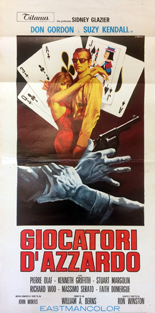
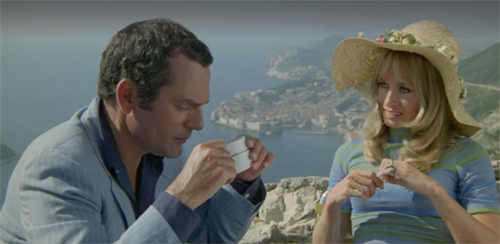
Aboard a cruise ship, cheapskate crook Rooney (Don Gordon, Bullitt) poses as a doctor in order to con an aristocrat (Massimo Serato, Killer Nun) out of his considerable wealth. Making Rooney’s job easier is that his mark loves to gamble.
Meanwhile, Rooney hopes to get into the bikini bottoms of an incomparably beautiful passenger (Torso’s Suzy Kendall, suntanned within an inch of, well, every inch).
Except — surprise! — it is! Writer/director Ron Winston (Banning) based his film on the Russian novelist’s 1866 follow-up to Crime and Punishment. Liberties have been taken. (Or so I assume. I don’t read Dostoevsky unless eight pages of full-color photos of Kendall come inserted at the book’s midpoint.)
With the story fresh from celebrating its first century at the time, the third-act twist is obvious as soon the first act puts its players in place. Obviousness notwithstanding, The Gamblers reveals itself as a more-than-capable caper as bubbly as the champagne its characters imbibe, with a jaunty score to match, courtesy of Mel Brooks’ regular composer, John Morris.
With dated but delightful support from Richard Ng (Winners & Sinners) in his first feature, the comedy is featherweight-light until the last couple of minutes. At that point, Winston seems to realize he’s wasted Kendall on every level but eye candy, and ends The Gamblers with a grand, unearned romantic gesture. From what I gather, that’s the kind of scenario that happens among people more attractive than you, gallivanting about more attractive places you’ll never be able to visit. —Rod Lott
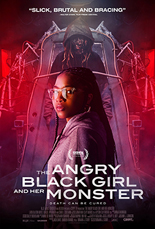
Mary Shelley’s foundational science-fiction/horror novel Frankenstein inspired this tale of systemic violence and grief gone mad. First-time filmmaker Bomani J. Story crafts a solid narrative of a young woman obsessed with bringing her slain brother back from the dead.
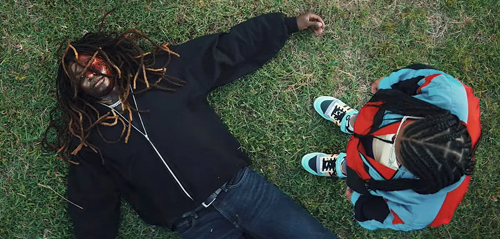
Brilliant Vicaria (Laya DeLeon Hayes) believes death is nothing more than a disease that can be cured, a theory that seeded in her mind following the accidental shooting death of her mother and the intentional murder of her brother Chris (Edem Atsu-Swanzy) by rival gang members. She snatches Chris’ body just after he was fatally gunned down, stowing the corpse in an abandoned utility room on her projects’ grounds.
Vicaria builds a machine that can harness the electricity from a nearby power station, and much like other Frankenstein adaptations before it, the ins and outs of this machine aren’t explained in full, letting the viewer suspend disbelief without a lot of cockamamie, pseudo-scientific jargon weighing the proceedings down. And much like in Frankenstein, Vicaria is successful in bringing Chris back, though of course he comes back all wrong. The gentle giant is now a bloodthirsty fiend whose motivations for killing are just as fuzzy as the methods that reanimated him. This is less Mary Shelley, more Hammer; the creature here isn’t a ponderous malcontent out for revenge, but a brute who can’t help but harm others indiscriminately — or at least, whenever he feels threatened.
Can Vicaria keep him a secret without losing her own life? This basic task is made all the more difficult by Kango (Denzel Whitaker), a local drug dealer who forces Vicaria to help him with his business after she steals some of his heroin to keep it off the streets and out of the hands of her father (Chad L. Coleman). Also complicating matters is Jada (Amani Summer), Vicaria’s little cousin, who seems to befriend Chris. To say that things eventually go sideways is an understatement.
There is much to love about The Angry Black Girl and Her Monster, but particular praise must be given to Hayes’ performance as Vicaria. She plays the role with subtlety and a plethora of emotions overlapping and interweaving with one another — from the titular anger to fear to joy and beyond. We understand the character as brilliant for her age, but we also see shades of her youth and at times naivety bleed through the brilliance, making the film overall as much a coming-of-age narrative as it is a horror film about life and death.
The look of the creature is especially impressive as well, as is the machinery that brings him back to life. Both harken directly back to James Whale’s iconic 1931 Frankenstein, with the creature’s hulking frame and sutured visage, and the elaborate electrical mechanics of Vicaria’s invention. These fantastical elements contrast nicely with the lived-in feel of the projects setting, a backdrop that allows the filmmaker to explore reality-based horrors like gang violence, poverty and drug addiction. It makes Vicaria’s quest all the more believable — who wouldn’t want to eradicate death in an environment like this?
The Angry Black Girl and Her Monster is overall an engaging and nightmarish update on a literary classic, one squarely positioned in modern day concerns yet also painted in broader, more universal themes, giving it a feeling of timelessness, much like Shelley’s novel. Story shows tremendous talent, and one cannot wait to see what he does next. —Christopher Shultz
As Christmas horror anthologies go, Nightmare on 34th Street bears a title so clever, it’s something of a Miracle it hadn’t been co-opted before filmmaker James Crow got to it. Now, the movie itself is less inspired, but it’s watchable. Because it’s British, prep to hear “Santa” pronounced as “Santer.”
As this movie’s jolly old St. Nick, Pierse Stevens (Crow’s House of Salem) tells a boy five bedtime stories, plus gets in a few choice words about the true reason for the season: “The poor fucker was on a cross, died, and all they want is fucking presents!”
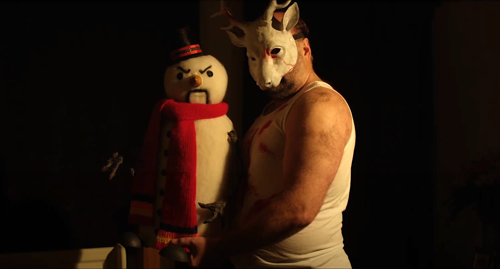
The stories involve a home invasion by “three Christmas nutters” who drive a van marked “THE SLAY”; a down-on-his-luck ventriloquist and his homicidal Frosty the Snowman puppet; and your garden-variety store Santa who, after being fired, poisons cookies and causes other general mischief. In arguably the most successful segment, a single mom/MILF (former lad-mag vixen Lucy Pinder) gets a visit from Krampus; in easily the worst, an infirm priest (Spidarlings‘ Jeff Kristian) and his past are key to “The 12 Kills of Christmas.”
Individually and overall, 34th Street houses too many characters, too few fresh ideas, no real jolts and, most regrettably, more padding than the average pillow supporting the heads of nestled children as they dream of sugar plums. However, Crow is able to pack a streak of nastiness under his low-budget tree, as kids are not only put in danger, but participate in it. He also stuffs its stocking with dark laughs; in addition to Santa’s possibly sacrilegious spouting above, an earlier cut features a now-excised babysitter tale in which a girl dismisses a Virgin Mary figurine with “Whatta slag!” —Rod Lott