
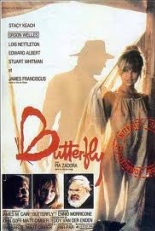
 It’s hard to believe there was a time when the name Pia Zadora was on everyone’s quivering lips. For one moment in history, she was lauded as our nation’s highest female ideal, a growth-stunted pixie with a mischievous, Lolita-esque twinkle in her eye. She was the Megan Fox of her time — a time when our country was less judgmental about its objects of sexual fantasies. Today, she’s nothing more than another cultural oddity, a punch-line name best left for Trivial Pursuit questions and cameos in John Waters flicks, but she got her masterpiece in the Depression-era, depression-inducing melodrama Butterfly.
Zadora is the bee-stung-lipped Kady, a seductively wanton tween who surprises her estranged pop, Jess (Stacy Keach), one afternoon and proceeds to turn his life upside down as she offers him her own downside up. Yes, she teaches this gruff loner to love again — not in the life-affirming, “I want to be a better father!” kind of way, but more in the “I want to massage my daughter’s nubile breasts while I bathe her!” kind of way. To Kady and Jess, incest is the best way to pass time as they mine for ill-gotten silver. I personally would’ve just stuck to singing old slave spirituals, but then again, Zadora isn’t my nympho daughter.
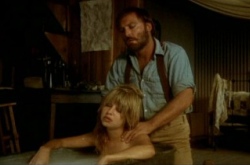 Orson Welles shows up as a drunken judge and bloats all over the screen, delivering a wonderfully unintelligible performance that is so bitter and careless and drunk on Paul Masson, I doubt he knew the cameras were rolling. But maybe that’s just Matt Cimber’s charmingly free-flowing directorial style which, coincidentally, made him the Razzies’ pick for worst director that year. (That’s okay, Matt, the Razzies have been the stupidest award show since … well, ever. Consider the source.)
Watching Butterfly, you’re filled with wistful visions of Zadora’s unrealized promise. I say it’s about time for this little spitfire’s comeback, if only for a feature-length realization of her post-apocalyptic video for “When the Rain Begins to Fall.” I’m sure Jermaine Jackson would be down for it. And probably Cimber, too. —Louis Fowler
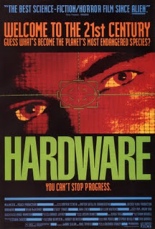
 True story: I first saw
 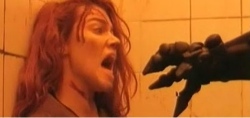 Not much for story, but director Richard Stanley keeps things moving through integrity of vision and an absolutely gorgeous giallo color scheme, layering it with a subtext of man’s symbiotic relationship with machines, first glimpsed through Moses’ artificial hand. Invaluable character actor William Hootkins gets to portray one of filmdom’s most depraved perverts, and Simon Boswell’s throbbing, Western-tinged score will earworm its way into your skull.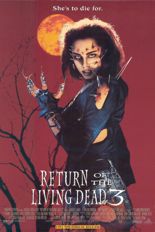
 The curse of genre sequels is that most people inevitably will dismiss them sight unseen. Put a Roman numeral after a title and at least half of your audience automatically will roll their eyes and look for something original, like the new remake. (See what I did there? It’s funny because remakes are the closest things we have to original movies these days. Isn’t that amusingly insightful?)
  Julie (Melinda Clarke,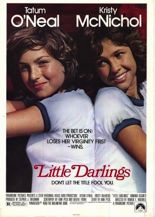

 In what amounted to a 1980 casting coup, the film stars Academy Award winner Tatum O’Neal and two-time Emmy winner, Kristy McNichol (who just happened to be my first celebrity crush when I was 8 years old) as the titular darlings. O’Neal is Ferris, the rich girl, and McNichol is Angel, the tough girl; they quickly become summer-camp rivals and compete to “become women” by pursing Armand Assante and Matt Dillon, respectively.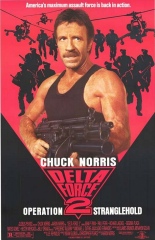
 There are two kinds of Chuck Norris films. The first create a decent enough entertainment around His Holy Beardness by surrounding him with actors capable enough to distract the audience from the immovable post that is Grimace Highkicky, such as
 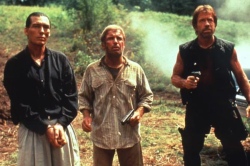 Directed by Aaron Norris (favorite bro of Bristle McSoloflex, and as fine a director as his sib is an actor), Delta Force 2 finds Punch Rockgroin leading some kind of anti-terrorist group, a leader so magnetic that no backstory or character development is necessary. After a friend is killed by Drago, The Beard with No Name works out his rage by kicking the snot out of his men in a training exercise and then traveling to South America for revenge, backed by the U.S. government.