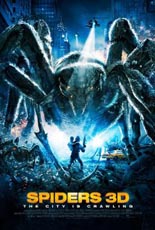
 It’s appropriate that Spiders’ third act hinges on a trip to a toy store, because what is its sector of science fiction but a big game of pretend? Directed by The Gate’s Tibor Takács, Spiders proves as harmless and hard-hitting as a Nerf football.
A Soviet space station containing experimental arachnids crashes into the New York City subway system, much to the dismay of Pelham-esque transit line supervisor Jason (Starship Troopers vet Patrick Muldoon, really intense and looking like Baby Pacino). He’s recently divorced from health department worker Rachel (2001 Maniacs’ Christa Campbell, increasingly pneumatic), who gets drawn into the resulting cover-up, in which the government spreads word of a highly contagious virus, because “giant spiders” would really freak the fuck out of the Big Apple.
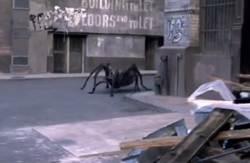 Aggressive and bloodthirsty, the spiders grow 6 inches per hour. They also growl, hiss and cry, and can head-butt Army trucks. Their queen possesses a yell like Godzilla. Initially, these creepy crawlers are icky enough to give arachnophobic viewers a mild case of shivers, but once they balloon into unnaturally grotesque sizes, their computer-generated design is so overly spiky as to be incredibly unrealistic. Muldoon and Campbell look like they’re just running from cartoons.
Then again, no one goes into Spiders expecting smarts. After all, not once in the movie does any unsuspecting citizen exclaim something to the effect of, “Holy shit! Look at that huge fuckin’ spider! What the hell’s happening?,” but you can bet that proverbial bottom dollar that Campbell stupidly walks right into an enormous, super-thick web covering an entire hallway.
Spiders is in no danger of ending up on the list of cinema’s best eight-legged thrillers — heck, it’s not even as good as 2000’s straight-to-video Spiders — and yet, a few scenes play out with an itsy-bitsy amount of fun. I’m looking at you, Muldoon Commandeers a Forklift. —Rod Lott


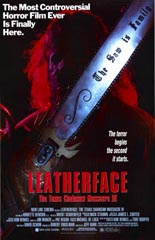
 Nothing in
 Absolutely fascinating in a car-wreck sort-of way, the clumsily titled