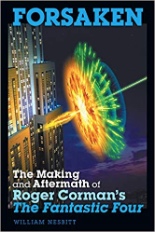
 After the 2015 documentary Doomed!, one might wonder what’s left to be said on the unreleased Fantastic Four film. Turns out, plenty! For BearManor Media, William Nesbitt has written Forsaken: The Making and Aftermath of Roger Corman’s The Fantastic Four. While I initially felt misgivings upon learning the book does not present a front-to-back narrative, its structure of nearly 30 individual Q&As actually works well; because the interviews don’t have to be read in order, so you can pick and choose those whose viewpoints interest you most. I most recommend those of principal actors Carl Ciarfalio and Alex Hyde-White, screenwriter Craig J. Nevius, director Oley Sassone, producers Corman and Bernd Eichinger, storyboard artist Pete Von Sholly and Film Threat’s Chris Gore. (Elsewhere, Stan Lee and Troma’s Lloyd Kaufman seem nowhere near as untrustworthy.) One small quibble: the title. I would’ve gone with Foursaken, because c’mon!
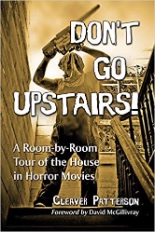 Cleaver Patterson could have collected various essays on fright films, but where’s the fun in that? Instead, he does something unique for this paperback, which you can probably infer from its title: Don’t Go Upstairs! A Room-by-Room Tour of the House in Horror Movies. Many of the approximately 60 blueprint entries cover the iconic works, from Psycho’s cellar and up The Exorcist’s stairwell to Poltergeist’s kitchen. But making the book all the better is that Patterson doesn’t forget exposing readers to more obscure titles, including the guest room of The Uninvited or the conservatory of Symptoms. In each case, the scene(s) in question is discussed and reviewed, rather than the movie itself. The McFarland & Company release isn’t essential, but its different angle is much appreciated.
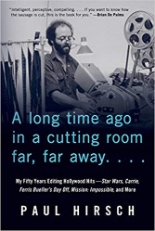 If nothing else, you will gain an enormous amount of knowledge of and respect for the craft of film editing after reading Academy Award winner Paul Hirsch’s autobiography for Chicago Review Press. A Long Time Ago in a Cutting Room Far, Far Away: My Fifty Years Editing Hollywood Hits ― Star Wars, Carrie, Ferris Bueller’s Day Off, Mission: Impossible, and More delivers exactly as promised, brimming with film-by-film remembrances of epic battles and epic solutions inside and outside the editing room. While Star Wars will attract the lion’s share of attention to the book, other chapters have no trouble sharing delightfully unfiltered stories. Those include Tom Cruise’s incredible generosity with coconut cake, John Hughes’ habit of suddenly cutting people out of his life, Tim Robbins’ crankiness at having to loop dialogue, Julia Roberts’ epic disgust of co-star Nick Nolte, and Joel Schumacher’s HR-unfriendly blowjob talks on set. But why no Extreme Ops anecdotes, dude?
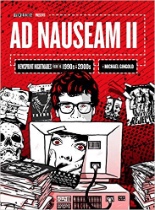 One activity lost in this internet age: poring over movie ads in the newspaper. As a child, it was about the only way to get a taste of films I wasn’t allowed to see. Throughout middle school, I would cut out ads for movies I saw or desperately wanted to, and posted them on my bedroom bulletin board alongside admission ticket stubs. (Why, yes, I was a hopeless nerd! Why do you ask?) Minus the crushing embarrassment, all those feelings came rushing back while reading Ad Nauseam II: Newsprint Nightmares from the 1990s and 2000s, Michael Gingold’s immediate follow-up to last year’s original Ad Nauseum. Although the years it covers may be less revolutionary for the horror genre, this sequel is superior to the first book based on the “story” it tells. The chronological coverage amounts to an actual narrative arc as the glory years of Voorhees, Krueger, et al., fade to a near-death. Notes Gingold, 1994 saw a mere nine titles for fright films … and then came Scream and Paranormal Activity, and suddenly, horror once again was — and still is — a Very Big Deal. The proof is in the pages, detailing quite a comeback.
 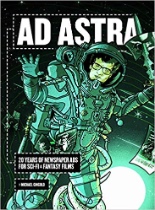 Meanwhile, sci-fi suffered no such doldrums, in part because the public views it as an Eagle Scout compared to horror’s high school dropout. That hardly makes Ad Astra: 20 Years of Newspaper Ads for Sci-Fi & Fantasy Films less enjoyable. Rather, the all-SF&F companion — released in tandem with Nauseam II by 1984 Publishing — enriches the Gingold experience as a whole; both come highly recommended. Hailing from New York, the author had exposure to more movies than we flyover states got, resulting in some true obscurities: Wired to Kill, War of the Wizards, Freeze Me and more. Page after page, these books bring back the glory days of phone recordings (Call D.A.R.Y.L.!), day-one freebies (Henry II: Portrait of a Serial Killer T-shirts, anyone?) and genuinely great marketing (“Who Is Darkman?”). Now do action, Gingold! —Rod Lott
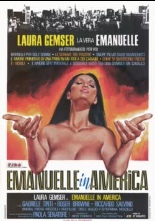
 Have you ever wanted to voyeuristically watch as a woman gleefully masturbates a horse? If the answer is “yes,” then pull your pants down, take out your questionable member and liberally grease up for

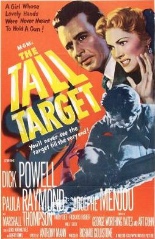
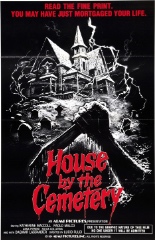
 Have you ever noticed that many of the children in Italian horror films are just as unappealing as the grotesque monster attacking them?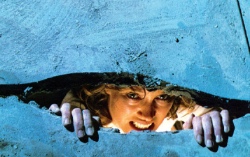
 H.P. Lovecraft’s short story “