The Wizard (1989)

You know what the Academy Award-winning film Rain Man was missing? A sneak peek at the upcoming Super Mario Bros. 3 video game!

Thankfully, this was generously rectified in The Wizard, the 1989 cult film starring then teen dream Fred Savage and current indie queen Jenny Lewis as two kids taking possibly autistic little brother Jimmy (Luke Edwards) to the Nintendo-sponsored gaming competition Video Armageddon at Universal Studios.

While many proto-nerds were pumped for Batman that summer, most of the kids I knew were eager to see this quasi-promotional flick because it featured not only a glimpse of the then-unreleased new Super Mario game, but what was possibly the coolest gaming device ever … until you actually used it: the Power Glove.

I wasn’t that excited for it, though, mostly because my brother and I lost out on getting a Nintendo the previous year; while my parents were out shopping one Saturday afternoon, we decided to coat the entire side of our farmhouse in thick, red-staining mud. (Honestly, I think they just didn’t want to spend the hundred bucks on the now-ancient console and used the wet dirt as an excuse. Bastards!)

Still, The Wizard mostly holds up if you lived in that era. It’s pretty amazing, cinematically, to remember there was an internet-free period when trios of youths traveled across the country, got viciously beaten up, chased by skunky private investigators, entered national 8-bit gaming competitions and, in the case of Lewis, falsely accused men of touching her prepubescent breasts. What a time to have been alive! —Louis Fowler

Get it at Amazon.

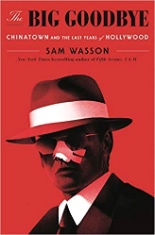
The Big Goodbye: Chinatown and the Last Years of Hollywood

Right on the jacket, Flatiron Books makes a so-bold-it’s-ballsy claim about Sam Wasson’s The Big Goodbye: Chinatown and the Last Years of Hollywood: that it “will take its place alongside classics like Easy Riders, Raging Bulls and The Devil’s Candy as one of the great movie-world books ever written.”

I can’t go that far. But I will call The Big Goodbye one of the best-written movie-world books (and yes, there is a difference). Consider this bit on Jack Nicholson, which reads like the very thing it describes: “Amazed by his staggering ability to draw out the shortest line of dialogue, to make a meal of crumbs, he realized that Nicholson’s innate mastery of suspense, of making the audience wait and wait for him reach the end of a line, added drama to the most commonplace speech, and Nicholson’s monotone, rather than bore the listener, inflected the mundane with an ironic tilt.”

That’s poetry! And yet, to be honest, I found more delight in Wasson’s 2010 bestseller, Fifth Avenue, 5 A.M.: Audrey Hepburn, Breakfast at Tiffany’s, and the Dawn of the Modern Woman, even though I have no strong affection for the Blake Edwards romantic comedy at its chewy center.

But let’s leave “Moon River” for an L.A. reservoir. Instead of a linear chronicle of the making of Paramount Pictures’ 1974 classic, Chinatown, the author uses The Big Goodbye to tell the making of four key creatives — Nicholson, director Roman Polanski, writer Robert Towne and studio exec Robert Evans — and how their individual histories informed the shared one they would create.

Polanski is first up; unfortunately, his story is the one least in need of retelling — especially this year, in the wake of the Manson murders’ 50th anniversary, the release of Quentin Tarantino’s Once Upon a Time … in Hollywood and the ongoing furor over his crimes of sexual abuse, both alleged and proven.

Nicholson’s story is one of temper and talent, indelibly linked. Evans’, one of legendary largesse, which puts the jacket flap’s boast right in line with his wavelength of exaggerated arrogance: “You know I’ve gotten more women pregnant than anyone in history. You know how? Love Story!”

Naturally, the tale that’s most interesting among these highly, highly flawed men is the one least known to the public: the lower-than-low-profile Towne. Wasson paints a full portrait of the enigmatic man and the screenplay’s long gestation period, abandoned plot points and characters and all. The most revelatory aspect of The Big Goodbye is the issue of Chinatown’s authorship, with Towne relying heavily on longtime friend Edward Taylor on building the noir-soaked narrative of the SoCal water wars — a backdrop Polanski more or less turned into a MacGuffin. Read The Big Goodbye for this story, if no other.

Oh, and in case you’re wondering, although she’s not one of the four focal points, Faye Dunaway does play a part … and doesn’t emerge as a saint, either. Then again, she never does. —Rod Lott

Get it at Amazon.

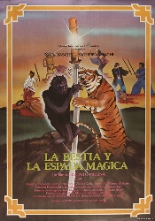
The Beast and the Magic Sword (1983)

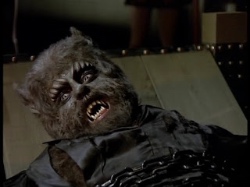
Despite a title that sounds like a primo Hawkwind cut from Warrior on the Edge of Time, this 1983 flick is actually a Spanish/Japanese co-production starring none other than Paul Naschy (aka Jacinto Molina) as ageless lycanthrope Waldemar Daninsky, this time on the prowl in feudal Kyoto.

Cursed by a sorceress in his native Europe to always carry the chubby mark of a throat-biting werewolf, pudgy monster-man Daninsky travels to Japan at the behest of his local alchemist to find a cure from Kian (Shigeru Amachi), a wise man with a penchant for fighting monsters and solving mysteries.

Together, Daninsky and Kian take on assassins, ninjas, samurais and, of course, a satin shirt-clad wolfman. And while all that is entertaining enough, the set piece has to be the werewolf-vs.-tiger scenario that happens about midway through, an epic fight of bloodied fur that’s on par with the living dead vs. tiger shark from Lucio Fulci’s Zombie.

When he made The Beast and the Magic Sword, Molina was bankrupt and turned to Japanese producers for an influx of cash; they gave him the money and so much more, from the inspiration to bring the lycanthrope movie to Japan to the sheer guts of having said lycanthrope punch a tiger in his man-eating mouth.

Apparently filmed at Toshiro Mifune’s studios, this 10th and, for a while, final of the Daninsky films, it’s also one of the best in the series; while the story is a bit far-fetched, this Were Wolf and Cub tale of high action and even higher production values is an extremely entertaining melding of European trash and Asian class. —Louis Fowler

Get it at Amazon.

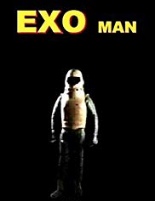
Exo Man (1977)

Remember the first-act origin of Iron Man, where Robert Downey Jr.’s Tony Stark builds a bulky metal outfit while being held prisoner in Afghanistan? Draw that section out to feature length, reduce the budget to equal a 12-year-old’s allowance and you have Exo Man, a superhero movie made the way they generally were in the 1970s: for prime-time network television.

As wealthy old white men are wont to do, Kermit Haas (José Ferrer, The Swarm) instructs his goons to rob a bank so he can’t be outbid in the upcoming auction of the Gutenberg Bible. At said bank is college professor and physicist Dr. Nicholas Conrad (David Ackroyd, The Dark Secret of Harvest Home), who jumps into action as a good Samaritan and catches a fleeing robber. Naturally, this puts Conrad on the radar of Haas’ right-hand man (The Incredible Hulk’s Jack Colvin in women’s sunglasses); in a subsequent skirmish, Conrad not only gets clobbered, but paralyzed below the waist.

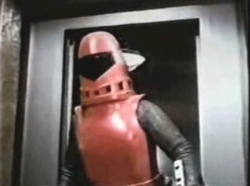
Good thing the doc’s been experimenting on how to alter the structure of matter — or something like that. All that matters is he succeeds — depicted through the not-so-special effects of magnets under the table — which enables him to “walk” again. To justify the title, he constructs a protective suit that makes him look like an unholy blend of a Shop-Vac and Conky from Pee-wee’s Playhouse, then goes out at night to fight crime, one sloooooow and lumbering step at a time. His Kryptonite? Toppling over.
Like Iron Man, Exo Man gives us the claustrophobic, you-are-there shots of Conrad’s super-sweaty face within the unforgiving helmet. Whereas Tony Stark’s is top-o’-line and outfitted with a holographic dashboard, Conrad’s relies on switches and buttons, all marked using an old-school Dymo label maker (and one button misspelled as “MALFUNTION”). As an underdog of a telepic, Exo Man carries a similar ambling, DIY aesthetic and plays the material with utter sincerity. Shot as a pilot, it never went further than this and didn’t deserve to — unlike writer Martin Caidan and director Richard Irving’s previous team-up, The Six Million Dollar Man. —Rod Lott

Masked and Anonymous (2003)

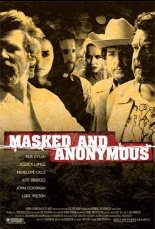
WTFOn an alternate timeline in an alternate America, a civil war with questionable sides rages on as everyday people try to survive by ignoring it. As the despot president begins to face his last few hours of life, the ubiquitous television network decides to hold a rather sketchy benefit concert for either the victims of the war or the promoter’s sizable debts, whichever comes first.

To play the show, they spring from prison the troubled troubadour of this timeline, Jack Fate. As he surveys the broken country with a wide array of name-brand actors, dropping abstract mantras and humanistic tantras, things continue to fall apart as Fate and his band perform some death-defying tunes in preparation for the last night of America as they seem to know it.

This remarkably prescient travelogue was conceived by (and starring) Bob Dylan, by the way.

One of the most woefully ignored films of the past 20 years, Masked and Anonymous is the dystopic present presented as a bitter song of broken hearts, hard-edged and mean-spirited in a way that refuses to give answers or, even worse, reasons for anything that it presents on screen and in theory.

And while that is usually something that might irritate most people, here, through Dylan and director Larry Charles’ acidic pen, it all seems like it was just two decades too early. With the threat of wars, pestilence, famine and death riding just over our own horizon, we don’t need to know the hows and whys anymore; we just gotta turn on the TV and figure out a way to survive it.

Dylan as Fate is, ironically, the movie’s Everyman; when he says, “I stopped trying to figure things out long ago,” it’s the only way to make sense of the shit that rolls down from on high, both in the film and in our own damnable lives, guaranteed no tomorrows. —Louis Fowler

Get it at Amazon.

Random Genre & Cult Movie Reviews