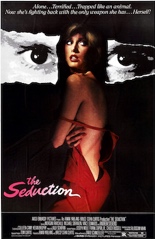
The Seduction (1982)

For whatever reason*, I watched The Seduction several times after its short theatrical run on a local UHF station, where it somehow aired with Morgan Fairchild’s nudity intact. Back then, pre-internet and with no HBO, that was like striking gold. Today, naked Fairchild doesn’t hold as much excitement, but those scenes have aged well compared against things in the movie that pretty much no longer exist: pay phones, department stores, Jacuzzi sex, Michael Sarrazin.

Fairchild’s Jaime Douglas anchors the news in Los Angeles, where the 6 p.m. time slot affords her visibility in the public eye. Not all of it is wanted, particularly that of the zoom lens of nosy neighbor Derek (Andrew Stevens, 10 to Midnight), whose snooping, screwed-up head has concocted a romantic fantasy he attempts to will into reality with heartfelt gifts of trinkets and trespassing. Just not into stalkers, Jaime doesn’t reciprocate his feelings, so Derek reasons if he can’t have her, well, no one can.
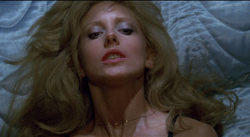
An early, tamer template for the erotic thrillers that bought Stevens’ groceries throughout the 1990s, The Seduction is high-gloss trash from writer/director David Schmoeller (Tourist Trap), but blandly enjoyable as he explores the contradiction of a woman so amazingly attractive, she can’t help but garner the male gaze — in fact, she makes a living off this ability — yet isn’t always fond of the gaze she garners. This thesis is set up in the first two lines of the film (Dionne Warwick’s singing of Lalo Schifrin’s overproduced ballad doesn’t count) as Jaime’s boyfriend (Sarrazin, The Gumball Rally) tells her, “I like looking at you,” to which she breathily replies, “I like being looked at.”

By the third act, Jaime is done being the victim, turning up the heat to 98 degrees of tease in order to turn the tables on her would-be paramour. While Fairchild plays this tough-cookie portion with the same smoldering indifference as the hot-tamale preamble, the flick certainly becomes less interesting in the switch. That could be reason enough for Schmoeller’s Seduction beginning and ending Fairchild’s big-screen career as leading lady; after this, she really only connected with movie audiences in the likes of Pee-wee’s Big Adventure and Naked Gun 33 1/3: The Final Insult, playing — and spoofing — herself. There’s nothing wrong with that, as long as we’re all still looking. —Rod Lott

*Hormones.
Get it at Amazon.

The Passion of Darkly Noon (1995)

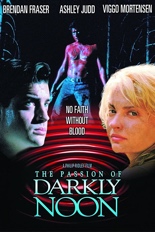
Philip Ridley’s momentarily vampiric The Reflecting Skin was a monumentally eerie film, deftly mixing homespun Americana ideals with surreal horror tropes, to beautifully cultish effect. Not nearly as known — and that’s really saying something — is the follow-up, The Passion of Darkly Noon, an even stranger film that, it seems, is still delightfully enigmatic some 25 years later.

A daring Brendan Fraser is the devoutly doctrinal Darkly Noon, the remaining survivor of a religious cult that apparently (off-screen) has just been shot all to hell by the FBI. Running through the woods and knockin’ on heaven’s door himself, Darkly is found and taken to the house of excitable sexpot Callie (Ashley Judd).

Married to a volatile mute (Viggo Mortensen), Callie’s provocative demeanor (but unwavering loyalty) is a bit too much sin and skin for Darkly, who, by the way, is as incel as they come; after numerous sessions of masturbation and flagellation, when he reckons there is no love in the world for him, he paints his body red and exacts unearned revenge.

Full of faux-poetic symbolism and heavy-handed allegories, Darkly Noon doesn’t really deliver on the promise of Skin, but with standout performances from the usually lunkheaded Fraser and dreamlike Judd, combined with the David Lynch-lite flourishes, Ridley does craft a watchable movie that is … well, still delightfully enigmatic. —Louis Fowler

Get it at Amazon.

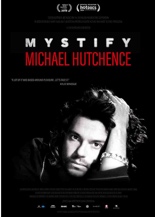
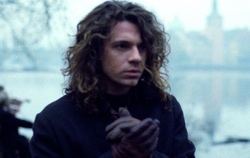
Mystify: Michael Hutchence (2019)

Growing up in the late ’80s, it was impossible to turn on the radio without hearing the voice of Michael Hutchence cooing an unseen paramour in tunes like “Need You Tonight” and “Devil Inside.”

It was a power that I, even as a 10-year-old, wanted desperately to possess, so much so that I even dressed up as Hutchence when my rural Texas school had a “come as your favorite celebrity” day. It was almost as good as the previous year’s George Michael costume.

A longtime INXS fan, I’ll admit that I have always had trouble reckoning the final years of Hutchence’s life, when he seemingly transformed from a likable cipher to a pretentious buffoon, more interesting for his problematic personal life than the music that had made him a vaunted superstar the world over.

It’s something that director Richard Lowenstein explores in-depth in the seductive documentary Mystify: Michael Hutchence; while the hits with his Australian band are casually mentioned, the film primarily seeks to explore the life of Hutchence outside of music, to great effect. Although it skips output like Dogs in Space for a bit too much about side project Max Q, for example, it’s a film of marked choices, most of which adds a surprising layer of humanity to the long-locked frontman.

What truly shocked me, however, was learning about Hutchence’s head injury in the early ’90s that apparently severed nerves and left him a different person, wildly erratic and often depressed. It’s this injury that is believed to have led to his 1997 suicide.

As mortifying as it all sounds, it’s really not all doom and gloom, as ultimately, Mystify is more a celebration of Hutchence as his family and friends remember him and want him to be remembered. It’s the way I want to remember him, too. —Louis Fowler

Get it at Amazon.

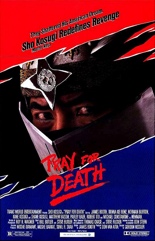
Pray for Death (1985)

When Franco Nero declined to return for an Enter the Ninja sequel, Sho Kosugi raised his hand and rode that shuriken-throwing train as far as it would take him: more or less to 1989, as the Bruce Lee of the two-night-rental era. However, Kosugi did more than just play ninjas in the Cannon Group’s Ninja trilogy; he also played ninjas outside of it, including Pray for Death, a stand-alone from unlikely helmer Gordon Hessler of KISS Meets the Phantom of the Park.

In Japan, Akira Saito (Kosugi) is a loving family man and hardworking salaryman, but his wife (Donna Kei Benz, Looker) longs to move to Los Angeles. So they do, with the intent to open a restaurant, but without the intent to be in an area so seedy, it could be a Chia Pet. Unbeknownst to the Saitos, an abandoned annex of their rundown place is where some crooks have hidden a valuable necklace. When those jewels disappear, the local mob boss known as — brace yourself for a name that screams “rejected Dick Tracy villain” — Limehouse Willy (Airport ’77’s James Booth, who also wrote the screenplay) wrongly assumes Akira and his family have something to do with it and will kill to get the necklace back.

Seeing as how Pray for Death is a revenge picture, take a good guess where things go from there. This is the kind of movie in which a low-speed fender bender causes a vehicle to explode as soon as bumpers touch. In which Akira always knows where to find his enemies. In which a woman is knocked unconscious before being fatally stabbed, with a quick round of sexual assault in between. In which the ultimate showdown takes place in a warehouse full of mannequins.

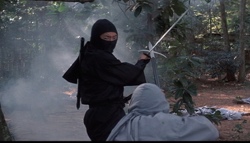
It’s in that last 20 minutes when Pray for Death comes, um, alive, as Kosugi drops the pacifism, applies the black eyeliner, puts on enough armor to resemble a Mortal Kombat character and ninjas up the place. Before that, thanks to the genial but cardboard acting of Kosugi, the movie is desperate for action. It could use a lot more of Akira leaping and flipping over a moving pickup truck, which Hessler shows in slow motion — as it should be, being the pic’s coup de grâce as far as visuals goes. Heck, I’d settle for just a little more of Akira’s kid’s tricked-out bicycle with jets of red smoke, a dashboard slingshot, hidden blow darts and more, all to make buffoons of mob goons and help Ninja Dad extract vengeance, sweet vengeance. —Rod Lott

Get it at Amazon.

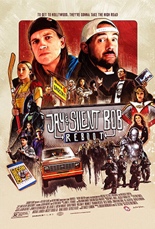
Jay and Silent Bob Reboot (2019)

A couple of years ago, director Kevin Smith had a heart attack that nearly killed him. Around that same time, I had a hemorrhagic stroke that nearly killed me. Since then, we both have attempted to get healthier to varying degrees, both physically and creatively.

Even though we don’t know each other and probably never will, I’ve felt a tenuous connection, creatively at least, to the man for over 20 years now. But while my creative wins and losses were kept mostly close to the chest, Smith’s highs and lows have been judiciously celebrated and gratuitously mocked by the same fair-weather fans who grew up with him.

But, as his latest flick, Jay and Silent Bob Reboot, and the subsequent roadshow tour proves, many longtime patrons still support his comedic arts and other ventures — especially the over-40 crowd, of which I am dutifully a part of — and still appreciate a thoroughly entertaining Kevin Smith film. They do exist.

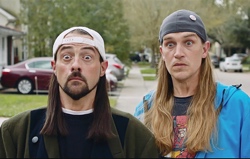
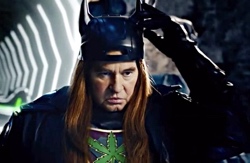
As funny and fresh as the spiritual prequel, Jay and Silent Bob Strike Back, was back in 2001, Smith ably mocks the current trends of Hollywood while defiantly taking part in them; having grown much older and forced to face life, Reboot finds a much older Jay (Jason Mewes) and Silent Bob (Smith) still hanging out in front of the Quick Stop and, even among them, it’s obvious the man-child bit is getting a bit tiresome.

While retracing the steps of Strike Back by having the duo shut down a reboot of the Bluntman and Chronic franchise, Smith throws a spanner in the works by introducing Jay’s daughter, Milly (Harley Quinn Smith, Holidays). As foul-mouthed as her dad, she and a few troubled friends tag along to California to Chronic-Con, with various pitfalls along the way, such as vengeful Uber drivers, the Ku Klux Klan and the American legal system.

Mewes carries most of the film on his back, delivering a performance that delicately teeters from pornographically hilarious to philosophically heartfelt. And I know that people like to give Smith shit for casting his own daughter, but as a proud father, it’s the same thing that any of us do if we had the capabilities and, to be honest, she not that bad as Jay’s child.

Of course, the fan-friendly film ties into a world of meta-criticism as Smith also stars as himself, jorts and all, poking fun at his persona, as well as the View Askewniverse he created and, thankfully, never forgotten about. It allows him — and me, too, honestly — a chance to look back in absolute appreciation while acknowledging the fact that sometimes we all have to grow up or die trying.  —Louis Fowler

Get it at Amazon.

Random Genre & Cult Movie Reviews