
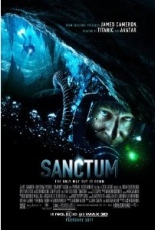
 When a thriller set beneath Papua New Guinea name-checks National Geographic magazine not once, but twice, it’s safe to say the focus might be on pretty pictures than pulse-quickening. Such it is with Sanctum, an Australian film to which James Cameron has attached his name as executive producer, because the guy gets erect for projects dealing with underwater exploration.
But don’t expect The Abyss. Fantastic Four‘s Ioan Gruffudd plays a billionaire financing a cave-diving scubafest that takes expert Frank (Richard Roxburgh) and his crew through tight squeezes as they venture through heretofore unexplored territory. Disaster strikes when a cyclone up top floods the caverns.
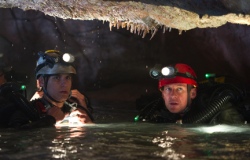 From there, it’s a swim for survival, with nature providing just as much conflict as Frank’s whiny, put-upon son (Rhys Wakefield). Any guess as to whether he and Pop will work things out by the end? Originality is not Sanctum‘s strong suit. I’m not sure it has one, but if it does, it’s in making viewers queasy with claustrophobia. (That could be because I was weak from hunger.)
Bad dialogue clashes with bad acting from all involved except Roxburgh. Gruffudd overacts to the point of being a cartoon (can we call a ban on all Apocalypse Now references in helicopter scenes from here on out?) and Alice Parkinson, as his girlfriend, reads her lines as if she’s expecting to be dubbed. And sorry, Jim, but the 3-D isn’t All That. Sanctum may not stink, but it sinks. —Rod Lott
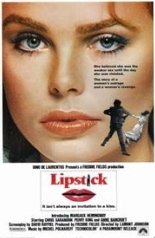
 Tragically, however, Sarandon is in the same building as the shoot and decides to attack Margaux’s adolescent sister (her real-life sibling, Mariel). Knowing the law isn’t on her side, Margaux decides to grab a shotgun and ensure Sarandon never hurts anyone else ever again (by shooting him in the balls).

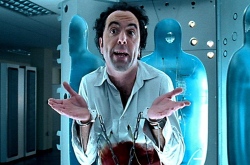 But this is not the Jekyll/Hyde tale you’ve seen dozens of times before, unless there’s one I don’t know about where Hyde kills a lion, tosses the supposed king of the jungle onto the van of his would-be captors, and then sings a spirited round of the “The Lion Sleeps Tonight” while standing atop the zoo’s caged den. Not a one of its six hours is a repeat of any before it.
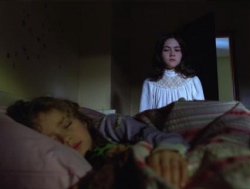 Esther’s warming-up period includes watching John bend Kate over the kitchen counter. Kate tries to explain: “They want to show that love, they want to express it.” Replies Esther, “I know — they fuck.” (Art Linkletter, you were so correct!) Before long, the girl is breaking legs, killing nuns, destroying marriages, setting fires, playing the piano even though she said she couldn’t — is there no end to her reign of terror?