
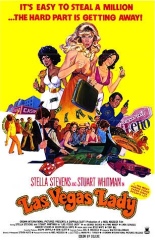
 Las Vegas Lady begins, appropriately enough, in a theme park and wax museum. But it’s not as much fun as either. I’m going to dish out blame to a mood-setting (read: mood-destroying) country-rock theme song that’s worse than any turd ever dumped onto drive-in screens by Crown International Pictures.
Said song is about Lucky, played by government-certified MILF Stella Stevens. As the tune goes, “She’s a winner and a sinner,” and the plot is only slightly more complex. In the opening moments, a shadowy figure in a cowboy hat ropes her into a job of robbing a Vegas casino of — pinky toward mouth, Dr. Evil — half a million dollars! The place deserves to lose it, because the unsmiling owner (George DiCenzo, Helter Skelter) is a real douche.
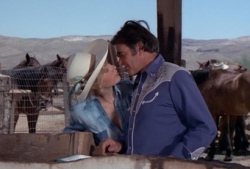 It’s a not-so-ritzy joint where the entertainment isn’t Goth magicians, killer tigers or stick-up-the-ass Billboard divas, but a chintzy circus act starring three busty trapeze artists, one of whom is sick of all the flying around. Lucky corrals her (Linda Scruggs) and a token black woman (Lynne Moody, Scream Blacula Scream) to aid her in the gig, along with Lucky’s fuck buddy (Stuart Whitman), who works security there and won’t stop asking her hand in marriage, even though she’s hot and he’s … well, like a beer gut in unkempt human form.
Ocean’s Eleven this is not, as the heist is as low-tech as the casino, which may as well have wood paneling. It’s so bottom-barrel by today’s standards that you can smell the Pall Mall through the screen. The biggest element into pulling the job off are Stevens’ pendulous breasts, which distract WKRP‘s Frank Bonner, forever endanger the PG rating, and mitigate that the big twist is obvious from the first scene. —Rod Lott

 The reveal of the killer proves to be anticlimactic, but then the film makes up for it by throwing a huge, steel-plated monkey wrench into the plot that really shakes things up – something I would never expect. The last act isn’t as good as the setup since the focus shifts from suspenseful to spiritual, but Chen Kuo Fu’s film as a whole is extremely well-crafted and anchored by two solid leads. —Rod Lott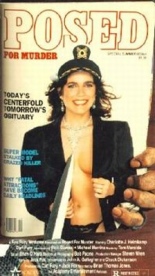
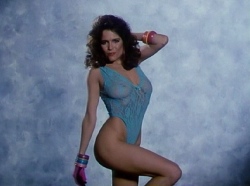 Charlotte Helmkamp (Miss December 1982) is clearly cast against type as Laura, a hot brunette with a bangin’ body whose photos in the low-rent Thrill have paid the bills, but who longs for the kind of respect that’s synonymous with being a terrible actress in low-budget horror films. While she pursues her dream in-between workouts and photo shoots, she barely has the time to notice that all of the people around her are turning up kinda dead.
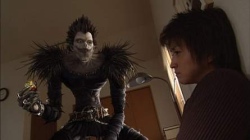 After the police get nowhere — and lose a lot of their own men in the process — they lean on the candy-addicted, hermit/genius known only as L (Ken’ichi Matsuyama of
 That said, I am hesitant to rank Birdemic among such truly classic “bad” movies as