Thanks to the talents of the filmmakers involved (especially screenwriter Nicholas Meyer, who would go on to make both Time After Time and Star Trek II: The Wrath of Khan) Invasion of the Bee Girls is a far better movie than any movie called Invasion of the Bee Girls has any right to be.
So much so that there’s a tendency among critics to describe it as a satire in order to justify the fact that they’re recommending a movie called Invasion of the Bee Girls, when the reality is the film mostly plays its exploitative concept completely straight, with few overt attempts at social commentary.
While I admit it is easy to interpret a film in which a group of sexually alluring women are compelled to engage in a mating ritual that causes their male partners to suffer fatal heart attacks as a sly commentary on the then-growing women’s liberation movement, it actually takes quite a bit of mental trickery to justify that interpretation based solely on the movie’s content. Tonally, Bee Girls never feels tongue-in-cheek, and if it were supposed to, then the attempted rape scene in its middle is more than simply gratuitous, but completely inappropriate as well.
The reality is that Invasion of the Bee Girls is simply a very well-executed version of a kind of film that traditionally sucks, which makes it less a commentary on its own subgenre than the standard by which that subgenre should be judged. Plus, it has tons of nudity. —Allan Mott
Being someone who hasn’t played video games regularly since the heyday of the Atari 2600, I have zero to little knowledge of the Tekken franchise. That statement still holds true after taking in the animated feature it has spurred, Tekken: Blood Vengeance 3D. I’m guessing the word “Tekken” must mean “boredom” in at least one of the Asian languages, because that’s the best description for this sorry excuse for entertainment.
I saw neither blood nor vengeance. I did see some leather-clad babe on a motorcycle trading sore words with another improbably proportioned woman in a near-kimono. There was also a schoolgirl who rode a panda to class, only to find herself competing with a fellow co-ed — the one garishly dressed in shades of purple, up to the added colors in her albino-white hair — for the affections of a guy who has an ongoing hobby of diving off rooftops in a bid for suicide.
In other words, TBV3D — as its fan base would call it, if the film were good enough to merit one — is less a futuristic fighting action piece and more just a piece. Of poop, that is. I suppose that’s okay if you’re expecting a giggly rom-com set in the halls of a learning institution. But then it should be titled Tekken: Giggle School 3D, no?
Tekken-ites seated around me in the theater sure enjoyed it, laughing at every gag, but those came across as in-jokes to this newbie viewer, because the movie expends no effort to set up any of the characters and their relationships to one another. Just what the hell was going on in this movie? My precious time being wasted, that’s what. —Rod Lott
I, Robot: Me, unimpressed. You, better off doing something else.
In a very loose adaptation of Issac Asimov’s classic book, I, Robot imagines a futuristic world 30 years from now, where friendly, eager-to-please robots are members of every household; where one miswired robot is suspected of murder; and where an entire robot revolution can be squashed by a wisecracking, sweet potato pie-eating cop in a skullcap and Converse sneakers.
That would be Will Smith, as Det. Spooner (a character not in the book, fork you very much), a homicide cop investigating the apparent suicide of a prominent robot inventor at the office of U.S. Robotics. All signs point to a new-model robot with the high-tech name of Sonny, although no robot has ever committed a crime before, being programmed with three laws which state, in essence, that no robot may ever harm a human; that a robot must obey human orders, as long as it doesn’t harm humans; and a robot must protect its own existence, also as long as it doesn’t harm humans. (These rules, unfortunately, do not extend to the audience.)
I, Robot doesn’t have a bad premise, just bad execution. My main problem with this movie lies with a miscast Smith. Continuously walking with a rap-video swagger, he has two modes of acting, each inappropriate: In normal situations, he’s over-the-top and shouting, while in times of life-threatening danger, he’s suddenly under the spotlight at Catch a Rising Star, lobbing leftovers from his Men in Black II quipbook. These ineffectual attempts at comedy include such one-liners as “Aw, hell, no!,” “Get off my car!” and — well, this is new — “Hold my pie!”
But he’s not the only actor to blame. As robot psychologist Dr. Susan Calvin, model-turned-actress (in theory, at least) Bridget Moynahan is quite robotic herself, and looks to be on the verge of tears with every line reading. The best performances come from the robots, and they’re computer-generated. In fact, there are times in this movie where everything onscreen is computer-generated, turning I, Robot into, quite literally, a cartoon.
Gifted director Alex Proyas (Dark City, The Crow) doesn’t help matters, forever swirling his camera as if it were a gyroscope, killing all sense of perspective in the action scenes and nearly requiring a dose or two of Dramamine. All he’s done here is created yet another megaexpensive sci-fi film with big, dumb moments out of place for the antiseptic tone he initially sets. I can see the script meetings now: “And the explosion will hurl Will out of the house, only he won’t get hurt because he’ll use a door like a surfboard and land safely in the pond outside! And he’ll do this while saving a kitty!” In keeping with Hollywood blockbuster mentality, all feats of derring-do are filmed in slow motion, all plot points are telegraphed far in advance, and all people unloading shotguns do so with lips pursed in a scowl. —Rod Lott
As fun as Marvel’s big-screen Thor is, you can always rely on The Asylum to make a movie that’s more fun, even if only in terms of sheer cinematic insanity. For a few years now, these straight-to-video kingpins have been churning out “mockbusters,” suspiciously similar, low-budget rip-offs (for lack of a better word) of current blockbuster theatrical releases. Did you like Transformers? You’ll love Transmorphers! Did Paranormal Activity give you the shivers? Paranormal Entity will make you crap your pants!
Almighty Thor, a mind-numbingly loco version of the classic Norse myths, features a pale, menacing Richard Grieco as Loki, and in the world’s biggest middle finger to classically trained actors like Anthony Hopkins, former wrestler Kevin Nash as Odin. The Thor depicted here is far from Chris Hemsworth’s muscle-bound hero; instead he’s a whiny, petulant, wannabe warrior prone to crying jags. Lots of them. Every time anything goes the slightest bit wrong, Thor starts to weep and emote and hang his head low, usually forcing the bo staff-flinging Jarnsaxa (Patricia Velasquez) to take up the slack and dispatch of whatever CGI baddies come their way.
Loki escapes from Hell with a handful of dragon dogs and heads up to Asgard, which, awesomely enough, looks a lot like the lush forests of Southern California. He wants the Hammer of Invincibility — basically a sharp rock tied to a stick — so he can rule the world, or at least a cost-effective portion of it. Odin gets his ass slayed, and the Hammer is sent to another dimension. Thor must man up and find the Hammer in modern-day California alleyways. He’s taught how to use a Uzi and … well, that’s something I’ve always wanted to see my entire life. God bless you, The Asylum. Monsters attack the city, Thor forges a new Hammer, and Grieco gets to eat for another week.
Cody Deal manages to be the greatest and worst Thor of all-time, giving such an emotionally chaotic performance that it should be studied by drama students for years. Then again, you need such a stirring performance for a movie that plays like a pre-teen’s creative writing assignment, a piece of Thor fan fiction that is so wildly creative and tonally manic that, if given to a school counselor to read, the kid surely would be prescribed some sort of ADHD drug.
Oh, yeah: It’s directed by Christopher Douglas-Olen Ray, son of legendary B-movie director Fred Olen Ray. There’s gotta be something in the genes, because dude’s every bit the mad genius his dad is. Maybe together they can make their own mockbuster superhero crossover? I look forward to seeing Metal-Head, Gamma-Beast, Sgt. Patriot and the Almighty Thor coming together in Vindicator Force 3000. Don’t let me down, The Asylum! —Louis Fowler
Better than most of Bela Lugosi’s Poverty Row efforts — but still just average — is The Corpse Vanishes, in which he plays a mad doctor who sends poisoned orchids to brides so that they’ll expire on the altar.
He then steals their bodies — hence the title — so that he can extract their youth and inject it into his aging wife, who sleeps in a coffin. A nosy female reporter figures it all out. A cop shoots a midget. —Rod Lott


 Thanks to the talents of the filmmakers involved (especially screenwriter Nicholas Meyer, who would go on to make both Time After Time and Star Trek II: The Wrath of Khan) Invasion of the Bee Girls is a far better movie than any movie called Invasion of the Bee Girls has any right to be.
  While I admit it is easy to interpret a film in which a group of sexually alluring women are compelled to engage in a mating ritual that causes their male partners to suffer fatal heart attacks as a sly commentary on the then-growing women’s liberation movement, it actually takes quite a bit of mental trickery to justify that interpretation based solely on the movie’s content. Tonally, Bee Girls never feels tongue-in-cheek, and if it were supposed to, then the attempted rape scene in its middle is more than simply gratuitous, but completely inappropriate as well.
 In other words, TBV3D — as its fan base would call it, if the film were good enough to merit one — is less a futuristic fighting action piece and more just a piece. Of poop, that is. I suppose that’s okay if you’re expecting a giggly rom-com set in the halls of a learning institution. But then it should be titled Tekken: Giggle School 3D, no?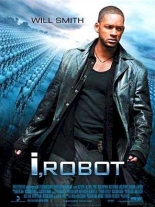
 I, Robot doesn’t have a bad premise, just bad execution. My main problem with this movie lies with a miscast Smith. Continuously walking with a rap-video swagger, he has two modes of acting, each inappropriate: In normal situations, he’s over-the-top and shouting, while in times of life-threatening danger, he’s suddenly under the spotlight at Catch a Rising Star, lobbing leftovers from his
 Loki escapes from Hell with a handful of dragon dogs and heads up to Asgard, which, awesomely enough, looks a lot like the lush forests of Southern California. He wants the Hammer of Invincibility — basically a sharp rock tied to a stick — so he can rule the world, or at least a cost-effective portion of it. Odin gets his ass slayed, and the Hammer is sent to another dimension. Thor must man up and find the Hammer in modern-day California alleyways. He’s taught how to use a Uzi and … well, that’s something I’ve always wanted to see my entire life. God bless you, The Asylum. Monsters attack the city, Thor forges a new Hammer, and Grieco gets to eat for another week.