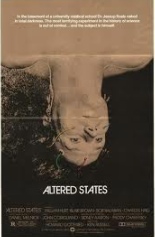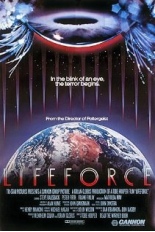
 Ah, the 1980s. It was a simpler time: a time of magic, miracles, demons and gods. A time when a cult horror director could commandeer a $25 million budget to construct an amalgamation of thoughtful British science-fiction and American horror. A time when Steve Railsback was considered a viable leading man. I speak of the infamous flop Lifeforce.
Loosely based on Colin Wilson’s novel The Space Vampires — fairly on-the-nose for a title — The Texas Chain Saw Massacre director Tobe Hooper and Alien screenwriter Dan O’Bannon cobbled together one of the cinema’s most bizarre achievements. Ostensibly a tale of intergalactic vampires discovered in Halley’s Comet (embodied by Mathilda May, wandering nude through her scenes and helping a few teenagers achieve maturity much faster), Lifeforce switches tones at will, transforming from space opera to vampire flick to chase film, then going absolutely bugfuck to become a zombie apocalypse. At one point, May replicates herself through blood streaming from the faces of nearby victims, and somehow, it just makes sense.
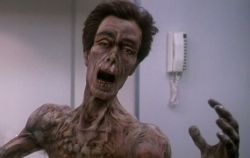 Cannon Films clearly didn’t know what it had signed on for. Lifeforce flopped, with reviews generally negative or worse (although Gene Siskel liked it). But aided through hindsight and extended editions, Lifeforce is a geek classic. Certainly no one involved phoned it in; Hooper’s direction (never better) captures the style and dry wit of the classic Hammer Quatermass films (well worth checking out), the score by Henry Mancini (!) is appropriately quirky and bombastic, and John Dykstra’s (Star Wars) special effects are superb — the desiccated zombie design is wonderful, and the alien spacecraft is a thing of beauty. No CGI here, just craft and skill.
And the cast! Railsback is fittingly hammy as the token American hero, and the rest of the talent is a who’s who of classic British faces, including Patrick Stewart, who may well be a Highlander considering he hasn’t aged a day in almost three decades. Lifeforce ain’t particularly scary, although it has a share of “Boo!” moments. But when you add up its elements — vampires, zombies, mad scientists, astronauts, sex, spaceships, psychics, aliens, Lovecraftian undertones — you have one utterly sui generis film. —Corey Redekop
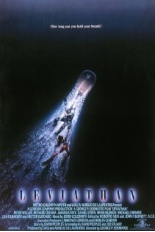
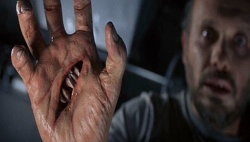 Leviathan does have some significant, although superficial-to-the-story differences from Alien, however. H.R. Giger famously designed the creature in Alien; Leviathan’s beast was created by the great Stan Winston, who unfortunately wasn’t doing his best work here. The early stages of the monster look cool, like a killer eel or something, but as it matures, it turns into an asymmetrical version of the Creature from the Black Lagoon-type character from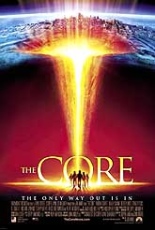
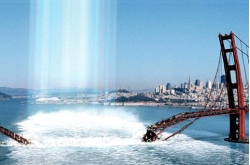 For a while anyway, The Core plays it straight enough that you just buy into it. It’s not until the mission is well under way that said suspension starts falling apart, probably because the movie is just too darned long. And the mission — its
 Then, immediately following, four others show up and weasel their way into the compound. It all serves to piss off Capt. John, who promises to settle arguments with the trusty gun hanging in a holster from his tan jumpsuit. It’s not long before the group is bickering and at each other’s throats.