True story: I first saw Hardware alone on a grainy VHS rental, digging its lo-fi vibe, while my sister caught it at a campus showing. Afterward, she labeled it the worst film she had ever seen, and to this day, she brings up my admiration as proof of my stupidity. I then remind her of her recommendation of Martin Lawrence’s Nothing to Lose, and we reach détente. Thing is, Hardware is seemingly designed solely for genre snobs who can glimpse genuine artistry poking out from between the seams. Part spaghetti Western, part Terminator and part slasher, if you dig the style, you’ll likely groove to the nihilistic audacity. If not, you’ll find it a heap of gory nonsense.
Set in a dystopia of sand and smog, and narrated by a DJ (Iggy Pop!) who crows, “There’s no fuckin’ good news!” the film follows soldier Moses (Dylan McDermott, far from TV’s The Practice) delivering a heap of junk to his sculptor girlfriend, Jill (Stacey Travis). Turns out, said junk is really the remains of a M.A.R.K.-13, a military cyborg designed to reassemble itself from whatever is nearby. Cue manic metallic menace and hearty spurts of blood.
Not much for story, but director Richard Stanley keeps things moving through integrity of vision and an absolutely gorgeous giallo color scheme, layering it with a subtext of man’s symbiotic relationship with machines, first glimpsed through Moses’ artificial hand. Invaluable character actor William Hootkins gets to portray one of filmdom’s most depraved perverts, and Simon Boswell’s throbbing, Western-tinged score will earworm its way into your skull.
It isn’t perfect; the script is undercooked, and the tiny budget betrays itself through clumsy action and ersatz effects. But Hardware, love it or hate it, is undeniably a pure product of Stanley’s mind, and in an era of generic Platinum Dunes horrors, it’s refreshing to see an unwillingness to compromise, even if the result is deeply flawed. Put it this way: If you can find the value of a movie where the hero strides past a baby tied to a dead woman’s waist without taking a second glance, you’ll appreciate Hardware; if not, I’m sure Blockbuster has a copy of Big Momma’s House. —Corey Redekop
Here’s what Virus has going for it: an all-too-rare lead performance by the undervalued Jamie Lee Curtis as the Sigourney Weaver of a crew of hard-nosed sailors trapped on an extraterrestrial-infested Rusian ship; a nifty-neato geek monster with some fairly cool animatronics and gore; a lesser (but at least not the least) Baldwin brother; and Donald Sutherland in bug-eyed, ham-sandwich mode.
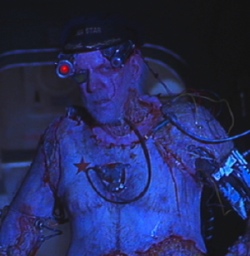
Here’s what Virus doesn’t have: genuine scares, anything approaching originality, and a director who can do more than aim the camera at the right spot. But when I’m presented with a monster comprised of electrical impulses that replicates itself by combining spare human body parts with mutated versions of the spiderbots that menaced Tom Selleck in Runaway, resulting in awesomely goofy Borg/Cenobite hybrids, I’m willing to forgive a lot.
A generic Alien on a boat, there’s little to actually recommend, and nothing aside from the efforts of some talented effects technicians stands out. But for me, Virus is comfort food — an unchallenging, unchanging, unhealthy snack — one of those films that somehow fills a particular hole in my soul. A greasy Hawaiian pizza of a movie.
Bonus marks for allowing Sutherland to perform his last scenes as a manic, organs-exposed Terminator. Even in a career as varied and wide-ranging as his, that must be a first. BTW: I hereby claim the term “sigourney,” meaning any female lead in a genre flick comprised otherwise almost entirely by male character actors wherein all men will almost certainly be deceased by film’s end, as in, “Jamie Lee Curtis pulls sigourney duty.” —Corey Redekop
As the first and best of the three official adaptations of H.G. Wells’ 1896 novel The Island of Dr. Moreau, Erle C. Kenton’s Island of Lost Souls brings the horror elements of the science-fiction tale to the forefront. The film remains chilling even today, despite having the most primitive of technology.
Pomade-haired shipwreck victim Edward (Richard Arlen) is brought to the title tropical site where the arrogant, power-mad scientist Dr. Moreau (Charles Laughton, looking a little like Fat Hitler) rules over his House of Pain, a laboratory where he creates ungodly mutations of half-men/half-beasts. Some resemble wolves, simians, even owls; all cower at the crack of their maker’s whip.
A victim of censorship, Island contains some crazy-ass ideas it has to dance around rather than discuss outright — namely, Moreau wanting to unleash his panther woman, Lota (Kathleen Burke), on his good-looking guest, Edward, to see what would happen if he would put his pee-pee into her hoohah until he had a big tickle. (Has the porn industry not leapt upon this idea yet?)
With expansive sets and excellent make-up effects, Island is a feast for the eyes, even in black and white. It’s also startlingly as relevant, with the particular issue of evolution still ridiculously as hot-button as ever. Perhaps one day, we as a society will be able to acknowledge the possibility of a higher power and let man fuck leopard whores freely and without judgment. One can hope. —Rod Lott
I’m as surprised as anyone to learn that there are levels of “quality” to the movies Syfy plays, but compared to the kind of stuff Syfy usually presents, Kraken: Tentacles of the Deep is Casablanca. Make no mistake: It’s B-movie trash with a CGI squid that Nintendo would be ashamed to put in a DS game, but it does have a couple of things going for it.
First of all, it’s not a horror movie. The title wants you to believe differently, but it’s actually an adventure film with Victoria Pratt and a couple of interns looking for sunken treasure that’s guarded by a mythological sea monster. Oh crap. I hope I didn’t raise anyone’s expectations there. This isn’t even Tomb Raider quality, but I was just so happy not to spend two hours watching CGI tentacles take down drunken teenagers, that the ridiculous treasure-hunting plot felt original.
Something else it has going for it are the leads. Maybe I’m just still in love with her from Cleopatra 2525, but I find Victoria Pratt extremely watchable and the best part of any movie she’s in. And yeah, Charlie O’Connell constantly reminds me that he’s not Jerry, but he’s still plenty charming.
That’s about it for the good stuff. The rich, Greek villain is a mustache-twirling cartoon, and there are all kinds of ridiculous holes in the plot. It’s just that when you’re expecting a big plate of chum, even Long John Silver’s tastes pretty good. —Michael May

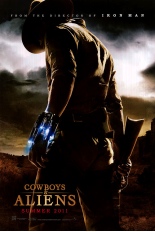
 Cowboy (Daniel Craig). Cowboys. Cowboys. Pow-pow-pow! Cowboys. Hot Indian (Olivia Wilde). Cowboys. Cowboy (Harrison Ford). Cowboys. Cowboys. Aliens! Pow-pow-pow! Zap-zap-zap! Aliens! Zap-zap-zap! Cowboys. Cowboys. Cowboys. Aliens! Pow-pow-pow! Zap-zap-zap!
  Cowboys. Cowboys. Aliens. Cowboys. Indians. Cowboys. Cowboys. Dynamite. Kaboom! Aliens! Zap-zap-zap! Zap-zap-zap! Aliens! Dead horses. Zap-zap-zap! Cowboys. Aliens! Zap-zap-zap! Zap-zap-zap! Pow! Cowboys. Cowboys. Indians. Aliens! Pow-pow-pow! Cowboys. Aliens! Aliens! Holy shit, aliens! Zap-zap-zap! Zap-zap-zap! Zap-zap-zap! Zap-zap-zap! Blast off! KA-BLOOEY!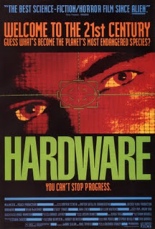
 Not much for story, but director Richard Stanley keeps things moving through integrity of vision and an absolutely gorgeous giallo color scheme, layering it with a subtext of man’s symbiotic relationship with machines, first glimpsed through Moses’ artificial hand. Invaluable character actor William Hootkins gets to portray one of filmdom’s most depraved perverts, and Simon Boswell’s throbbing, Western-tinged score will earworm its way into your skull.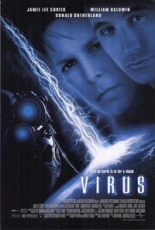
 A generic
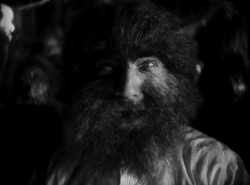 A victim of censorship, Island contains some crazy-ass ideas it has to dance around rather than discuss outright — namely, Moreau wanting to unleash his panther woman, Lota (Kathleen Burke), on his good-looking guest, Edward, to see what would happen if he would put his pee-pee into her hoohah until he had a big tickle. (Has the porn industry not leapt upon this idea yet?)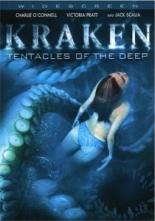
 Something else it has going for it are the leads. Maybe I’m just still in love with her from