
Category Archives: Documentary

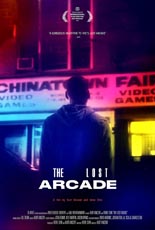
The Lost Arcade (2015)

lostarcadeThrough taking a camera into Chinatown Fair during the famous New York City arcade’s final days in 2011, freshman filmmaker Kurt Vincent found the story he wanted, and also a better one he had not foreseen.

The expected focus of The Lost Arcade would be to chronicle the closing of what was an institution for the Pac-Man generation — those boys and (a scant few) girls for whom Chinatown Fair represented more than a game’s three coin-op lives: an escape from their real ones, 25 cents at a time.
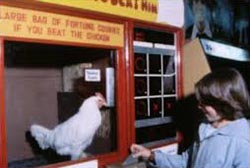
lostarcade1And yes, the documentary is that, but what also emerges from that construct is what makes the movie special: a story of the fabled American dream made reality for Sam Palmer. A Pakistani gentleman, Palmer was not the founding owner of the place, but he was its heart. In the days of gorillas hurling barrels at chivalrous plumbers, of defending Earth from symmetric lines of invading aliens and, in the arcade’s rare non-video attraction, of a live chicken that danced and played tic-tac-toe, the kindly Palmer trusted the young men whom no one else would and created an all-inclusive community in our nation’s most iconic melting pot — a task as daunting as conquering Dragon’s Lair on a single quarter.

Talented poultry aside, there appears to be nothing special about the arcade at face value. In fact, it looks too cramped for the claustrophobe and too grimy for the germaphobe, but the patrons don’t seem to care — hell, they like it the way it is. While you and I may have no familiarity with the Fair — and, therefore, no nostalgia for it — Vincent finds the angle that makes the subject remarkably relevant for us … and unexpectedly moving. The Lost Arcade is a quiet find. —Rod Lott

Get it at arcademovie.com.

Just Desserts: The Making of Creepshow (2007)

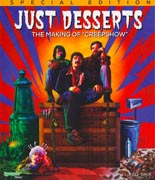
justdessertsSo deep is my love for 1982’s Creepshow that, although I already had paid $20 for a brand-new VHS of it back in the day, I happily parted with a similar amount once the George A. Romero film debuted on DVD. Only one problem existed with that disc, as well as the eventual Blu-ray: It was bare-bones, featuring a trailer and nothing else. (Chapter selections and interactive menus do not count, Warner Bros.)

In the category of Better Late Than Never comes Michael Felsher’s Just Desserts: The Making of Creepshow, a feature-length documentary previously available only in the UK. Remarkably, it’s worth the decadelong wait. Even if Stephen King declined to participate, Romero is all aboard, as are FX wizard Tom Savini, actress Adrienne Barbeau, actor Tom Atkins, comic artist Bernie Wrightson — hell, even that noted ray of sunshine Ed Harris! (And yes, thank the Lord, he does discuss his improvised disco-dancing skills.)

justdesserts1No stranger to the world of documentaries for genre pictures, Red Shirt Pictures head Felsher doesn’t waste time with reiterating EC Comics history lessons, because, really, if you do not already possess at least a primer-level understanding of the once-controversial Tales from the Crypt and its companion titles, would Just Desserts even be up your alley? Topics of relevant discussion instead include Romero’s approach to coaxing King in his first acting role, how they faked Ted Danson’s drowning and the in-camera methods used to give Creepshow its unique, comic-book look. Best of all, however, are the anecdotes — and they number many — surrounding the challenges of cockroach wrangling … and the unavoidable mishaps.

The highest praise one can give such a thorough behind-the-scenes undertaking is that he or she could have sat through another half-hour or more. With Just Desserts, the Creepshow superfan in me says, “Duh, you lunkhead.” —Rod Lott

Get it at Amazon.

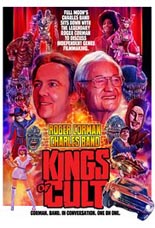
Kings of Cult (2015)

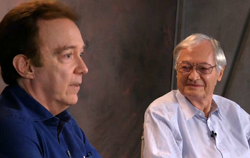
kingsofcultA missed opportunity all around, Kings of Cult is a meeting of the indie-cinema minds Roger Corman and Charles Band. Strange pairing, so why Band? Because his company, Full Moon Features, is behind this shoddy documentary, that’s why.

For about 52 minutes, the two men sit in front of a backdrop seemingly pilfered from the J.C. Penney Portrait Studio and shoot the shit about their long and storied careers, their financial troubles starting out, studio interference, the changing state of the motion picture industry, milking the public through merchandising and the origin of Ghoulies’ infamous toilet-bowl poster art. Okay, so maybe it’s just Band who talks about those last two points.

kingsofcult1By now, B-movie fans are familiar with both men to a T, so they will know in advance that Band tends to dominate the conversation, despite being the one in the room who doesn’t have an Academy Award for lifetime achievement. Perhaps Corman’s age has something to do with his remarks being brisk and to-the-point, whereas Band is long-winded, especially for someone whose movies nowadays barely crack an hour. He also somehow gets away with not answering the unseen moderator’s softball question on their all-time favorite film: For Corman, it’s Sergei Eisenstein’s Battleship Potemkin; for Band, it’s … well, let him ramble for several minutes about a project he hasn’t even made yet, because a plug is a plug, kids.

There’s just not enough meat to Kings of Cult to justify it: no occasion, no structure, no clips! No, thanks. —Rod Lott

Get it at Amazon.

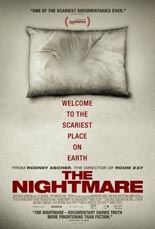
The Nightmare (2015)

nightmaredocSkepticism prevented me from seeing how Room 237 director Rodney Ascher could make a compelling feature documentary on the subject of sleep paralysis. The Nightmare is not only a mind-grabber, but a sphincter-clencher. Even those viewers who do not struggle with sleep paralysis — read: about 93 percent of us — should find it unsettling all the same. After all, bad dreams are bad dreams: relatable, no matter what might scare you.

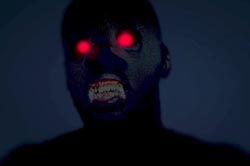
Yet sleep paralysis is more than mere bad dream. It’s a condition in which the sleeper hallucinates a terrifying scenario, yet feel physically unable to move a muscle in reaction. In interviewing eight people spread about all jagged corners of our nation, Ascher finds startling commonalities in their stories, which Nightmare re-enacts with disturbing precision and visuals simultaneously simple and creepy as hell: shadows, static, glowing red eyes. (Hello, darkness, my old friend. I’ve come to talk to you again, about why on earth you’re doing this to me!)

nightmaredoc1I should have known better; the guy made an eerie, hair-raising short about the Screen Gems logo that, after three viewings, still gives me the shivers. The Nightmare scares while serving the interest of science, and raises an intriguing theory about the correlation of events reported by sleep paralysis sufferers and by people claiming to be alien abductee; in other words, the latter may “just” be the former and don’t know it.

Anyway, good night! Sleep tight! Don’t let your anus be probed! —Rod Lott

Get it at Amazon.

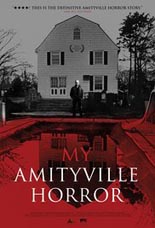
My Amityville Horror (2012)

myamityvilleFact or fiction or somewhere in between, the box-office smash The Amityville Horror and the Jay Anson best-seller from which it came are responsible for our nation’s collective consciousness surrounding the multiple murders in one Long Island home on Nov. 13, 1974, and the lingering phenomena reported to haunt it ever since. Among that “ever since” phase, the most famous is the focus of the 1979 movie: the short-term residence in 1975 of George and Kathy Lutz, and their three children.

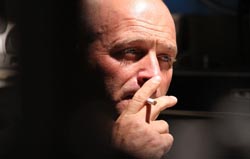
In the documentary My Amityville Horror, eldest child Daniel Lutz recounts — to the sympathetic ears of psychologist Susan Bartell, to the camera of newbie filmmaker Eric Walter and to the curiosity of you, dear viewer — what the family went through in their 28 days at 112 Ocean Ave. Now a middle-aged father himself and a near-doppelgänger for actor Michael Chiklis (TV’s The Shield), Lutz is only just beginning to articulate what he still doesn’t understand, even with 35 years of hindsight.

myamityville1Not everything that comes from his mouth can be filed under “complete sense,” but one thing is crystal-clear: He believes and buys in to his mother and stepfather’s story that ignited a cultural phenomenon for nearly four decades now (and more recently debunked as fraud in the name of greed). He also drops bombshells not included in Anson’s 1977 quasi-novel or its two screen adaptations (the blockbuster original or the less-successful 2005 remake): that Daniel found himself possessed, that he was physically abused by a priest, that he witnessed George demonstrating powers of telekinesis.

Experts hailing from both sides of the issue — hoax and truth — contribute their opinions as well, including parapsychologist Lorraine Warren (played by Vera Farmiga in The Conjuring franchise with more credibility than is deserved), who is interviewed while her identical twin roosters cock-a-doodle-doo in the background. Ultimately, My Amityville Horror offers no definitive answers — hell, how could it? — but the questions it raises, both old and new, undeniably hold interest. Draw your own conclusions; you’re apt to loan Walter’s documentary your attention regardless whether you believe a word of it or not. —Rod Lott

Get it at Amazon.