Category Archives: Intermission

Movie Freak: My Life Watching Movies

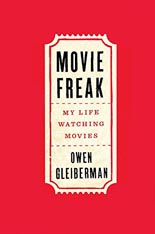
moviefreakFor whatever reason, our nation’s finest film critics have been feeling very nostalgic of late, writing books that look back on their entire careers. In 2014, Kenneth Turan gave us Not to Be Missed: Fifty-Four Favorites from a Lifetime of Film; Richard Schickel followed in 2015 with Keepers: The Greatest Films — and Personal Favorites — of a Moviegoing Lifetime; and now 2016 brings us Owen Gleiberman’s Movie Freak: My Life Watching Movies.

I don’t mean to suggest Gleiberman has latched himself onto a bandwagon like an opportunist caboose — far from it. In fact, he has surpassed those efforts of his better-known, longer-at-it peers, both of whose works I loved reading. By infusing their decades-encompassing critical acumen with the cinema-as-a-drug zeal of comedian Patton Oswalt’s Silver Screen Fiend confessional from last year, Gleiberman has given us this year’s best biography you didn’t know you wanted, auto- or otherwise.

Besides, can you imagine Schickel or Turan having the guts to go into detail about their porno turn-ons? (And would you want them to?)

Ask someone — anyone — at a party, “How did you get to be a [insert job title here]?” The answer will be boring — incredibly, mind-numbingly boring, so much that you wish you had an extra gin and tonic to minimize the suffering. One gets the sense Gleiberman knows this, too, and thus, has taken great pains to make his story compelling. Of course, it helps if you love movies — really, really, really love movies.

I do. Most of us know Gleiberman’s name from his 24-year stint at Entertainment Weekly, starting with its debut issue. I recall that very edition, feeling like I had found a kindred spirit because of his straight-A review of Men Don’t Leave, a quirky dramedy starring Jessica Lange that I adored, yet the rest of America ignored. I have been addicted to Gleiberman’s writing ever since. In Movie Freak, he tells us how he landed that “dream job,” by way of The Boston Phoenix and a good word from Pauline Kael, and how he managed to nearly fuck it up so often, for so long.

It’s a story of an affectionless father, brazen naiveté, superficial relationships with the opposite sex (particularly notable: a six-month cocaine-and-S&M bender) and even more superficial relationships with his fellow film critics. Cursed with a potent mix of insecurity and jealousy, they can be raging bullies, as his dealings with Kael and David Edelstein attest. His description of Rex Reed as “Blanche DuBois-with-a-hemorrhoid” is as dead-on as his perception of Roger Ebert as “far too perceptive a man to give a tongue kiss to as many mediocre movies as he did.”

It’s also a tale of clubbing with Oliver Stone; drinking with Russell Crowe; watching Sid & Nancy director Alex Cox eat a booger; hitting on Gillian Flynn, pre-Gone Girl; and pissing off Denis Leary and Robert Duvall.
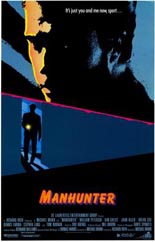
manhunterAs gossipy as all that sounds, Movie Freak forgets not the cinema. In reconnecting with his past, Gleiberman revisits and reconsiders his favorites since the 1970s; most critics would err on the side of snobbery rather than champion something as genre-soaked as Michael Mann’s Manhunter or as comic-violent as Stone’s Natural Born Killers, yet the author is as ballsy to go out on that professional limb as he is about rendering his personal life transparent.

Reading these revitalized quasi-reviews is a kick. Whether one agrees with his opinions or not, these pages electrify. His passion for these and other films makes you want watch them again or, if you’ve never seen them, elevates your curiosity into urgency. That’s the joy of absorbing solid film criticism … so it’s nice to have the rarity of being able to pay him back. Allow me to explain: Regarding a passage on the increasing surplus of highly specialized music documentaries at film festivals, he writes, “I fully expect to see entire films devoted to the life and times of Clarence Clemons, the poetic genius of Bernie Taupin, and the sonic miracle of the Moog synthesizer.” Regarding the latter, Mr. Gleiberman, allow me to point you to 2004’s Moog! (Its double-disc soundtrack album is awesome, natch.) You are welcome.

If there are negatives to Gleiberman tackling the long form, they are minor. Like millennials, he literally overuses “literally.” More than once, he uses “kiddie-corner” when he means “kitty-corner.” And, speaking of “kiddie,” he misidentifies the runaway-robot comedy Short Circuit as a Paramount Pictures release, whereas Tri-Star handled that one; it’s an important distinction given that the anecdote in question is about inadvertently making studio enemies by bailing on the flick’s junket before its conclusion.

I can relate. Less about junkets, however, and more about heading for the exit when a movie proves insufferable. As with our shared fondness for Men Don’t Leave, Gleiberman joins me in going against the grain — and pretty much all of civilization — in openly detesting Peter Jackson’s needlessly bloated Lord of the Rings time-wanks. Fight on, beleaguered white man! —Rod Lott
Get it at Amazon.

Jaws 2: The Making of the Hollywood Sequel

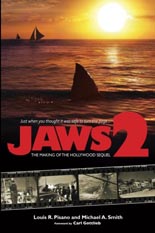
jaws2bkFervent fans of their subject, Louis R. Pisano and Michael A. Smith have joined forces to tell the story of Jaws 2: The Making of the Hollywood Sequel, published in both hardcover and paperback by BearManor Media. To be brutally honest, the tale was told much better in another BearManor release, 2009’s Just When You Thought It Was Safe: A Jaws Companion, in which author Patrick Jankiewicz covers Universal’s entire shark-flick franchise.

To Pisano and Smith’s collective credit, they have interviewed damn near everyone still alive who was involved with the inferior (yet still beloved and highly profitable) sequel. Their passion for the finished product shows. They have uncovered a wealth of storyboards and photos from the set to satisfy the most ardent of Jaws 2 admirers. They even wrangled Carl Gottlieb, co-screenwriter of the first three films, to provide the foreword.

If only their work had gone through a judicious edit, as the book is filled with inconsistencies, repeated information and unprofessional passages.

The sloppiness is subtle at first, as a mention of Steven Spielberg’s Close Encounters of the Third Kind morphs into 3rd Kind just three paragraphs later. Little things like that start popping up with greater frequency, like spawn of the Surinam toad. If it’s not awkward phrasing (“of the filming of the original film”), it may be a run-on sentence that could have been saved with a single comma: “Prior to heading to Martha’s Vineyard to shoot the cast spent countless hours every day learning to sail under the watchful eyes of Ellen Demmy.”

Instances of the authors’ “narration” (I don’t know what else to call it) struck me as especially bizarre, as they stop to address the reader in a manner that half-assumes said reader doesn’t understand how a book works, such as the concept of progressing from one chapter to the next. For example: “You will learn much more about the Florida shoot, throughout the stories of the cast and crew, later on in the book. To mention certain things here would only spoil your upcoming reading. No one likes to know what happens before they read a book or watch a movie. Read on and we promise, you won’t be disappointed.”

And yet, I was, greatly. The major behind-the-scenes events of Jaws 2’s troubled production were covered really well in Jankiewicz’s earlier text, particularly the story ideas that never came to be, the dismissal of original director John Hancock (Let’s Scare Jessica to Death), Roy Scheider’s disgust for reprising his starring role of Chief Brody, and Scheider’s fisticuffs with replacement director Jeannot Szwarc (1984’s Supergirl).

Even if I had not read the Jankiewicz book, however, I still would have to take issue with the way such stories are presented by Pisano and Smith, which is to say “twice.” So many anecdotes are repeated in full. Take, for instance, their recounting of producers Dick Zanuck and David Brown recruiting Howard Sackler for screenplay duties. First, from page 2 (with their errors intact):

“Not dissuaded, the producers contacted Howard Sackler. Sackler, a playwright whose works include The Great White Hope, winner of both the Pulitzer Prize and the Tony Award for Best Play. A friend of Browns’, as a favor Sackler had done a re-write on Benchley’s original script for Jaws and was familiar with the material. It was Sackler who suggested that the character of Quint’s hatred toward sharks stemmed from his being a survivor of the attack on, and sinking of, the U.S.S. Indianapolis towards the end of World War II. The scene where Quint recalls the event, later re-written, in part, by Gottlieb and actor Robert Shaw, remains one of the most memorable in film history. Keen on the idea, Sackler met with Zanuck and Brown and suggested, not a sequel but a prequel. What if the film detailed the mission of the U.S.S. Indianapolis …”

Now, four chapters later, from page 53:

“Before 1975, if you knew the name Howard Sackler it was because he was the author behind the 1969 Broadway play The Great White Hope, which won Sackler the Tony and New York Drama Critics Circle award as the year’s Best Play as well as the Pulitzer Prize for Drama. A friend of film producer David Brown, Sackler accepted the offer to do a re-write on Jaws author Peter Benchley’s script for the film version of his novel. Sackler’s main contribution to the story was the back story that the shark fisherman, Quint, derived his hatred for sharks from having survived the sinking of the U.S.S. Indianapolis in July of 1945. … When Brown and his producing partner, Richard Zanuck, approached Sackler about writing Jaws 2, Sackler’s first idea was to write about the Indianapolis incident.”

Similar duplication occurs with stories of other Jaws 2 contributors: Gottlieb on pages 3 and 55; Lorraine Gary and Murray Hamilton, pages 4 and 9; Jeffrey Kramer, pages 4 and 11. I stopped keeping track, but their regurgitation is inexcusable.

The authors’ coup, as it were, is in interviewing so many of the “Amity Kids,” from both the Hancock and Szwarc regimes about their recollections. Much overlap exists here, too, yet that’s somewhat expected since they’re all talking about the same topic. Still, their answers appear to have printed verbatim, and could have been trimmed for better flow. —Rod Lott

Get it at Amazon or BearManor Media.

Reading Material: Short Ends 2/7/16

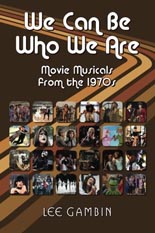
wecanbewhoweareJust a Hair shy of 800 pages, We Can Be Who We Are: Movie Musicals from the 1970s is a brick. Available in hardback and paperback, the BearManor Media release by Lee Gambin is nothing if not a giant love letter to the cinema’s arguably most experimental decade of that once-sacrosanct genre. Going year by year, Gambin dives deep into each and (one assumes) every film that either is a full-fledged musical or dependent upon music; from those rated G to those rated X, he examines them with one eye toward history, one eye toward criticism and both ears toward their tunes. All the obvious titles are here, but what makes the book special is the inclusion of the lesser-knowns and obscurities, such as Son of Dracula (with Harry Nilsson and Ringo Starr), The First Nudie Musical, White Pop Jesus and assorted nuggets from the world of prime-time TV (e.g. The Paul Lynde Halloween Special). With the occasional doozy à la “Racquel Welch,” spelling is the author’s second greatest enemy, bested only by a tendency to let his interviews read as transcripts in need of a good trimming. Then again, when someone pours as much passion onto the pages as Gambin has here, I can understand his desire to impart as much here’s-what-happened knowledge as the spine glue allows.

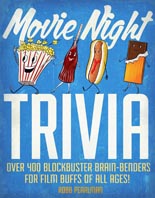
movienighttriviaAs bright and colorful as its cartoon-concessions cover, Movie Night Trivia would work as a gift to a film-loving friend, but why not you, too? Across half a dozen categories, Robb Pearlman (with true-or-false assistance from Shane Carley) has written 400 questions to test your knowledge of yesteryear’s classics, today’s blockbusters and a bunch in between. These “brain-benders” range from easy (“Name Chuck Noland’s quiet, yet faithful, friend from 2000’s Cast Away”; it’s even multiple-choice) to hard (“Name the two races that join together when The Dark Crystal is restored”) to arguably misleading/not entirely factual (“Hitting theaters between 1998’s Star Trek: Insurrection and Star Trek: Nemesis [2002], _____ is often called the best Star Trek movie ever made” — the answer is Galaxy Quest; “never made” would be playing fair). Skill level be damned, the Cider Mill Press paperback is a visual treat, with many items getting their own well-designed, full-bleed page featuring photography from the flick in question. It’d make a killer app.

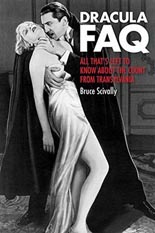
draculafaqClearly, Bruce Scivally has done his homework for Dracula FAQ: All That’s Left to Know About the Count from Transylvania. While the trade paperback touches upon the vampire’s literary roots and subsequent stage adaptations, it’s the prince of darkness’ numerous incarnations in the movies — reverent and irreverent, Universal and Hammer — that form the book’s focus. The most satisfying aspect of this is how these sections read like miniature making-of articles on the films, whether John Badham’s Dracula, Francis Ford Coppola’s Bram Stoker’s Dracula or the comedy Love at First Bite. Television runs a distant second focus, with looks at various comic books, Drac-influenced music and merchandise bringing up the rear, all illustrated with a wealth of photos and poster art. Being of the opinion that vampires don’t sparkle, I could do without the entire chapter devoted to The Twilight Saga; still, in the end, Dracula FAQ proves one of the very best entries from Backbeat Books’ ongoing FAQ line of pop-culture crash courses. Other recent titles tackle The Twilight Zone and TV finales; coming up are Rocky Horror and M*A*S*H.

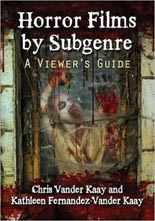
horrorsubgenreHorror Films by Subgenre: A Viewer’s Guide is a rather drab title that doesn’t exactly get the saliva flowin’. Hiding behind it, however, is a fun work of reference presented uniquely. Spouses Chris Vander Kaay and Kathleen Fernandez-Vander Kaay have chopped and divided the world of fright flicks into 75 distinct categories of That Which Scares You, whether animal attacks, environmental disasters, invisible beings, serial killers, old folks, puppets, carnivals, tools, twins — you get the idea. And if you don’t, well, therein lay the book’s purpose: introducing the reader to a very specific type of terror. Each chapter begins with a brief essay about that subgenre, followed by the meat: reviews of three or four movies that Team Vander Kaay believes are among the best representations of that subject vs. the best quality. Part of the fun of reaching each is predicting which movies they might cover; while you’re apt to guess at least one correctly, they throw in their fair share of left-field choices, too. While you could flip only to those subgenres that interest you, the McFarland & Company trade paperback is also perfectly readable as a front-to-back experience. If horror isn’t your thing, perhaps one of McFarland’s several other serious-minded film texts of the season may be: Tim Burton: Essays on the Films, A Galaxy Here and Now: Historical and Cultural Readings of Star Wars and Wizards vs. Muggles: Essays on Identity and the Harry Potter Universe, to name just three. —Rod Lott

Get them at Amazon.

Guest List: Anders Runestad’s Top 5 Movies Tangentially Tied to Robot Monster

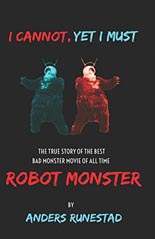
icannotyetimustAll hu-mans, rejoice! Perhaps due to an error in calculation, someone has acquired the temerity to write an entire book about 1953’s Robot Monster, one of cinema’s legendary creative calamities. That someone is Anders Runestad, and that book is I Cannot, Yet I Must: The True Story of the Best Bad Monster Movie of All Time, Robot Monster. At nearly 700 pages, it tells all there is to be told of the film’s production and legacy, and here, in his Guest List for Flick Attack, Runestad tells us about his favorite films that — believe it or not — have ties to his book’s Golden Turkey classic.

Robot Monster in my view is the greatest bad monster movie of all time, and thereby an essential cult film of any kind, but why should this be the case when there are so many other contenders? Well, the contenders sadly lack a gorilla wearing a diving helmet who speaks to himself about his conflicted emotions.

Continue reading Guest List: Anders Runestad’s Top 5 Movies Tangentially Tied to Robot Monster