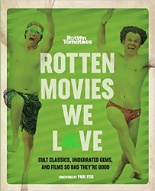
 Let’s get something straight: The Rotten Tomatoes website is a tool of evil. And yet, its editors sure have put together one helluva fun book in Rotten Movies We Love: Cult Classics, Underrated Gems, and Films So Bad They’re Good. Its cover is a good place to start this discussion, too, because what’s wrong with Step Brothers? Not one damn thing, and that’s entirely the point. See, for the most part, this Running Press release is not a nose-thumbing, Medved-style coal-raker, but an affection-overflowing celebration of movies the public embraced, even if critics failed to. Therefore, across all genres, prep for spirited defenses of members of the maligned, such as Dr. Giggles, MacGruber, Event Horizon, San Andreas and Bela Lugosi Meets a Brooklyn Gorilla, the latter from guest scribe Leonard Maltin. An absolute pleasure to read, it’s a keeper worth revisiting. More ’maters, please.
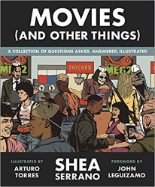 After penning a bestselling book about basketball (and other things), Shea Serrano follows it up with the similarly structured Movies (and Other Things). Published by Twelve, the colorful hardback finds Serrano posing 30 geekily theoretical questions (“Who gets it the worst in Kill Bill?”), each of which he answers in a sly, intelligent, knows-his-shit way, supplemented by charts, graphs and/or Arturo Torres illustrations. I only wished I were more willing to take part in the conversation. It’s not unlike Ryan Britt’s Luke Skywalker Can’t Read, but each essay tends to wear out its welcome before Serrano reaches his conclusion. With discussions of Denzel Washington, Booksmart, Kevin Costner, Selena, movie dogs, the Marvel Cinematic Universe and so much more, this book is destined to be beloved; I fully admit knowing my lukewarm response resides in the minority.
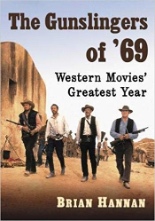 While 1939 and 1999 are often bandied about as the best years for movies, Brian Hannan makes the case for 1969 marking cowboy cinema’s sweet spot, in The Gunslingers of ’69: Western Movies’ Greatest Year. It’s hard to argue against that when you consider the staggering amount of masterpieces made, including The Wild Bunch, Butch Cassidy and the Sundance Kid and Once Upon a Time in the West. And there are 40 more Westerns where those came from (even the X-rated), with Hannan offering an inviting and well-balanced mix of history and criticism as he covers each film in a broad overview of what was perhaps the genre’s most transformative time: when revisionism hopped in the saddle. If you enjoy classic Westerns, this comes recommended, as does Hannan’s The Making of The Magnificent Seven (also published by McFarland & Company) from a few years ago.
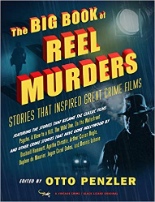 Following similar genre-celebratory collections on vampires, zombies, ghosts, adventurers and pulp heroes (all from Vintage Crime’s Black Lizard line), anthologist extraordinaire Otto Penzler rounds up more than 60 pieces of short fiction for The Big Book of Reel Murders: Stories That Inspired Great Crime Films. Simply put, this hefty trade paperback is just that, with Ian Fleming’s “A View to a Kill,” Agatha Christie’s “The Witness for the Prosecution,” Richard Connell’s “The Most Dangerous Game,” Daphne du Maurier’s “Don’t Look Now,” Edgar Allan Poe’s “The Murders in the Rue Morgue.” Straddling the genres of mystery, thrillers, horror and more, Reel Murders also showcases Arthur Conan Doyle, Dashiell Hammett, Dennis Lehane, Edgar Wallace, Jack Finney, Joyce Carol Oates, Robert Louis Stevenson — not a single one to sneeze at. Whether you like to read source material of films you’ve seen or crime fiction in general, this bang-for-your-buck collection should be right up your shadow-strewn alley. —Rod Lott