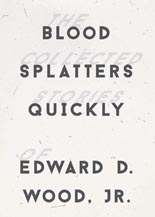
 Cult cinephiles know Ed Wood also applied his unique stamp of “talent” to two-bit porn mags in the 1960s and ’70s, via short stories; however, the fiction’s scarcity kept fans’ knowledge from extending into experience. That all changes with OR Books’ release of The Blood Splatters Quickly: The Collected Stories of Edward D. Wood, Jr., a paperback whose exacting design, pulp illustrations and overall packaging belie the quality of the Plan 9 madman’s prose. Never subtle, the guy sure loved his ellipses, exclamation marks and “shock” endings, all evident in these 33 tales, more expertly curated than offerings like “The Whorehouse Horror” and “Breasts of the Chicken” have a right to be. Cheap, dirty and often deviant sex fuels much of the riotous contents, with horror being the primary genre in which Wood banged these things out, and they can be read almost as quickly as they were birthed; one can assume there were no second drafts. After all, at the time of their printing, the stories likely were read (if at all) during masturbators’ refractory periods. You can read them whenever you wish — I won’t judge — but please, just pull the string.
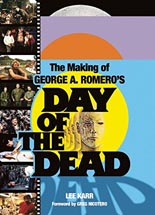 To trot out and paraphrase the cliché, you don’t have to be a fan of the Night of the Living Dead trilogy’s third leg in order to enjoy Lee Karr’s The Making of George A. Romero’s Day of the Dead, but it sure helps. Published by the UK-based Plexus, the full-color trade paperback overcomes a self-congratulatory preface with a detailed account of how the 1985 soldiers-vs.-zombies epic was made: with more butcher scraps than millions. While Karr was not present during the two-month shoot, one wouldn’t know it judging by the wealth of info the day-by-day diary contains, running the gamut from bone-dry minutia to juicy gossip. Much of the latter is devoted to effects legend Tom Savini’s unbridled penile antics; his libido is surpassed only by his ego. Speaking of effects, Greg Nicotero lends further credibility with a foreword, and no spread goes by without some sort of photo or illustration. Personally, I find Dawn of the Dead to be the far superior sequel, but Karr’s love lay with this Day instead. If yours does, too, tear into it sooner than later.
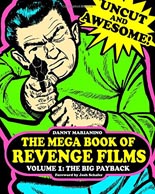 Maybe it’s just me, but if you’re going to write a book about movies in which the whole point is characters seeking vengeance, shouldn’t you be able to spell “vengeance”? Sometimes Danny Marianino does, but many others times he doesn’t, and the whole of The Mega Book of Revenge Films — Volume 1: The Big Payback is so every-page-riddled with typos, run-on sentences and other egregious errors that it’s obvious he didn’t select “Check Spelling” on his self-published manuscript. What the man — I can’t quite bring myself to label him a “critic” — lacks in panache, he makes up for in passion, running through a seemingly random selection of payback pictures with a fanboy verve so true and strong, one practically can hear Chris Farley sheepishly end each capsule review with, “That was awesome!” As much as I knock The Mega Book for its rusted coat of grammar and questionable taste (“retarded” is an oft-repeated adjective), I still enjoyed reading it and will buy 2016’s promised Volume 2.
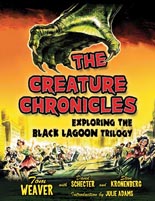 Likely because it aims — and succeeds — to be the definitive, end-all-be-all account on its subject, The Creature Chronicles: Exploring the Black Lagoon Trilogy has been given the deluxe treatment from McFarland & Company: a full-fledged, sleeved hardback with glossy, spot-color pages. As if you couldn’t tell by now, Tom Weaver — with co-authors David Schecter and Steve Kronenberg — dives into documenting the history of Universal’s 1954 classic Creature from the Black Lagoon and its two sequels with everything there is to know about the Gill Man. Skip the synopses and instead marvel at such finds as the list of proposed titles for the first film, audience comment-card reactions from its sneak preview, photos of the costume that thankfully didn’t make it to the screen, and more. The authors even spend time detailing every abortive attempt at a remake, the brief life of a Black Lagoon fanzine (courtesy David J. Schow) and flicks spawned in Creature’s wake (Octaman, anyone?). The downside to McFarland’s spruced-up edition is the price tag, but tried-and-true Monster Kids may not mind, given the sheer depth of the writing team’s result.
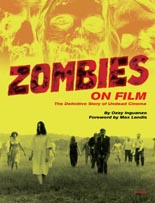 Zombies on Film: The Definitive Story of Undead Cinema also strives for authoritative status — it’s right there in the subtitle — but falls short of that. Part of that is because there are too many other great books on this well-worn subject (Glenn Kay’s Zombie Movies: The Ultimate Guide, in particular), but the bigger, better reason is just the structure of the publisher, Universe: It makes coffee-table books, and Ozzy Inguanzo has constructed a damn fine coffee-table book that just happens to center on movies full of rotting flesh, exposed brains and spilled intestines. That’s not a dismissal of Inguanzo as a writer, either; he’s a fine host to time-machine readers through Hollywood’s long fascination with these invaders from the grave, touching on all the usual suspects (Romero, Raimi, et al) and then some, without quite digging as deep as previous volumes have so well, especially in the realms of the cult and obscure. Zombies on Film is at its strongest when it casts its dangling eye on the fare of foreign shores and the ’80s’ VHS floodgates. No matter where the journey takes you, however, the visuals — heavy on posters and photos reprinted large and in full-color — are the oversized tome’s real selling point.
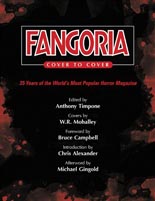 Finally, the least likely subject for an art book might be the blood-splattered covers of Fangoria magazine — you know, the ones that repulsed your mother so much, she refused to buy it for you at the grocery store. And yet, just in time for the horror pub’s 35-year anniversary, Cemetery Dance unleashes Fangoria: Cover to Cover, a terrific volume that reproduces every issue’s purposely garish cover, obviously in chronological order and wonderfully granting each a full page. (So what if it’s already out of date?) The book is as much as a history of post-1979 film horror as it is of Fango itself, regrettable cover choices and all — not to mention the occasional typographical use of Comic Sans. Its former editor Anthony Timpone contributes notes for each issue, which are almost as entertaining as Bruce Campbell’s foreword. Fango’s iconic filmstrip adorns so many of the issues, it’s a tad sad to see it retired. Another trend you’ll notice: select titles vying for cover space for three consecutive issues, even if it’s just a two-word teaser. You’d have to be mad to read every word of every cover here … and that would be I. —Rod Lott
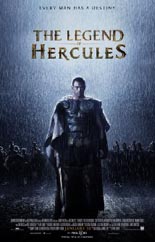
 The first of two Hercules projects to hit the big screen in 2014,

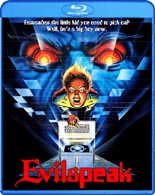
 Poor, picked-upon Pvt. Coopersmith unleashes some serious satanic comeuppance on his classmates in