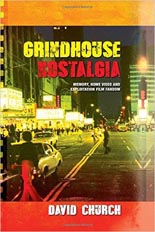
 It’s a good thing that Edinburgh University Press has a paperback of Grindhouse Nostalgia: Memory, Home Video and Exploitation Film Fandom on the schedule, because the hardcover’s list price may put off some otherwise interested parties. And that’s too damned bad, because I’d wager true exploitation-film fans will appreciate this smart, swift volume. Although technically an academic tome, it’s hardly work when the subject matter is so fun, and David Church traces the history of grindhouse cinema from its dirt-cheap roots (when what was playing was largely secondary) to its corporate co-opting today as a catchall term. While Bill Landis and Michelle Clifford’s Sleazoid Express remains the definitive depiction of the Times Square moviegoing experience, Church’s book excels in examining the scene ever since: namely, the second wave ushered by Quentin Tarantino and Robert Rodriguez’s big-screen Grindhouse; the subsequent coattail-riding DVD reissues of B-, C- and Z-level fare; and now the faux-retro vibe of such titles as blaxploitation spoof Black Dynamite and women-in-prison romp Sugar Boxx.
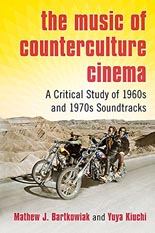 Arguably, the films of the 1960s and ’70s yielded the best soundtracks of cinema history thus far, and The Music of Counterculture Cinema, edited by Mathew J. Bartkowiak and Yuya Kiuchi, supports that theory with 14 chapters on some of those seminal titles, although not necessarily the titles you’d expect (for example, no essay is dedicated to Simon and Garfunkel’s game-changing work for The Graduate). Your enjoyment of the McFarland & Company collection may vary, depending on your love for the subjects visual and aural. For example, examining Wendy Carlos’ Moog-tastic score for Stanley Kubrick’s A Clockwork Orange and the squarely futuristic “now” sounds of Roger Vadim’s Barbarella appeal to me, yet I don’t give a damn about what Country Joe McDonald has to say, on Woodstock or anything. What I admire most about the book is how it encompasses such a wide swath of pics, from Roger Corman’s misunderstood Gas-s-s-s to the bom-chika-wow-wow of the X-rated Deep Throat.
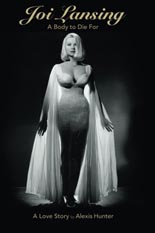 No question regarding the aptness of the title of Joi Lansing: A Body to Die For, as the actress indeed had that; Alexis Hunter’s unusual biography, however, does not inspire equal hyperbole. Available in hardcover and paperback, the BearManor Media release is not the full-life book many Lansing fans want and expect; instead, it’s a chronicle of the loving, lesbian relationship the author (aka “Rachel Lansing”) had with the B-movie bombshell after meeting on the set of 1970’s Bigfoot and extending until the 44-year-old actress’ untimely death two years later from breast cancer. I had never heard of their couple status (much less Hunter at all), and if shots of them together were not included in A Body to Die For’s generous-enough photo section, I might have doubted Hunter’s story outright, because it’s written with such over-reverence and awe that it often reads stalkery. From shrimp cocktails to silicone implants (say it ain’t so!), the tale is heavy with day-to-day details, but light on momentum.
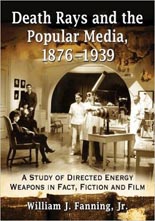 To talk specificity is to talk William J. Fanning’s Death Rays and the Popular Media, 1876-1939: A Study of Directed Energy Weapons in Fact, Fiction and Film. And as that unwieldy title makes known, it’s only fractionally about the movies, yet when I hear the term “death ray,” my mind immediately flashes to villainous Auric Goldfinger expecting James Bond to die by slicing him vertically with one, crotch first. Goldfinger is one of the titles discussed, barely, with the bulk of the 15 pages on film spent on serials and real obscurities. Because so little of the McFarland release concerns itself with the cinematic — and those 15 pages failed to click with me — I can’t recommend it to film buffs at all. Perhaps those with rabid interest for the intersection of history, science and warfare will be able to glean something from it. —Rod Lott
Get them at Amazon.

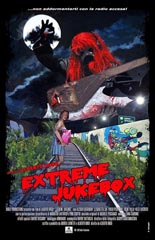
 Look at a jukebox — if you can find a pub or pizza parlor that still has one — and peruse its tunes. Among those 45s, you’re likely to find a mix of musical genres from which the automated arm can pluck: rock, pop, country. Fittingly but annoyingly, Extreme Jukebox is every bit as scattered in its DNA.
  Then again, they may not. It’s hard to say for certain, because Extreme Jukebox is an excruciating mess of self-pleasuring slop. Narratively, it just flies by the seat of its (soiled) pants, ending up as confused as any potential audience member — even those who make it all the way to the punchable final shot. It seems that Bogo wanted to salute slasher movies and send up slasher movies, and since neither tone works alone, the approaches are downright discordant sharing the same frames; scenes don’t flow as much as they trip over one another.


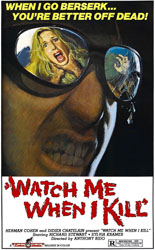
 In
In 
 When is not a good idea for a comely college co-ed (Nan Barlow,