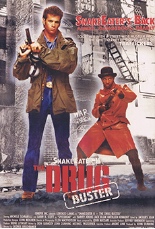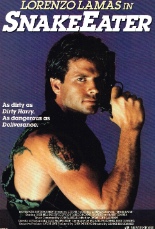

Whether you love Teen Wolf and Empire of the Ants or prefer your beasts a little more out of this world along the lines of Species, Strange Invaders or Killer Klowns from Outer Space, COMET TV has you covered! Available on digital television networks and online at CometTV.com, COMET has an incredible array of cult movies and television shows that you can’t get from subscription-based streaming platforms like Netflix, Amazon or Hulu.
We’re giving away a COMET TV Prize Pack (as pictured above) to one lucky Flick Attacker! Here’s how to enter:
• Simply leave a relevant comment on any review on this site …
• … and then contact us with the URL to that review, along with your name and address, no later than March 9.
• Open to U.S. only; no P.O. boxes. The winner will be chosen at random from all submitted entries.
• Each household is only eligible to win the COMET TV Prize Pack via blog reviews and giveaways. Only one entrant per mailing address per giveaway. If you have won the same prize on another blog, you will not be eligible to win it again. Winner is subject to eligibility verification.
Hop aboard the Train to Busan, although I certainly can understand any hesitation on your part. After suffering through so many awful films of the undead, I had no desire to see yet another zombie movie. Especially a Korean one that is two hours long. Nothing against the Koreans — or any Asian people — but they are known for letting running times overstay their welcome, so when a film hurts, the pain is extended.
But seriously, all aboard! Because Train to Busan not only subverted my expectations, but exceeded them. It is an instant classic of zombie cinema, as well as Eastern Hemisphere horror.
Leaving the station in Seoul, the KTX 101 bullet train is bound for the port city of Busan, some 200 miles away. Fund manager Seok Woo (Gong Yoo, The Suspect) is on it, to deliver his adorable moppet daughter (Kim Soo-ahn, the 2014 omnibus Mad Sad Bad) to her mother, from whom he is divorced — and bitterly so. Just before the doors close, a very special passenger stumbles on undetected: one infected with a killer virus that … hell, you already know the symptoms and the side effects.
The resulting outbreak threatens to decimate the entire passenger list, which includes a baseball team, a lone cheerleader, an expectant couple, a selfish CEO, two elderly sisters and one stowaway hobo. Do not get too attached, because the film’s ballsy bid to play for keeps means anyone can succumb to a bite and transform into herky-jerky, convulsing meat sacks. The zombies of Busan are fast on their feet and operate with the horde mentality of those in World War Z — a solid comparison, given how action-driven both engines are. Another is the Korean/English co-production Snowpiercer, as each follows passengers making their way from the back of the train forward, but in Busan’s battle between the haves and the have-nots, the “not” refers to disease rather than dollars.
If the undead offer nothing new — and they do not — the film at least feels fresh because the major characters are not written as stock archetypes; they are fleshed out (no pun intended) like real people, flaws and all. For example, our hero? He’s a shitty father. And thank goodness, because otherwise, Soo-ahn — all of 9 or 10 at the time — would not be gifted with the same role; her performance is astonishing, judging by any age. If the final two scenes don’t strike you emotionally, that’s on you, not the movie — the brainchild of animation vet Yeon Sang-ho (including Seoul Station, something of a prequel), making a remarkably assured and accomplished directorial debut in the live-action format. —Rod Lott
Does the world need more than one book on the movies of Mamie Van Doren? Hell, no. But I sure do! With Joseph Fusco’s 2010 book already sitting on my shelf, now there’s Atomic Blonde: The Films of Mamie Van Doren to keep it company. First published in 2008, Barry Lowe’s book now is back in print and available in a more affordable paperback edition from McFarland. Today a prolific author of gay erotica, Lowe spends the first 50-ish pages to deliver a condensed biography of the former Joan Olander, the virginal farm girl who became one of the three iconic sex bombs of the squeaky-clean 1950s and boundary-pushing ’60s, behind Marilyn Monroe and Jayne Mansfield. And the rest of the text? Why, a flick-by-flick examination of her career, of course, with special attention given to her campier efforts — including High School Confidential!, Sex Kittens Go to College, Las Vegas Hillbillys, The Navy vs. the Night Monsters, Voyage to the Planet of the Prehistoric Women — and no punches pulled. Lowe wrote this breezy book with the hopes that readers might see her as skilled beyond testing the thread strength of sweaters, and yet it is populated with photos that play up those God-given talents. In my eyes, that’s not really a complaint. Recommended!
Maybe having been born in 1971 has something to do it, but I think some of the most memorable vampire movies came from that decade. (I mean, seriously, The Vampire Happening? The Vampires Night Orgy? The Dracula Saga? C’mon, folks!) Gary A. Smith agrees; as he writes in the introduction of Vampire Films of the 1970s: Dracula to Blacula and Every Fang Between, “filmmakers everywhere jumped on the bloody bandwagon,” giving us bloodsuckers that also were black, gay, adept at kung fu, peace-preaching and puppies — just not all at once. The fun of this McFarland & Company paperback is in Smith covering their respective flicks not chronologically, but broken up into distinct groups, such as “Carmilla” adaptations, Jean Rollin works, Mexican entries, outright comedies and, yep, “Vampire Porn.” Any book that gives the likes of Al Adamson, Andy Milligan and Jess Franco chapters of their own is one worth sinking your teeth into.
One area of the movies I have yet to take a deep dive into? Ye olde serials. Other than chapters of Bela Lugosi in The Corpse Vanishes doled out across several early episodes of Mystery Science Theater 3000, these superheroic, swashbuckling, space-patroling, spy-smashing tales remain a blind spot in my cinematic education. Because they are extinct, I’m guessing the same may be true for many of you. For a crash course, turn to Geoff Mayer’s Encyclopedia of American Film Serials. Designed by McFarland & Company as an oversized paperback, it seems ready-made for decades of referencing to come. It holds tremendous value in that it’s indexed not only by titles, but actors, directors, writers — heck, even composers! Entries are written with voluminous knowledge, with particular attention paid to concepts and cliffhangers, but the introduction gives a broad, baseline knowledge of the art form, its various studios and its eventual death. The reproductions of poster art are entirely welcome; I just wish they were in color, although the shorts they shilled were not. —Rod Lott
Research suggests that more women enjoy horror movies than men, and while I have yet to encounter supporting evidence in my life, the construct of XX is well overdue: an anthology film directed by the fairer sex.
Utilizing wordless, doll-centric sequences of stop-motion animation in lieu of a wraparound, XX begins the picture proper with Jovanka Vuckovic’s “The Box,” which is not to be confused with the 2009 Richard Kelly film. Working from a short story by the uncompromising Jack Ketchum, Vuckovic (author of Zombies!: An Illustrated History of the Undead) charts the increasing unease of a suburban wife and mother (Natalie Brown, TV’s The Strain) whose comfortable and idyllic existence is upended when her son, after glimpsing inside a stranger’s parcel on the train, loses his appetite … for good. Brown gives a strong performance built upon quiet helplessness as this mysterious, undiagnosed ailment then affects her daughter and husband in short order.
Better known as Grammy-winning art rocker St. Vincent, Annie Clark makes her directorial debut — and impressively so — with “The Birthday Party.” Shifting to a polar-opposite tone, Clark’s soiree follows Mary (Heavenly Creatures’ Melanie Lynskey, great as always) as she prepares for her little girl’s big celebration, mostly by attempting to hide the newly discovered, freshly deceased body of her husband. The tale essentially stands as a one-joke number, but since the joke is rooted in gallows humor, I dare not fault it. Also worth cheering: the ever-versatile Lindsay Burdge (The Invitation) as Mary’s stuck-up neighbor.
Next comes the intense exhortation of “Don’t Fall,” from XX ringleader and portmanteau vet Roxanne Benjamin, a contributor to Southbound (as well as producer of that project and the three V/H/S pix). In fact, this segment of two camping couples and one ferocious threat feels as if it could have made its home in Southbound. The most classically scare-rigged of the bunch, “Don’t Fall” is also the odd (wo)man out, in the sense — and this is not a negative — that it is unconcerned with exploring the inherent challenges of being a mother.
Nowhere is that concept clearer than Karyn Kusama’s “Her Only Living Son,” about a tired, middle-aged single mom (a wonderful Christina Kirk, Along Came Polly) forever struggling to make ends meet and do what’s right for her unappreciative teen son, Andy (Kyle Allen, TV’s The Path), even if that entails moving from town to town to keep his father from finding them.
The crux of XX can be found in “Son,” in an unassuming bit that finds Andy curiously licking a fleck of bloody yolk from an egg he’s cracked open: All at once, viewers get an acknowledgment of womanhood, a comment upon it and, this being horror, an icky act designed to elicit cringes.
I’d argue — okay, perhaps “argue” is too strong a word — that not one of the four talented ladies in charge here yet qualifies as a known-quantity director within the genre, although between the mis-sold Jennifer’s Body and the rather sly (and aforementioned) The Invitation, Kusama comes closest. But it’s not exactly as if they’ve been handed the opportunities, so XX marks a vital step toward sharing the wealth of material, and this batch is so varied from segment to segment, no story feels repetitive. Beyond spearheading the film, kudos are due to Benjamin (will someone please give her an entire feature?) for sticking to V/H/S’s indie-minded template of not explaining every detail; the beauty is that things are more memorable and unsettling and rewarding when their pieces remain a mystery — you know, just like women themselves. —Rod Lott
Last October, Houston Rockets point guard Bobby Brown came under fire for signing his name and jersey number on the Great Wall of China. In the department of shame, however, Brown’s thoughtless and egotistical act of vandalism pales next to the wrongheaded disaster that is The Great Wall, an epic fantasy from House of Flying Daggers auteur Zhang Yimou.
Bearing for-the-ages bad hair, Matt Damon (Jason Bourne) and Pedro Pascal (TV’s Narcos) portray William and Tovar, a couple of non-Chinese mercenaries in China, looking to finagle some newfangled “black powder.” Being in the wrong place at the wrong time, the pair is imprisoned by the intimidating-sounding The Order and assumed to be not long for this world … until William’s ace archery skills strike The Order as a damn good defense against the Tao Tei.
Ah, yes, the Tao Tei: those giant, reptilian creatures that try to bust through the Great Wall (hence, the title) once every six decades. Victorious or not, at least the monsters exhibit impeccable attendance. Damon’s vaguely Irish bow-and-arrow beefcake joins an acrobatic female commander (the ever-flipping Jing Tian, Police Story: Lockdown) and other bugaboo crushers on the kind of multicultural crew that fronts so many of today’s global-minded blockbusters, from Rogue One: A Star Wars Story and the Magnificent Seven remake to each successive sequel in The Fast and the Furious franchise.
In all but the computer-generated threat, The Great Wall looks, well, great. But as in real life, looks aren’t everything, and indeed, this cruel mistress bores. In their color-coded armor, our heroes resemble comic-book warriors who have burst from page to screen, but Yimou has stuck them into a rote screenplay that reminded me of Reign of Fire — not a positive comparison, considering that 2002 dragon-festooned film is one of the few times I’ve exited the theater mid-movie.
Closer to Yimou’s home turf, it also brought to mind the high-flying fantasies of Tsui Hark, who rose to world-cinema fame on the strength of mystical martial-arts adventures like 1983’s Zu: Warriors from the Magic Mountain … and then missed as often as he hit. Although Yimou’s filmography is roughly half the size of Hark’s, a more definitive through line exists in Yimou’s work; whether Raise the Red Lantern, Curse of the Golden Flower or Jet Li’s Hero, he tends to stick within his comfort zone of costumed epics, more or less grounded in realism. The Great Wall retains the man’s hallmarks — an air of elegance, fluidity of movement, a love of the historical, elaborate robing as vital as weaponry — yet in poking a hole through the arthouse to get a glimpse of the more commercial fare playing next door, his hold on mastery falls to the floor. —Rod Lott