
All posts by Rod Lott

SST: Death Flight (1977)

Things are not going well for Cutlass Aircraft Maiden One. The supersonic transport jet’s media circus of an experiment flight from New York to Paris has been sabotaged; a Third World flu virus has been loosed onboard; and, dammit, who the hell let Bert Convy on this plane?

Welcome, disaster-flick junkies, to SST: Death Flight, a made-for-TV Airport rip-off so blatant that it earned director David Lowell Rich the plum gig of guiding the final Airport sequel, The Concorde … Airport ’79, off the tarmac.

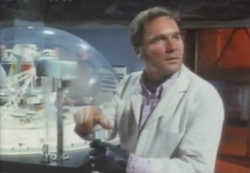
Piloted by testy Capt. Walsh (Robert Reed, TV’s Brady Bunch patriarch), America’s first SST passenger jet flies the friendly skies while breaking the sound barrier. Everyone who’s anyone has secured a seat on the transatlantic flight: the governor, some contest winners, a former pilot who might possibly come in handy (Doug McClure, Satan’s Triangle), a World Health Organization doctor (Brock Peters, Two-Minute Warning) and a busty beauty queen (Misty Rowe, Meatballs Part II) who talks about how she’s been farting all day. Taking the thankless roles of flight attendants are Tina Louise (TV’s Gilligan’s Island) and Billy Crystal (presumably auditioning for TV’s Soap).

There’s also a very angry Cutlass engineer (George Maharis, Murder on Flight 502) whom the powers that be turned down for a promotion, so he switches a barrel of Maiden One’s hydraulic fluid for one filled with laundry detergent … and still boards the doomed flight — a pretty stupid move, if you ask me, but that’s how these things roll. Same goes for casting Convy as a heel, as any viewer of the Irwin Allen telepic Hanging by a Thread could tell you. In a scene added for SST’s European theatrical release (and intact on DVD), his curly-headed cad of a character keeps yanking down the spaghetti straps of Rowe’s dress in order to free her breasts and join the mile-high club.

When the effed-with barrel springs a leak, the resulting spill looks like tomato soup. When the plane is shown in flight, it looks like a Matchbox toy being held in frame by the tail. And when SST: Death Flight plays, it does indeed look like an Airport sequel, starting with 99 problems and right down to an overstuffed cast, including Peter Graves, Burgess Meredith, Lorne Greene and Regis Philbin. —Rod Lott

Get it at Amazon.

Rest Stop (2006)

With an electrical socket as its logo, Raw Feed jolted to life, kinda, in 2006 as a direct-to-DVD subsidiary of Warner Home Video and intended home for envelope-pushing horror free from MPAA meddling. Instead, Raw Feed issued product that felt overly derivative and devoid of imagination; six flicks later, the outlet ran out of juice. Its final offering was 2008’s fittingly titled Rest Stop: Don’t Look Back, a sequel to the line’s debut. That first film, plain ol’ Rest Stop, is so rote, I couldn’t submit myself to a part 2. I feel like I’ve seen it anyway.

Young Midwestern lovers Nicole (Jaimie Alexander, Thor: The Dark World) and Jess (Joey Mendicino, whose only other movie role to date is the sequel) run away from home and hit the open road toward California. (In other words, like John Steinbeck’s The Grapes of Wrath, if the Joads headed west not for work, but the freedom to copulate.) After stopping for an open-air quickie, Nicole’s girl bladder ruins everything when she has to tinkle. Begrudgingly, Jess pulls over to — cue ominous music — a rest stop in the middle of the woods. It’s a place where no right-minded city planner would allow one to be built, lest he’s seeking to serve the body-waste needs of storybook creatures.

Surprise! The facilities are a dump! (Last Shithouse on the Left, anyone?) While Nic is squatting atop the scum-layered stool to make water, Jess mysteriously makes like a tree and leaves. You won’t pry it outta me, but his vamoose act might have something to do with the shit-kickin’ redneck in the yeller truck.

If not for the pre-existing Joy Ride and Wrong Turn franchises revving up around that time, Rest Stop might be fresher meat … except that still leaves dozens of other crazy-dude-in-a-vehicle films to contend with, notably the ’80s VHS fave The Hitcher and the granddaddy of them all, Steven Spielberg’s Duel.

Better known as a writer of nearly two dozen X-Files episodes and creator of its short-lived The Lone Gunmen spin-off, John Shiban made his feature directing debut with Rest Stop, and has yet to follow it up. He also wrote it, yet given the pedigree of the landmark X-Files series, the only thing shocking about his script is how color-by-numbers predictable it is, which allows boredom to set in faster than quick-dry cement. More about spilling blood than turning twists, it owes its brightest spots not to leading lady Alexander, who spends the back half shirtless, but to the performance by former child star Joey Lawrence (Urban Legends: Final Cut) as a cop. Whoa! —Rod Lott

Get it at Amazon.

Guardians of the Galaxy Vol. 2 (2017)

It does not take much for Guardians of the Galaxy Vol. 2 to generate instant goodwill among viewers — just the earworm that is Electric Light Orchestra’s “Mr. Blue Sky,” the 1977 pop confection to which tiny tree creature Baby Groot so adorably grooves, oblivious to what unfolds behind him: his teammates’ all-hands-on-deck battle with a giant space monster. (Geez, Louise, how I wish I held stock in Baby Groot merch.) This opening bit is but one way in which returning writer/director James Gunn wrings maximum mileage from Vol. 2’s existence as a sequel to the 2014 surprise smash-hit original: It leaps right into the fray. No re-introducing the characters, no sequences of having to get the band back together — waste not, want not. It’s bigger, better and much, much funnier.

This time around, the wisecracking, Walkman-worshipping Peter Quill, aka Star-Lord (Chris Pratt, 2016’s The Magnificent Seven) learns a little more — okay, a lot more — about his past on Earth. In fact, he finally comes face-to-face with the father he never knew, Ego, played by the always-welcome Kurt Russell (The Hateful Eight). Family — whether real, surrogate, dysfunctional or otherwise — is the thread sewn through all the storylines, especially with green-skinned Gamora (Zoe Saldana, Star Trek Beyond) experiencing sibling rivalry taken to the extreme, as her sister, Nebula (Karen Gillan, The Circle), tries to kill her. Or with Yondu (Michael Rooker, The Belko Experiment), the finned-headed baddie of the first adventure, flipping sides due to fatherly affection for Quill. Or with Baby Groot (voiced by Vin Diesel, xXx: Return of Xander Cage) serving as the needy infant to every other Guardian, upper- and lowercase. More examples exist.

In shortcutting the setup, Gunn frees more time to let Gamora and her fellow Guardians have more to do than in the first film, and benefiting most is Drax (Dave Bautista, Spectre), the superhuman muscleman with no social filter. His scenes with Ego’s antennae-bearing assistant, the telepathic Mantis (Pom Klementieff, 2013’s Oldboy remake), make for some laugh-out-loud moments. The downside to the wider canvas? An expanded running time of 136 minutes that can’t help but fall victim to third-act bloat — a problem not limited to this film or even all Marvel Studios product, but effects-driven Hollywood blockbusters in general.

At least the enormous success of Guardians of the Galaxy (which I found fine, but hardly the Greatest Thing Ever so many others did) allowed Gunn to rubber-stamp Vol. 2 with his distinctive brand of subversive humor — in permanent red ink, no less. Those who have followed the Troma undergrad‘s filmmaking efforts from the start will recognize more of his touch, and less of Marvel corporate’s. (Watch in particular for the scene where Rocket Raccoon, voiced by The Hangover trilogy’s Bradley Cooper, asks for a piece of tape.) In fact, if you watch Gunn’s two superhero parodies prior to him getting in bed with Marvel, 2000’s The Specials and 2010’s Super, you’ll notice he unknowingly had been auditioning for this gig all along. The major differences are that he can cast Sylvester Stallone instead of Josh Duhamel, and that millions now appreciate him instead of hundreds. Gunn and his Guardians deserve it, for this and future volumes. —Rod Lott

The Circle (2017)

James Ponsoldt’s The Circle is in no shape to exist as either a technological thriller or an Orwellian warning of waning privacy in today’s selfie-obsessed society. The film feels like an unfinished work, a lump of clay half-fashioned into, well, something, yet never placed in the kiln for firing.

Harry Potter graduate Emma Watson centers the picture as Mae Holland — or at least is supposed to, but the ingenue is stunningly miscast and working so far below her fighting class that her naive newcomer to Silicon Valley threatens to float away with any sudden gust. Escaping the number-not-a-name existence of a corporate cubicle farm, Mae lands a customer-support gig at The Circle, clearly a stand-in for both Google and Apple, with American treasure Tom Hanks (Sully) as Eamon Bailey, its ersatz Steve Jobs. With a campus that boasts such amenities as yoga classes, Beck concerts and, um, live improv, The Circle stands as the workplace among every self-aggrandizing millennial, and its gadgets are as omnipresent in their lives as underpants.

Bailey’s latest baby is SeeChange, all-seeing cameras embedded in sleek spheres the size of cat’s-eye marbles; because of their portability and line of camouflaged colors, SeeChange cams are ideal for global “accountability.” Mae becomes something of a cause célèbre when she agrees to wear one and live a life of a broadband-broadcast transparency 24/7 (with three-minute breaks to heed nature’s call). Then Bailey releases software that allows SeeChange users to find anyone anywhere in the world in the matter of minutes — crowd-sourced bounty hunting, if you will. Raise your hand if you think Very Bad Things will come of this.

Indeed, they do — both in the movie and, more to the point, to it. Pardon the pun, but The Circle’s better-watch-out message strikes one as rather square. As shiny as Mae’s environs and Ponsoldt’s film are, its clarion call about good technology’s capacity to serve evil ends is older than the dial-up modem — just ask the prehistoric apes bludgeoned by that newfangled bone — so predictability is hardwired into the plot. Reliable sources tell me Dave Eggers’ same-named 2013 novel (on which the film is based) carried a satiric edge; if so, that has been stripped in the story’s transition from page to screen, and Eggers himself shares the blame, as he shares scripting duties with director Ponsoldt.

In past films — Smashed, The End of the Tour and especially The Spectacular Now — Ponsoldt demonstrated an assured deftness for balancing the alkaline and the acidic, which makes the deafness of tone displayed here all the more worrisome. His knack for guiding great performances in absentia, undeniable talents come off undeniably poor, with Watson lacking the gravitas — or likability — to function as the film’s anchor. As reliable an actor as Hanks is, villainous roles are not his strong suit. (There is a reason Jimmy Stewart avoided them, Tom.)

No actor is worse than Ellar Coltrane (the boy of Boyhood), whose childhood pal of Mae’s cannot deliver even the simplest dialogue (“Bye”) with authenticity. No actor is luckier than John Boyega (Star Wars: The Force Awakens), who is given nothing of value to do — one of the movie’s many introduced-then-discarded elements. And no actor suffers more embarrassment than Karen Gillan (In a Valley of Violence), whose Circle-exec character is under such immense stress that she appears increasingly pale ’n’ frail, bringing to mind An American Werewolf in London’s ghoulish running gag of an ever-decomposing Griffin Dunne; too bad Ponsoldt and Eggers are not aiming for laughs, but paranoia … and missing by a cringeworthy mile. —Rod Lott

Reading Material: Short Ends 4/30/17

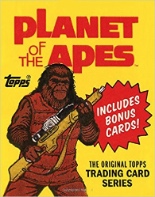
Jake Paltrow and Noah Baumbach’s 2016 documentary, De Palma, stands among my 10 favorite films of last year, with my only criticism being that it stops after 93 minutes. Anyone else who was left wanting more (and more and more) may find that itch somewhat scratched by Douglas Keesey’s Brian De Palma’s Split-Screen: A Life in Film. New in paperback from University Press of Mississippi, the book more or less takes the same tack of chronologically examining each of the filmmaker’s features — but here in more detail and from a perspective that is not the filmmaker’s own. A critical piece of Keesey’s thesis is examining how much of De Palma’s recurring themes — such as the ever-controversial merging of sexy women and graphic violence (Body Double and Dressed to Kill in particular) — is ingrained in the man’s own DNA. While he may lack in the behind-the-scenes dish, Keesey overflows with insight and ideas. The result is a close cousin of a Criterion commentary track, flooding your mind with a greater understanding and forcing you to see the films in a whole new light. Regardless of what De Palma might think of this book, I think it’s tops.

Take one look at Escape Velocity: American Science Fiction Film, 1950–1982 and you might sigh heavily and think, “Really? Another history of sci-fi movies?” Well, yes, but also no. For this Wesleyan University Press paperback, film professor Bradley Schauer does indeed take the reader on a fantastic voyage through sci-fi’s cinematic life, but more importantly fueled with cultural and economic perspectives, rather than merely the historical. Starting with the genre’s first recognition as such by studio powers and ending with its box-office apex of Best Picture nominee E.T.: The Extra-Terrestrial, the author covers ground swiftly yet smartly. Terrific design aside, what makes Escape Velocity so worthy of your time is the attention Schauer pays to such avenues of interest similar studies ignore: the value of camp, the infusion of politics, the rise and function of fanzines as film criticism, and the Star Wars-ization of blockbusters, more present today than ever.

Those who read Bryan Senn’s 2013 book, The Most Dangerous Cinema: People Hunting People on Film, will not be surprised at the sheer scope of his latest (and arguably greatest), The Werewolf Filmography: 300+ Films. Although far from the only text on the subject, it is hands (paws?) down the most complete and comprehensive to date, placing it well ahead of the pack. For each of the many, many movies covered, Senn reviews it in authoritative detail and with a healthy sense of humor — the latter primarily in lycanthropic descriptions, such as the “cross between a schnauzer and Fozzie Bear” in 1969’s Dracula (the Dirty Old Man). Every werewolf movie you could possibly think of is here, plus ones the average Joe Moviegoer is not likely to have been exposed to, including the rockin’ Werewolf of Woodstock; the clip comedy President Wolfman and the Paul Naschy/Fred Olen Ray sexploitation pairing, The Unliving. (See Senn’s recent Guest List for Flick Attack for seven unsung gems.) While valuable as a reference work, the McFarland & Company hardback is an absolute pleasure to read page by page, all 400-plus of them. The only thing I can hold against it is getting me interested in all those crazy Howling sequels. —Rod Lott

Get them at Amazon.