
Sarah T. — Portrait of a Teenage Alcoholic (1975)

WTFAfter new student Sarah T.’s (Linda Blair) hopes are dashed when she fails to make it into the glee club, she begins a staggering road to faux-drunkenness in the classic made-for-TV melodrama Sarah T. — Portrait of a Teenage Alcoholic. Made at a time when open liquor was practically its own food group, it doesn’t help that Sarah walks around Hollywood with her deadbeat dad (Larry Hagman) as he’s slugging brews out of a paper cup.

Things start looking up when she duets with Mark Hamill on a Carole King song, but with congratulatory booze passed around at the wildest shindig you ever did see — they’ve got a party sub! — things get really crazy when Sarah T. smashes a plate of far too much potato salad into a rival’s chest after a rather cutting comment about Raquel Welch and how she eats all of her potato salad. While for most of us that would be a real popularity killer, but, because of her alcoholism, Sarah T. is now the most fun girl in school, especially among the chunky kids who carry their lunch in a ratty brown sack and still say “Far out!” Far out!

At home, though, things get worse as she’s not only busted for boozing while babysitting, but inadvertently get her nice old maid fired. Luckily, by the end of the film, Sarah T. goes to a teen-centered Alcoholics Anonymous and, after listening to a junior alkie spill his guts, mostly gets her life back on track — the drunken horseback-riding into oncoming traffic helped too, I’m sure.

Directed by Richard Donner in what feels like the one true sequel to The Omendominus tequilium — the facts about teen drinking are clumsily presented to the parents watching at home with their kids, while the kids are given plenty of great tips on how to score booze and not let Mom and Dad find out about it. Sadly, I had to learn that college. And it wasn’t booze, it was Doritos.

Just call me Louis F., I guess. —Louis Fowler

Get it at Amazon.

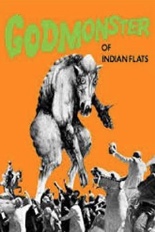
Godmonster of Indian Flats (1973)

Although nearly a half-century year old, Godmonster of Indian Flats remains startlingly relevant for our times. It’s a story of a God-fearing, anti-science populace clinging to the idea of yesteryear. It’s a story of a politician who abuses his power to enrich his own station in life, at the expense of the poorer townspeople. It’s a story of one African-American man trying to do what’s the right while forever under the thumb of a racist society that fears “the other.”

It’s also a story of a “damaged mongoloid beast,” but to the film’s credit, it could function with that plotline excised. I don’t want to live in a world in which such a removal were made — I’m only saying it could be done. More is bubbling beneath Godmonster’s matted-cotton surface than mere creature-run-amok chaos.

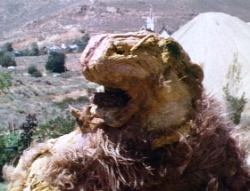
And holy moly, what a creature! One morning, to the amazement of all-business anthropology professor Dr. Clemons (E. Kerrigan Prescott, Fiend Without a Face) and mild-mannered sheep rancher Eddie (Richard Marion, Child’s Play 3), a half-developed embryo is birthed into the flock. Dr. Clemons notes the preemie’s condition is the result of chromosomal breakdown during cross-fertilization, and these 10 seconds form all the scientific explanation we as viewers need. The professor incubates the thing in his lab, where it grows into an 8-foot monstrosity that looks like a mange-ravaged Mr. Snuffleupagus or a walking tumor as depicted by a Nabisco Barnum’s Animal Cracker, or perhaps both.

When it gets loose and terrorizes the town, Godmonster morphs into a classic Western as members of the “vigilance committee” assemble on horseback to hunt it down and lasso that li’l doggie amid the mayor’s declaration of martial law. Needless to say, audience sympathy aligns with that of writer/director Fredric Hobbs (Alabama’s Ghost): squarely on the side of the deformed, misunderstood abomination, no matter how many schoolchildren he scares the shit out of or number of filling stations he somehow explodes. Godmonster of Indian Flats certainly hums an odd tune, but at least it hums. —Rod Lott

Get it at Amazon.

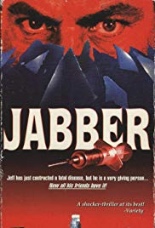
L.A. AIDS Jabber (1994)

At all of 19 years young, Jeff Roberts (Fart: The Movie’s Jason Majik, redefining “overwrought”) has a problem: In addition to mental issues and acid-washed jeans, he’s got the HIV. Shortly after receiving this death sentence from a rather lackadaisical doctor who can’t be bothered to get up from his chair, Jeff snaps and vows to get back at those who gave — or may have given — him the virus. Filling a syringe with his own blood, he becomes … wait for it … the L.A. AIDS Jabber.

Okay, so while he never goes by that name, the movie sure does. Unfortunately, although unsurprisingly, that eyebrow-raiser of a title is its most interesting aspect. Shot on video, the bad-taste slasher takes itself too seriously as Jeff jabs his way toward vengeance, starting with that whore Tanya. As people die by the little prick, a detective and a news reporter investigate, so much so that the sick flick becomes more about them.

The only movie written, directed and produced by actor Drew Godderis (Evil Spawn), L.A. AIDS Jabber cannot truly be discussed without spoiling its M. Night Shyamalandafuckyousay twist ending: The doctor learns the test results were mixed up; therefore, Jeff is not — repeat: not — infected with the HIV virus. One could say you definitely didn’t see that coming — Godderis included, because if Jeff’s blood was all on the up-and-up, what killed his victims?

The movie is sometimes called just plain ol’ Jabber, but hell, that’s no fun. —Rod Lott

Get it at Amazon.

Dixie Dynamite (1976)

In the Deep South, because where else, Tom Eldridge (Mark Miller, Blonde in Bondage) runs a moonshine business on his 7.5-acre property … until the town sheriff (Christopher George, Mortuary) shows up to throw a wrench in the works. As Tom panics and tries to flee Johnny Law, he’s shot dead by a lummox of a deputy (Wes Bishop, who wrote and produced the film).

Daddy’s death is the first domino in a string of troubles in motion for Tom’s two daughters, Dixie (Jane Anne Johnstone) and Patsy (Kathy McHaley). They face eviction from their home, thanks to the local greedy banker (R.G. Armstrong, Evilspeak), and can’t find a job — cue the montage of the ladies walking past multiple “NO HELP WANTED” signs. When close family pal Mack (Warren Oates, Stripes) fails to win the $1,000 grand prize at The Moto-Cross Big Race — seriously, that’s what it’s called — the Eldridge girls decide to resort to the ol’ standby. No, not prostitution: revenge.

A knee-jerk reaction would be amazement that Dixie Dynamite works as well as it does. But Bishop and frequent director Lee Frost made B-movie magic almost every time at bat in their long and fruitful partnership, which included horrors that shocked (Race with the Devil), schlocked (The Thing with Two Heads) and stripped (House on Bare Mountain). This proto-Dukes of Hazzard entry into the hicksploitation contender is no different. In fact, it’s one of the better ones, comfortably forming a wheel-centric companion to Chrome and Hot Leather, Frost/Bishop’s 1971 biker pic.

Plus, with Oates as something of a third-lead ringer, Frost/Bishop were able to anchor the film with more talent than the duo’s lesser efforts. If Dixie Dynamite holds any sort of surprise, well, it actually has two. The first is that one of the racing cyclists is Hollywood legend Steve McQueen; don’t bother looking for him, because he’s hiding uncredited underneath a helmet. The other, larger surprise is not that Johnstone and McHaley had zero movie credits before this, but that they had zero afterward, as both women are radiant. The screen clearly adores them, making their vanishing act from it all the more criminal. And speaking of, the final reel’s heist sequence cleverly pulls a Quick Change/Inside Man trick years before either had the chance. —Rod Lott

Get it at Amazon.

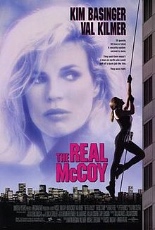
The Real McCoy (1993)

One of the great good films to come out of the 1990s action boom, this Russell Mulcahy caper stars Kim Basinger as Karen McCoy, quite possibly the hottest felon ever to walk out of a woman’s prison, complete with makeup and hair did. After a multiyear rap for a botched burglary of an Atlanta bank — complete with high-tech gear that must’ve cost more than she would’ve made from the heist – she’s now looking to reconnect with her son and walk the straight and narrow.

But, of course, because Kim Basinger is so hot, every man she comes across wants to wrap their slimy tentacles around her, especially her grimy parole officer, who I’m pretty sure was in plenty of Ernest P. Worrell flicks. Add in the equally slimy Terence Stamp, as a crime lord clad mostly in a terrible Southern accent, who kidnaps her kid, leaving her with no other option but to return to the robbing life. Along the way, she meets affable J.T. (an affable Val Kilmer), a bumbling driver who seems out of place in this movie, but oh, well, it was the ’90s and we threw caution to the wind and hired Val Kilmer whenever we could.

Watching The Real McCoy for the first time in 20 or so years, it’s a bit strange now to watch these Joel Silver, Andrew Vajna, Don Simpson or, in this case, Martin Bregman-produced flicks in the era of #MeToo, because throughout most of the movie, Basinger takes beating after beating from various men and never once fights back — until the very end, of course, when she all of a sudden unleashes kung-fu kicks left and right.

A lot of this probably wouldn’t fly today and you’d have to wonder if Basinger, whose star has waned a bit, would do it all differently today. And while it would be easy to call for a remake, this was quite the bomb at the box office, earning about $6 million in receipts. Maybe it didn’t fly so well back then, either? —Louis Fowler

Get it at Amazon.