
Rub (2023)

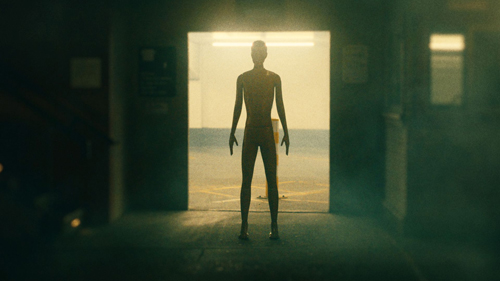
Seeking human connection, the balding, bullied Neal finds it in the hands of Perla, a sex worker. She plies her trade at the kind of massage parlor one speaks of with air quotes.

It’s also the kind of place that attracts gang robberies. During just that, Neal, dressed only in his tighty-whities, shifts into White Knight mode, rescuing Perla not just from the scene of the crime, but her dead-end career tugging at strangers’ junk. Circumstances force them to flee town with their lives and little else.

As the unlikely couple of Rub’s sympathetic but tragic heart, unknowns Micah Spayer and Jennifer Figuereo are terrific. Neither embody the movies’ idea of conventional leads, which is honestly half the film’s appeal. Pretty Woman, this ain’t.

While Spayer has the showier role as an incel with an uncontrollable temper, Figuereo’s is, I’d argue, the more difficult to pull off: making us believe she has feelings for Neal that go beyond convenience. I wish the supporting cast members operated at their skill level. Neal’s ruthless co-workers act like they’re in a comedy, and poorly.

Rub isn’t a joke, although the tagline of “Not all endings are happy” sure has a winking tastelessness not present in Christopher Fox’s first feature. Its initial half works well, but once Neal and Perla hit the road with no place to go, the movie doesn’t seem to have a destination locked down either. A dinner scene among a table of wayward souls breaking bread in particular grates with fabricated emotion; Rub does its best trafficking in the dark, like employing psychedelic animation to convey the drug-induced panic on Neal’s face. —Rod Lott

Get it at Amazon.

The Wendigo (2022)

After livestreamer Logan (Tyler Gene) goes missing while looking for a “haunted, mythological creature thing” at North Carolina’s Lake Tomahawk, a group of friends and fellow content creators search for him.

Of course, they have to document it, too — whether that’s out of care or for the clout is up for interpretation. Walking into a restricted area of the woods, the five flirt, argue, theorize, get lost and — eventually — run and scream. This is found-footage horror, after all.

I believe in the hands of a majority of microbudget filmmakers, Logan’s livestreamed prologue would be stretched out to be the whole movie, with each (p)added minute diluting its effectiveness (especially in the use of the buffering symbol at peak moments). Instead, The Wendigo takes the smarter route of going a layer deeper. To its credit, I was absorbed enough in the hunt that I kept forgetting its cryptozoological foundation. Antlers aplenty; no snow.

While the full result is imperfect, it’s start-to-finish better than most, no doubt aided by first-feature director Jake Robinson (also part of the primary cast) wrapping things up after an hour. With the last 15 minutes achieving a mild intensity, he doesn’t give you the chance to become bored. However, the final scene, involving a circle of people, finds him letting go of the restraint he otherwise ably demonstrates. —Rod Lott

McBain (1991)

Not based on the action-film character from The Simpsons, this McBain is based on the action-film character by James Glickenhaus, director of The Exterminator. And who plays this rousing actor hero? You must’ve said Robert Ginty, right?

But instead, we have an out-of-it, out-of-his-element Christopher Walken, well before he become a walking internet meme in regular, off-kilter movies.

In 1973, in the jungles of the Philippines Vietnam, the U.S. is withdrawing her troops. Michael Ironside, Steve James and Chick Vennera are on the plane ride home, but first, they find a P.O.W. camp they have to liberate. It looks like the set of Cannibal Holocaust. There, Walken is in a fight with a lookalike Bolo Young. Of course, the battle is won. But, should they we need each other, Walken and Vennera have a bond with a tattered $100 bill if things go bad.

Eighteen years later, things go bad.

Vennera is a freedom fighter for the Filipino Colombian government. Although he takes el Presidente hostage, he is killed by his own gun in a reversal of fortune. With Vennera’s sister (Maria Conchita Alonso), Walken (supposedly) walks all the way to New York City, has a beer and reunites with members of his old platoon, now leading very different lives, all of them dumb.

To get to the Philippines Colombia, they have bloody fights with drug dealers and mafia goombahs in order to get enough money to charter a plane. This takes up most of the movie’s 104-minute runtime. On arrival, Alonso and her freedom fighters take the presidential palace, and Walken shoots el Presidente in the head, with thumbs up all around in jingoistic support.

With songs that are overwrought hymns to America (“This my song for freedom!”) alongside the bloodiest gun battles in the early ’90s, this is a strange film that manages to be very boring. Although Glickenhaus caught lightning in a bottle with The Exterminator, apparently the bottle shattered on the ground with films like The Protector and Shakedown.

Plodding with its bad editing, weird time lapses and strange motivations, this movie is just pretty bad. No wonder it has been mostly forgotten, especially with cast members like Walken or Ironside, who are usually able to discern when bad trash is good trash. With McBain, it’s bad trash all the way around. —Louis Fowler

Get it at Amazon.

Til Death Do Us Part (2023)

Wedding bells are ringing … until they don’t, when the bride decides she can’t go through with the nuptials and flees. To find her, the gobsmacked groom sends his seven groomsmen on a “containment mission” — odd word choice, if not for all of them being highly trained assassins, would-be spouses included.

Til Death Do Us Part. Get it?

From Timothy Woodward Jr., director of 2020’s The Call, the colorful thriller plays like a siege picture, as the bride (Natalie Burn, Mechanic: Resurrection) holes herself up in a house whose threshold the groomsmen attempt to penetrate. As they do, the bride goes mano y womano against them, whether using a chainsaw, a golf club or considerable martial arts skills that can’t be easy to execute while wearing a wedding gown.

These balletically choreographed fight sequences are the strongest minutes of Til Death Do Us Part; as a showcase for Burn’s pure physicality and athleticism, the film succeeds. Outside of that, it’s a mess. We’re made to feel the pain of every punch of a tussle, until the soundtrack suddenly does a tonal 180˚ by pulling a cover of “Rockin’ Robin” or a Frankie Valli soundalike single from its jukebox. In this way and others, the movie is often at odds with itself.

While many of the groomsmen look and behave like Tarantino cast-offs, best man Cam Gigandet (2017’s The Magnificent Seven) dances (sometimes literally) through his part as if he were competing against George Clooney for the lead in a comic caper set at a charm school. Meanwhile, an unrecognizable Jason Patric (Speed 2: Cruise Control) pops up in a super-sober subplot I don’t believe was designed to confuse its audience as long as it does.

One thing that is designed to pull the proverbial wool is the movie advertising itself as “from the creator of Final Destination.” While Jeffrey Reddick serves as a primary producer alongside Burn and Woodward, he’s not credited with the script. Til Death Do Us Part lives not only in a different genre, but has none of that franchise’s cleverness or entertainment ROI. Consider that a divorce. —Rod Lott

Night of the Sharks (1988)

You can’t miss Treat Williams in Night of the Sharks. He’s the one wearing minimally buttoned Hawaiian shirts and a baseball cap emblazoned with a big, red “S” — which, it goes without saying, stands for “Shit, what did my agent get me into?” (Oh, just an Italian B movie to keep your tummy full before your mid-1990s comeback, Treat.)

Williams’ fisherman character, David Ziegler, lives the hammock-and-shack life on the Caribbean shore, complete with a bolo-wearing sidekick (Foxy Brown’s brother, Antonio Fargas). The plot ostensibly concerns Ziegler fighting for his life when his dumb brother sends him a CD encoded with all the secrets of a criminal overlord (John Steiner, Caligula) that many a goon will kill to keep. But director Tonino Ricci is no dummy (despite Thor the Conqueror’s evidence to the contrary); ergo, his movie is titled Night of the Sharks, not Disc of Incriminating Data.

Sharks do appear, although mostly in sunlight. In fact, a particular shark pesters Ziegler daily, not unlike an unchained Doberman on a USPS mail carrier’s route. It swims in shallow water around Ziegler’s boat; Ziegler shouts it’s a “son of a bitch”; the shark shouts back. From shot to shot and scene to scene, however, its fin changes shape. In close-up, it’s toothless. Not that you’ll mind.

Perhaps sensing Dead Heat was going to tank, Williams gobbled up an easy paycheck in semi-paradise, whether you consider that to be the Dominican Republic or in bed with Janet Agren (City of the Living Dead) as his still-hot-to-trot ex-wife. (It’s certainly not listening to the cancer-ravaged voice of Christopher Connelly, playing a priest in his final role.)

Sharksploitation pics often don’t climax in an all-out jungle war, but that just makes this junk that much more fun. They also often don’t contain genuine star wattage like Williams, who, ever the professional, appears to have taken this as seriously as his 1970s’ lead roles. Yes, even when he’s arguing with a shark — which, it goes without saying, ain’t the stuff of Sidney Lumet. —Rod Lott

Get it at Amazon.

Random Genre & Cult Movie Reviews