

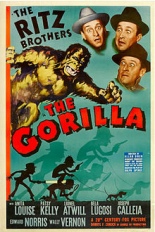
 Following a plague of murders committed by the titular beast, a rich man (Lionel Atwill) receives a note that fingers him as the monkey’s next victim, to be killed at midnight. He calls his niece, her fiancée and three bumbling detectives (The Ritz Brothers) to his mansion, which turns out to house a ton of secret passages, which the gorilla uses to terrify the houseguests (which include butler Bela Lugosi).
But director Allan Dwan’s The Gorilla is no horror film — rather, it’s Edgar Allan Poe’s “Murders at the Rue Morgue” mystery rejiggered as a screwball comedy. And the comedy is perfectly stupid, which helps make the movie perfectly enjoyable.
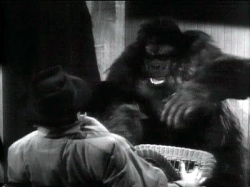 The Ritz Brothers are like a combination of The Marx Brothers, Abbott & Costello and … oh, I dunno, Sammy Petrillo and Duke Mitchell, just to even things out a bit. (Typical exchange: “How do you spell ‘gorilla’? Two Rs or two Ls?” “Gorilla. G-O … Gee! Oh! Gorilla!”)
Every old, dirt-cheap, 66-minute movie should have a killer monkey on the loose running through a hidden maze of corridors, bonking guys on the head. Yeah, I kinda loved it. —Rod Lott
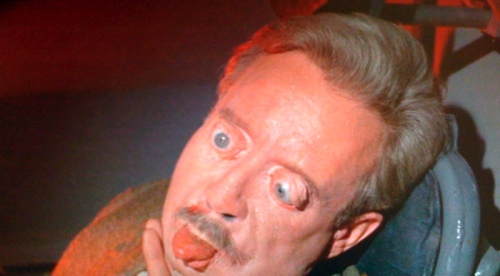

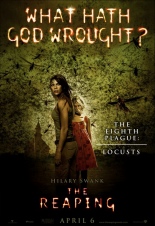
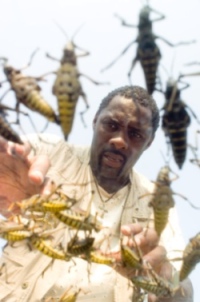 Stephen Hopkins’ film isn’t nearly as bad as its icy reception would lead you to believe. Okay, so it’s overly orange-looking and has an end scene that you can predict halfway through, but it’s fun enough and I’m always up for a movie in which fat people’s faces are covered with boils.
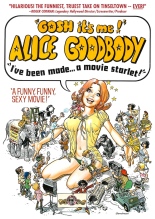
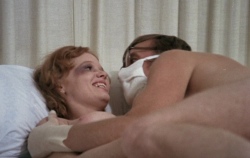 Writer/director Tom Scheuer clearly had no interest in the film’s many sex scenes, since he plays them all for laughs (with varying results), but they all benefit from the presence of his lead actress (who appeared in a lot of these movies for a good reason), which makes their ubiquity a lot easier to bear.
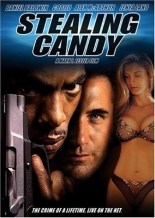
 Candy (luscious Jenya Lano), who has a no-nudity clause in her contract, agrees to, um, perform, but only to save her life. When it comes time for the big bang, the movie actually delivers the goods. And when the netcast is over and $13 million sitting in an offshore account, alliances are tested, secrets are revealed, tables are turned and Lano’s breasts go back in her bustier.