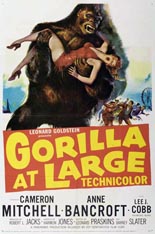

Gorilla at Large (1954)

gorillalargeWhile the exact year escapes me, I recall with fondness that time in grade school when one of Oklahoma City’s local UHF stations was televising a 3-D movie marathon. It took some heavy pleading on my part to convince my mom to drive the quarter-mile to the nearest 7-Eleven, where a pair of those cellophane-lensed cardboard specs — one red, one blue — could be yours for something like 50 cents.

She gave in, and I happily awaited the four nights of cominatcha cinema whose lineup remains burned in my brain: 1961’s The Mask, 1977’s kung-fu Dynasty and two flicks from 1954: Creature from the Black Lagoon and Gorilla at Large. Try as I might, I don’t think I made it past the first commercial break of the latter. I didn’t deserve Gorilla then, but I deserve it now.
gorillalarge1And so do you. Directed by Harmon Jones (Don’t Worry, We’ll Think of a Title), the novel whodunit is as if King Kong were the idea of Agatha Christie. Despite its off-putting name, the Garden of Evil carnival boasts two star attractions: Goliath, hawked as the “world’s largest” gorilla, and Laverne (Anne Bancroft, The Graduate), the trapeze artist whose gimmick is to swing perilously over his caged habitat.

When a man is discovered murdered at said cage, suspicion falls upon Goliath … but wait, didn’t the carnival’s owner (Raymond Burr, Airplane II: The Sequel) just order a gorilla costume for the barker (Cameron Mitchell, Blood and Black Lace)? A police detective (Lee J. Cobb, preparing for his Exorcist role) noses around to find out; look for eventual Delta Force colonel Lee Marvin as a patrolman!

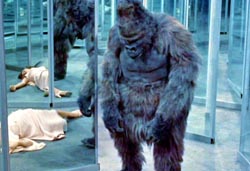
Although unapologetically a B picture, Gorilla at Large has more to offer than talentspotting future A-listers. Many of Jones’ shots possess a depth of field even projected flat, and his camera soaks up the color of the carnival backdrop. That’s not just there for show, either, as great pains are made to incorporate various attractions into the script, from the tilt-a-whirl and merry-go-round to the roller-coaster finale. The most memorable sequence finds The Bride and the Beast’s Charlotte Austin is pursued through the mirror maze by a gorilla — whether real or fake is immaterial at that moment of suspense. —Rod Lott
Get it at Amazon.

Tango & Cash (1989)

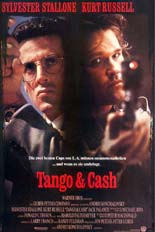
tangocashLiterally the last action film of the ’80s, the Guber-Peters Company buddy copper Tango & Cash seemingly rounds up every element that defined the genre that decade, and packed them into the first 10 minutes. To wit: Renegade cops! Guns! Car chases! Cocaine! Tits! Mullets! Mullets!! Mullets!!! Complete and total disregard for life, limb and property! Russian comic relief! The snyth-pop music of Fletch’s Harold Faltermeyer! The scary-potato face of Maniac Cop Robert Z’Dar!
Okay, so I lied. All that can be found in the first nine minutes. Only upon closer scrutiny do we notice the absence of two things: running/jumping from an explosion and a slice of beefcake via a hunk’s bare buns. Rest assured, both “rear” their heads before director Andrei Konchalovsky (Runaway Train) ends the film — in a freeze-frame of a high-five, natch.

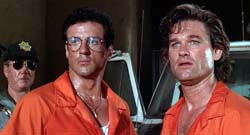
tangocash1Respectively coming off Lock Up and Tequila Sunrise, Stallone and Russell respectively play rival cops Lt. Raymond Tango and Lt. Gabriel Cash, respectively buttoned-up and a loose cannon. Both winners in the war on drugs — or at least as far as their L.A. beats are concerned — the men are framed for murder by rat-loving criminal kingpin Yves Perret (Jack Palance, playing his character as if he were still in Tim Burton’s Batman), simply to move the story forward and give Tango and Cash something to do — namely, go to prison, simply so Tango and Cash can break out of prison. You get the picture; its idea of audience-pleasing comedy is dressing Russell in drag and having Stallone declare that “Rambo is a pussy.” Ha, get it?

At once as familiar and embarrassing as a lunch of SpaghettiOs, Tango & Cash does sport a couple of surprises, the first being that our heroes are like James Bond in that they have their own Q, as savant-as-ever Michael J. Pollard (Bonnie and Clyde) constructs such useful gadgets as the guns that pop out of Cash’s cowboy boot heels. Speaking of 007, future Bond girl Teri Hatcher (Tomorrow Never Dies), in an early role as Tango’s troubled kid sister, Kiki, proves to have quite the impressive stripper moves. She also may be the screen’s only clothes-peeler to a perform a drum solo in the middle of her routine. Well-played, Ms. Hatcher, well-played.

Kiki’s rhyming throwaway comment of “grime, crime and slime” nearly could be Tango & Cash’s plot synopsis, but definitely works as a tagline for this high-calorie high colonic of a movie. Same goes for Tango’s utterance of “good old American action,” because no one makes mindless violence as the USA. USA! USA! USA! US — whaddaya mean Konchalovsky was born in Moscow? No wonder this production was so troubled. —Rod Lott

Get it at Amazon.

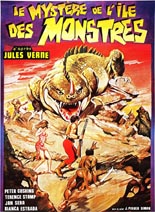
Jules Verne’s Mystery on Monster Island (1981)

mysterymonsterislandIf a mystery exists in Jules Verne’s Mystery on Monster Island — one does not — the characters are not cognizant of it. Please forgive them, for they are very, very stupid.

And so is their movie, for which Pieces auteur Juan Piquer Simón pillow-smothered Verne’s 1882 adventure novel Godfrey Morgan into a live-action cartoon. Don’t get your hopes up when the names of Star Wars’ Peter Cushing and Superman II’s Terence Stamp topline the opening credits; both distinguished thespians bookend the film like veritable Cryptkeepers. (Expect even less from Spanish horror icon Paul Naschy, who croaks in the first scene.) That leaves the heavy lifting of the featherweight narrative to no-names Ian Sera and David Hatton.

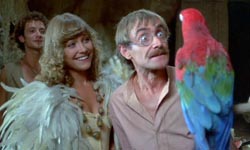
mysterymonsterisland1Simón’s four-time leading man, the Screech-like Sera (Pod People) plays Jeff Morgan, one of those aristocratic sorts who wishes to see the world before settling down. His uncle (Cushing) bankrolls a yearlong, not-so-extraordinary voyage for the young man aboard his ship, and orders the fussy etiquette professor Artelect (Hatton, The Pirates of Penzance) along as Jeff’s slave, more or less. It’s as if Jeff were traveling with Sesame Street’s Mr. Noodle.

Rather quickly, the ship gets wrecked after an attack by walking fish creatures, leaving Jeff and Artelect stranded on an island where, despite a language divide, they befriend a native man (Gasphar Ipua, Simón’s Sea Devils) in a loincloth and constantly encounter title-hencing monsters, including dinosaurs, seaweed heaps and giant caterpillars that spew God-knows-what. No matter the critter, Artelect quakes in fear and screams, “Monsters! Monsters!” (He also shouts this upon spotting a pig and a fully stationary skeleton; in other words, he redefines “annoying.”) Eventually, our heroes get wise enough to Home Alone the hell outta that jungle by crafting such defense mechanisms as banana cannons and coconut catapults.

The monsters are laughably cheap and unconvincing, seemingly with fewer points of articulation than a corncob voodoo doll. Simón attempts to justify it through a story “twist,” but since Verne’s book was beast-free, I’m not buying what Simón is selling there. At the same time, I wouldn’t want him to change a thing, especially with regard to the creatures’ appearance; the more “real” they would look, the less entertaining Mystery on Monster Island would be. As is, it’s another Simón disasterpiece. Dig in! —Rod Lott

Get it at Amazon.

Point Break (2015)

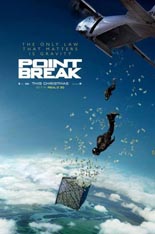
pointbreak15Look, just because something is old does not make it great. And yet, as the Point Break remake surfed into theaters on Christmas Day 2015, I do not recall running across a single article or review that failed to refer to the 1991 original, which paired Patrick Swayze with Keanu Reeves, as “classic” — noun or adjective. “Classic” is a charged word — one that should be earned rightfully vs. bestowed automatically.

Perhaps Swayze’s too-young passing in 2009 is responsible for the revisionist love, because Kathryn Bigelow’s crime flick was neither well-reviewed nor a hit in its July ’91 bow. In fact, its $8 million opening placed it in fourth that weekend, behind James Cameron’s Terminator 2: Judgment Day, John Singleton’s Boyz n the Hood and a reissue of a then-30-year-old cartoon, Disney’s 101 Dalmatians.

So, old? Definitely. Classic? Hardly.

With that out of that way, back to the “new” Point Break

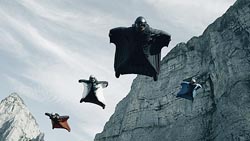
pointbreak151… and wow, does it suck. Seven years after witnessing (if not encouraging) the death of his dumbass bike-riding buddy (Max Thieriot, House at the End of the Street), extreme-sports athlete Johnny Utah (Luke Bracey, The November Man) has reinvented himself as an FBI agent. When a group of rogue extreme-sports enthusiasts use their extreme-sports skills to pull off a series of extreme heists, Utah is the only one who convincingly can go deep, deep, deep, deep undercover. After all, he’s got the extreme-sports know-how, the sleeve tats and, of utmost importance, the looks of what would result from The Fast and the Furious’ Paul Walker impregnating Sons of Anarchy’s Charlie Hunnam.

With the bureau’s blessing and armed with gun and surfboard, Utah takes off to infiltrate the gang, crack the case and bring ’em to justice … extreme justice. (Fun fact: According to one of the film’s posters, justice has no limit. Crime doesn’t, either, according to another. #themoreyouknow) Led by the Zen-ful Bodhi (Deliver Us from Evil’s Edgar Ramírez, too good an actor to endure haircuts as super-silly as he does here), the group operates under a Robin Hood agenda of wealth redistribution: Steal from the rich, make it rain on Third World countries. Bodhi’s crew members have names like Roach, Chowder, Grommet and Samsara, and welcome Utah into their bro-dude family with irony-free lines like, “What’s a motocross rider like you doing on a wave like that?” and “The only law that matters is gravity.”

Yes, Point Break is exactly that point-blank simpleminded, and its stupidity exhausts the viewer. Clearly cribbing more from the likes of Furious 7 than Bigelow’s big Break, it boasts some absolutely amazing stunt sequences that impart if not an adrenaline rush, then a solid contact high. Yet not even the best is worth suffering two hours plus of boneheaded dialogue and an unintentionally hilarious bumped-uglies subplot between Utah and eco-friendly earth child Samsara (Warm Bodies’ Teresa Palmer, suffering the further indignity of having her breasts pushed up to her neck). Invincible director Ericson Core (chosen for his extreme name?) is no Bigelow; while he can shoot leaping, jumping, running, falling and other action verbs all day, the man is forever crippled when it comes to mere walking and talking. —Rod Lott

Get it at Amazon.

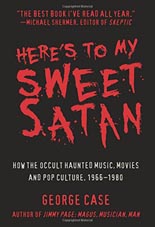
Here’s to My Sweet Satan: How the Occult Haunted Music, Movies and Pop Culture, 1966-1980

heresweetsatanOne of my favorite books from last year, Spectacular Optical’s Satanic Panic, did a thorough job of looking at one 1980s trend as peculiar today as Jams and parachute pants: the widespread hysteria among preachers, teachers and suburban creatures that Dungeons & Dragons and heavy metal and the like were corrupting our children. It is an excellent read that comes at its subject from a multitude of angles.

But that feverous movement is just one portion of a far larger story; full-blown, coast-to-coast delirium doesn’t just happen overnight. After all, tales of devilish temptation are as old as the Book of Genesis, so how did these media items become public enemies? George Case looks at the sordid, start-to-finish tale in Here’s to My Sweet Satan: How the Occult Haunted Music, Movies and Pop Culture, 1966-1980. Don’t let the serial killer-looking cover scare you away.

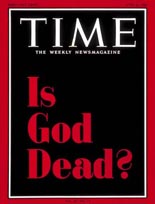
Why jump in at 1966? Because that’s when, on its April 8 cover, Time magazine famously inquired, “Is God Dead?” As Case notes in his introduction, “After World Wars I and II, fascism and the Final Solution, and the atomic bomb, the presence of a benign God watching over humanity became less plausible to the average mind than ever.”

time-isgoddeadAs restrictions on media slowly laxed, especially with regard to the MPAA, creatives increasingly pushed the envelope in turn, resulting in such zeitgeist magnets and game changers as Rosemary’s Baby, The Exorcist and The Omen; the early novels of Stephen King; a host of rock records, from The Beatles’ Sgt. Pepper album to Blue Öyster Cult’s “(Don’t Fear) The Reaper.”

With each piece of media earning its own “making of” story, all of these and more paved the way to “redirect the middle of the road to the occult,” eventually leading to PMRC LP bonfires and hysteric vilification of mazes and monsters — the aforementioned “satanic panic,” to which Case devotes the seventh and final chapter. Structurally simple but effective, the chapters before that segregate the subsets of motion pictures, music and literature from one another. Even greasy kids’ stuff à la Ouija boards, horror comics and Count Chocula cereal earns a section of its own.

No matter the chapter and from the very beginning, the author approaches his main topic for what it really is: one big business. (We could gauge just how big if only we were privy to the tax returns of Alice Cooper, Gary Gygax and Bill Blatty.) He writes, “While Black Masses, evil spirits, and poltergeists continued to bring customers to the Warlock Shop and the Metaphysical Center, they were also ringing up sales at pharmacies, airports, malls, and department stores.”

By now, I assumed that everything there was to be told about, say, The Exorcist, had been told long before. I was wrong. With Case’s examination of that 1973 Oscar-winning blockbuster and other artistic works that leveraged Christian America’s fear of the unholy into big bucks, there’s real heft to Here’s to My Sweet Satan: factually, culturally, intellectually. —Rod Lott

Get it at Amazon.

Random Genre & Cult Movie Reviews