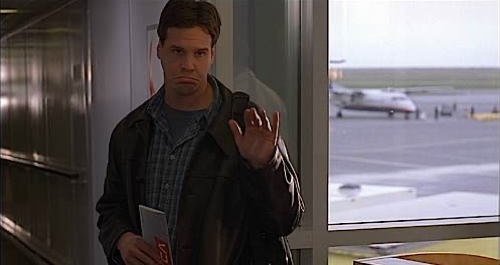
Rest in Pieces (1987)

After her nutty Aunt Catherine takes a fatal swig of strychnine, Helen (Lorin Jean Vail, 1986’s The Patriot) learns she’s the sole survivor of the family — and, therefore, sole beneficiary of an estate worth $8 million.

With husband Bob (Scott Thompson Baker, 1987’s Open House), Helen moves to Spain to occupy her aunt’s property in the hoity-toity neighborhood Eight Mannors [sic]. The only thing about the home stranger than the kitchen’s trapdoor is the collection of oddballs among the house staff and neighbors, from a hot maid and a blind man (The Panther Squad’s Jack Taylor) to a priest and a guy whose wardrobe is Nazi garb.

As the requisite strange occurrences begin — e.g., a piano playing on its own, carbon monoxide poisoning, suffocation by shower curtain — Helen and her many fashionable ’80s sweaters believe these hangers-on may be after her inheritance and, by extension, her life. The group murder of a violinist hired for a private performance lets viewers know early that despite Bob’s you’re-just-paranoid protestations, Helen’s suspicions couldn’t be more spot-on.

But the movie sure could be. Never as fun as it inches toward, Rest in Pieces is only as clever as its punny title, which is to say the film from José Ramón Larraz (hiding behind the Joseph Braunstein pseudonym he used for Black Candles and Edge of the Axe) is an undistinguished shocker. His horror films of this era play like comfort food to former lurkers of video-store aisles, yet not every Larraz sticks to the ribs.

Sure enough, this one passes right through, with the big takeaway being its casting coup of honest-to-God Academy Award winner Dorothy Malone as Aunt Catherine — her final role if not for the résumé-saver Basic Instinct. Heroine Vail, however, is in no danger of getting near an Oscar, for several reasons — stopping acting in 1988 being the least of them. —Rod Lott

Get it at Amazon.

The Heavenly Kid (1985)

I saw more flicks on cable in the ’80s than anywhere else, especially on HBO. One of those movies happened to be The Heavenly Kid, a twice-a-day film, typically catching it both in the late morning and early evening. I was that way with a lot of movies, mind you, but this one was, for the most part, different.

Sure, it had the sex and drugs and all that, but it also had an early-’60s juvenile delinquent named Bobby (Lewis Smith) who, after a dragstrip race gone bad, comes back to earth to help a kid named Lenny (Jason Gedrick) become a world-class chick-scorer; he’s doing this all in the name of getting to “Uptown,” by the way.

But while Lenny is becoming the teen king — or, at least, the teen prince — of cool, Bobby learns that not only is Lenny his son, but Bobby has to grow up and, figuratively, become a man so his son will live to fight another day. When I was a kid myself, I thought that that was a neat little riff, but all grown up now, I can kind of see what director and writer Cary Medoway was trying to say.

I mean, sure, it was in a teen sex comedy, but there’s a lesson about maturity somewhere in there, I promise.

At the time of release, right after he appeared in the anachronistic sci-fi flick Buckaroo Banzai, Smith was poised to be a big name, only to star in the TV-movie version of David Bowie’s The Man Who Fell to Earth before fading into semi-obscurity. It’s kind of a shame, really, because he could’ve been a big star. At least I think so.

Instead, Gedrick, Jane Kaczmarek, Richard Mulligan and future starlet Nancy Valen — whom you may remember in infomercials for the Thigh Roller, Thin ’n Sexy Body Wrap and Kevin Trudeau’s Debt Cures “They” Don’t Want You to Know About — seemed to have any career. But, in the ’80s, this heavenly kid thought Smith was as cool as cool got, with this movie being an absolute revelation. —Louis Fowler

Get it at Amazon.

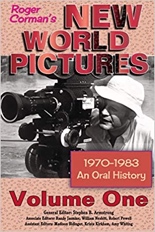
Roger Corman’s New World Pictures (1970-1983): An Oral History

Stephen B. Armstrong’s two volumes of Roger Corman’s New World Pictures (1970-1983): An Oral History are likely not what you think them to be, thanks to the “oral history” label. Today, we associate that term with a chronological narrative weaved together from quotes from varying sources, as one finds in untold numbers of internet articles and pop-culture books (e.g., I Want My MTV or Live From New York: The Complete, Uncensored History of Saturday Night Live).

What you get from Volume One and Volume Two, however, isn’t a story, but a collection of Q&A interviews (published by BearManor Media) separated by the interviewee and not presented in any order — other than starting with Roger, of course.

With that carp out of the way, know this: There are some great stories for the reader to discover within these interviews (and it’s kind of amazing how many made their way to Corman via Martin Scorsese). Jonathan Kaplan recalls getting one day’s notice to direct his first film, Night Call Nurses. Lewis Teague talks about his assignment to figure out how to get some sex and action scenes cut into Monte Hellman’s Cockfighter. John Sayles reveals eye-rolling details from the Piranha script he rewrote, such as the killer fish seeking menstruating swimmers.

No one is more self-congratulatory than actor Martin Kove, while no one is more entertaining than actress Grace Zabriskie. It’s less about her #MeToo remembrance of Galaxy of Terror co-star Ray Walston and more about her blunt frustration and annoyance with the interviewer’s inquiries (“Dear God in heaven, I just can’t get interested in that question”), not to mention bafflement over why anyone wants to talk about Galaxy of Terror.

Others submitting to the hot seat include Sid Haig, Dick Miller (but just barely), Joe Dante, Allan Arkush, Mary Woronov, Robert Englund, Jack Hill and many more, several of whom are behind-the-camera personnel with names you won’t recognize. That’s not a bad thing, other than not always being properly introduced to the reader; in fact, I’d argue the single most informative conversation is with Corman attorney Barbara Doyle, who details her process for acquiring acclaimed foreign films for U.S. distribution, which gave Corman serious credibility to offset his miserly reputation.

On that note, a throughline emerges, with many acknowledging the low-as-possible budgets while also praising the flip side to that: real-world training and creative freedom. Not for nothing was the man awarded an honorary Oscar in 2009 … although it sure wasn’t for Galaxy of Terror. Armstrong makes sure to celebrate both, as one should! —Rod Lott

Get it at Amazon or BearManor Media.

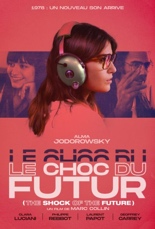
Le Choc du Futur (2019)

WTFThe retro tribute Le Choc du Futur ends with an onscreen note of thanks to the unheralded women who were pioneers of electronic music in the 1970s, with a list of names that should be immediately written on a piece of paper and taken to your nearest record store to search.

Translated The Shock of the Future, the French film details a day in the life of Ana (Alejandro’s granddaughter Alma Jodorowsky) and her obsession with 70s-era equipment — especially a then-state-of-the-art beat machine — in the attempt to make a commercial jingle. She never gets around to it, instead making a killer disco tune instead.

As she does this, Choc details the constant barriers women faced in that burgeoning age of electronic music, most notably the way every guy, though he seems to take her seriously, wants a sexual favor in return. And while I’m sure not much has changed on that front, the way Ana perseveres is actually quite inspiring.

Directed by French composer Marc Collin and written with Elina Gakou Gomba, Le Choc du Futur portrays Ana as an anachronistic music geek with definite opinions that wouldn’t seem out of place at a Saturday-afternoon record store argument, especially when she’s decrying how, staring in the face of an electronic frontier, rock and roll is dead.

At the time, no matter how short-lived that time was, she might have been right, too. —Louis Fowler

Get it at Amazon.

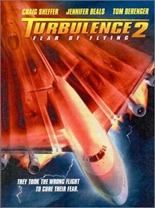
Turbulence II: Fear of Flying (1999)

A sequel in name only, Turbulence II: Fear of Flying fills a Trans-Con Airlines jet cabin with enrollees of a self-help course to conquer their phobia of the friendly skies. Their “final,” so to speak, is to take an actual flight instead of participating in a mere simulation. That the real voyage includes mass poisoning (via ice cubes) and a hijacking is entirely unplanned.

Because one of the students (Craig Sheffer, Nightbreed) survived a fiery plane crash years before, leading him to his current chosen profession of milquetoast aeronautical engineer, he’s de facto designated to become our unlikely hero. And because he’s a single dad, of course the cute passenger one row ahead (Jennifer Beals, Four Rooms) is destined to practically be engaged to him by the time the aircraft kisses the runway, even if she boarded with someone else at her side (Jeffrey Nordling, Tron: Legacy) — someone for whom she shuts down the Mile-High Club initiation process mid-coitus.

By definition, direct-to-video actioners are pretty derivative, and Turbulence II is no exception. In this case, however, clearly influenced by my beloved Airport franchise, that’s a good thing. Having worked for Roger Corman more than a dozen times, Rob Kerchner (Carnosaur III: Primal Species) delivers a story stripped clean of subplots for maximum efficiency, which director David Mackay (Black Point) welcomes while seemingly convincing himself this sweet new gig is Die Hard 2.

Third-billed Tom Berenger (Sniper) gets the somnambulant role of the air traffic controller who never leaves the tower, much less moves. An exception to the latter is the moment when a hostage comes crashing through the tower’s skylight after being thrown from the plane overhead. You’ve gotta give it up for the villain exhibiting such incredible aim and timing, in a sequence that does not do the same; in fact, when the falling man approaches the bottom of the frame for moment of impact, you can see him slow down! Turbulence II, you are cleared for landing in what remains of my heart. —Rod Lott

Get it at Amazon.

Random Genre & Cult Movie Reviews