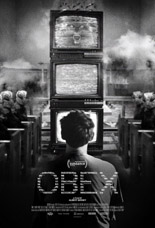

Obex (2025)

In 1987, Baltimore elected its first Black mayor — not that a resident like Conor Marsh (Albert Birney, I Saw the TV Glow) cast his vote. After all, he’s a shut-in who chooses to experience life through screens; when he’s not watching TV, he’s on his computer, earning a meager living by turning people’s photos into ASCII art. Watch, type, sleep, repeat.

One day, a floppy diskette with the game Obex arrives in the mail. The objective: Defeat a soul-eating demon named Ixaroth. The game literally changes Conor’s sad, lonely life! But by kidnapping his dog. 

Conor’s mission to save his four-legged best friend takes him outside his comfort zone of dot-matrix printers and computer magazines bagged with shareware, and into the forest. It’s a fantasy world all its own, with an animated fairy, a Zelda-ready elf (Callie Hernandez, Alien: Covenant) and a walking, talking RCA television set (Frank Mosley, Don’t Look in the Basement 2).

Written and directed by Birney himself (Strawberry Mansion), Obex revels in the 8-bit aesthetic. But it’s not all about that. Its sound design, black-and-white visuals and extreme close-ups of cicada bring Pi to mind, not to mention that film’s loner protagonist. Heck, so much absurdity is planted within Obex, it could have oozed from the mind of Pi’s protagonist after his DIY trepanation.  

Birney’s film is imaginative throughout, although significantly more winsome in its first half, before Conor ever leaves the house. Not that the video game-inspired environment is a loss. Turns out, a cursor floating in the sky can be a beautiful thing. —Rod Lott
Get it at Amazon.

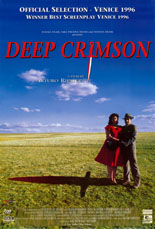
Deep Crimson (1996)

The salacious true crime story of the Lonely Hearts Killers in the 1940s was dramatized in the down-and-dirty flick The Honeymoon Killers, with Shirley Stoler and Tony Lo Bianco. (Surely, you’ve seen the far-out promotional images for that 1970 movie, right?)

Even though Killers was a slight precursor to John Waters’ comic misanthropy, it took director Arturo Ripstein — one of Mexico’s premier filmmakers — to really give it a sensational retelling in 1996’s dark and dour Deep Crimson, not to be mistaken for Deep Red, Crimson Peak or the pornographic Deep Peaks.

In 1940s Mexico, slightly overweight nurse Coral (the brilliant Regina Orozco) leads an extremely unhappy life. She not only is a single mother of two young kids, but has monstrously bad breath. Her only sexual outlet is to feel up her comatose and disabled patients, and she’s obsessed with actor Charles Boyer, an obsession that plays to her disembodied fantasies of leading a full life.

On the other side of town, Coral meets a man named Nicolás (a swarthy Daniel Giménez Cacho). He’s dangerously slick, well-toupéed and, of course, also seriously lovelorn. After a brief meeting and a slice of cake, they make passionate love and fall head over heels in love. So, what do they do next?

They send her kids to the orphanage, then immediately find a drunken woman to kill with rat poison. After dumping the stranger at a train station, they continue their murderous streak, conning elderly women and taking out their liver-spotted bodies Their worst act is an old-time home abortion that cumulates in the bathtub drowning death of a 4-year-old.

This being 1940s Mexico, justice is appropriately dealt. Cut to credits.

Having seen only a few of Ripstein’s genre films — the severely spooky La Tía Alejandra being the creepiest — I found the impact of the couple’s crimes, combined with the damaged psychology of the mother, makes Deep Crimson a truly engaging movie, especially for Orozco, whose performance always rides the tenuous line between depressive love to maniacal woe. Turning subversive love and perverse longing into a real necessity, Deep Crimson is a dry, dusty tale told through the perceptive lens of the sterile Mexican desert. Ripstein tears apart the Lonely Hearts Killers’ story and rebuilds it the way should have been done right from the beginning. —Louis Fowler

Get it at Amazon.

Christmas Bloody Christmas (2022)

Built by the U.S. military for defense, an animatronic Santa Claus goes haywire to turn homicidal on Christmas Eve. Why? Like the old joke about a dog licking its testicles, because it can.

And also because Joe Begos’ movie is titled Christmas Bloody Christmas, shot through a head-shop haze. 

The Final Girl of this self-knowing slasher is Tori (Riley Dandy, 2022’s Interceptor), owner of a record store patronized by hipsters. After a night of liquor and oral, she and cashier Robbie (Spiderhead’s Sam Delich, here a dead ringer for John Oates), find themselves targeted by the fire ax-wielding RoboSanta+ (a mute and committed Abraham Benrubi, The Belko Experiment).

Bloody’s highlight arrives all too early as we see the robotic Kris Kringle awaken through its POV, each metallic boot step clunking as it hunts its first fornicating victims. From there to the bitter end, when RoboSanta’s green laser eyes come in handy, Begos (Almost Human) hasn’t supplied a story to hold attention between slaughters. He opts for that laziest of indie-horror solutions: time-biding NSFW conversations, from Robbie telling his boss to “flick your bean” to a toy store employee ordering her boyfriend to “eat my ass out” — all so utterly uhh-noy-ing and free of imagination, you’ll root for RoboSanta just to be done with the thing.

Fatally pitched as a Silent Night, Deadly Night reboot, Christmas Bloody Christmas seems conceived as a seasonal Terminator parody. That kernel of an idea is all Begos has, though, short-circuiting any chances of holiday horror immortality. —Rod Lott

Get it at Amazon.

Fast Food (1989)

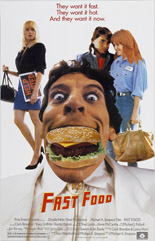
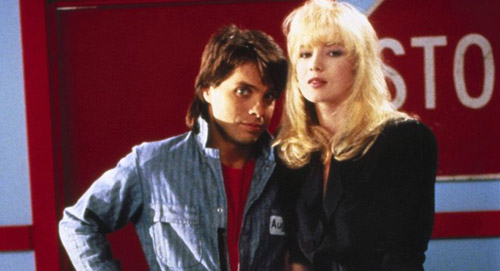
Kicked out of college for running a casino party and crashing a sleep study on nocturnal penile tumescence, eighth-year seniors Auggie (Clark Brandon, My Tutor) and Drew (Randal Patrick, Weekend Warriors) are forced to devise a full-time scam. Their answer: Turn Drew’s family’s gas station into a gas station-themed burger eatery. That it looks like a set from kidcom Saved by the Bell is of less concern than hiring Michael J. Pollard (Tango & Cash) to man the grill.

Col. Sanders had his secret blend of 11 herbs and spices; Auggie lucks upon a formula that unlocks the brain’s repression of sexual urges. He tests it by mass-Mickeying their catering gig for a sorority cotillion. It works so well, the hired band vocalist tells the crowd, “Wait a minute, I feel a little different! Let’s rock and roll!”

Because Auggie already radiates rapey vibes (“Here’s to swimmin’ with bow-legged women” is his pickup line) and no scruples, he slathers it on the restaurant’s patties. I don’t understand that business plan, but lo and behold, neither does Fast Food. This Zapped!-inspired setup doesn’t really take hold until the final third, and even then, nudity is as absent as healthy menu items. Otherwise, this thing contains all the ingredients for your (below-)average 1980s teen comedy: wet T-shirt contest, record scratch on the soundtrack, fast-speed montage, guy playing broom guitar, timely W.C. Fields impressions.

If history remembers Fast Food, it’s only for being former porn star Traci Lords’ first movie with an MPAA rating tamer than an R. She’s stunt-cast as a spy for competing burger franchise mogul Wrangler Bob Bundy (Jim Varney, who’s basically doing Ernest P. Worrell in different headwear). Under the spell of the sex sauce, she strips to a PG-13-friendly bra and panties.

Director Michael A. Simpson ports over several members of his Sleepaway Camp II and III cast, including Pamela Springsteen (sister of Bruce) and Tracy Griffith (half-sister of Melanie). The latter gets the movie’s single laugh, asking Auggie, “Don’t you have somewhere else to be? Like in custody?”

Brandon and co-star Lanny Horn (Homework) wrote the screenplay. Their collaboration is so artless, Hamburger: The Motion Picture looks like the Dardenne brothers by comparison. —Rod Lott

Get it at Amazon.

Class of ’74 (1972)

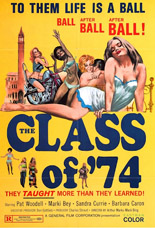
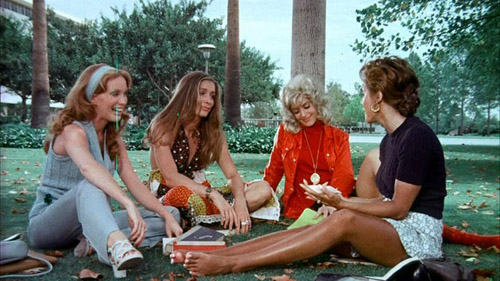
Three coeds live a credo espoused by the Rolling Stones (and, um, The Soup Dragons): They’re free to do what they want any old time. By “what,” they mean “whom,” of course, and the ladies urge their brunette Gabriella (Barbara Mills, The Suckers) to do the same. So she does.

Don’t expect much from Class of ’74 in plotting. After the on-campus prologue introducing us to our heroines (Sondra Currie, Marki Bey and Pat Woodell), the movie depicts their episodic, nudity-laden forays into college hookups and heartbreaks. Consider it a countercultural stepsister to Roger Corman’s Nurses pics in structure and spirit, yet sapped of all the fun. For example, the biggest bummer of a sequence finds a gay man in a Han Solo vest recalling how he was molested by his coach.

Arthur Marks’ films bear a distinct look, with a vivid palette of greens and oranges like peas and carrots from a piping-hot Swanson TV dinner. (I’m certain drive-in screens did his palette no justice.) That visual resemblance is all Class of ’74 has going for it, because his other works don’t play this staid. In fact, the following year’s The Roommates is even a sequel, but you wouldn’t know it; it’s a real blast to this movie’s utter drag.

In the last few minutes, Gabriella exercises her true sexual freedom by bedding a senior citizen (Phillip Terry, The Leech Woman) on a boat. —Rod Lott

Get it at Amazon.

Random Genre & Cult Movie Reviews