
Category Archives: Sci-Fi & Fantasy

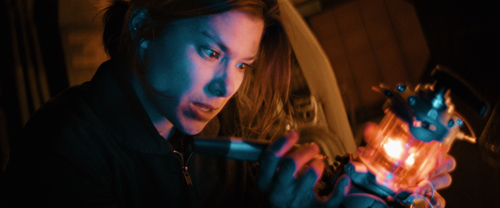
Dark Asset (2023)

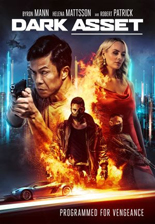
For its early years, starting in 1995, the fledgling UPN network operated on a business model leaning heavily on cheesy, ultimately short-lived sci-fi/action series, like Nowhere Man, The Sentinel and Deadly Games. In title, concept and production quality, Dark Asset feels like one of those shows, albeit never aired and salvaged by cobbling several episodes together into a faux feature. The first hour is so overstuffed with flashbacks, collectively introducing close to a dozen characters, that if not for the three-decade difference, my comparison wouldn’t be out of the question.

Total charmer Byron Mann (2018’s Skyscraper) stars as calm, cool, collected John Doe. He’s ex-Special Forces — “a soldier’s soldier,” we’re told — and the latest recruit for a shadowy super-spy operation in which Dr. Cain (Robert Patrick, Terminator 2: Judgment Day) shoves a microchip into the brain. Said chip allows Dr. Cain and his iPad to implant ideas into said brain — not quite control, but the power of suggestion.

Should’ve gone with control, Doc! Doe disobeys orders and punches, kicks and chops his way outta the lab and to a hotel bar where he meets Jane (Helena Mattsson, Species: The Awakening), a beautiful blonde in town for the requisite “business conference.” As with writer/director Michael Winnick’s superior Guns Girls & Gambling, his camera loves — and I mean loves — Mattsson. If you’ve ever wanted to see her fight open-bloused, may I direct your attention to Dark Asset.

But it’s not likely to keep it. With a two-thirds-in twist you’ll guess upon Clue One, the structure of John Doe telling most of the movie’s story to Jane with constant cutaways that show it — flashy cars, pulsating lights, fisticuffs with swarthy bizmen — interrupts any gained momentum, if not derails it. The flatness of digital video doesn’t assist Winnick in achieving his B-pic vision; ergo, the UPNity of it all. At Dark Asset’s best, the Mann-as-machine fight scenes, I was reminded of Jet Li’s similarly action-driven The One; at its worst, well, UPN’s The Burning Zone, I guess? —Rod Lott


Get it at Amazon.

Acción Mutante (1993)

In early 1995, I skipped class to attend a comic book-like convention near the now-demolished Holiday Inn on Oklahoma City’s north side. Even though the film bootleggers were always present in the exciting ads of cult-movie zines, this show was the first time I had seen them and their wares in person.

With a few bucks — I think about $5 — I purchased my first bootleg VHS tape, a staticky copy of the intriguing foreign action/comedy/sci-fi hybrid Acción Mutante, which I’d discovered in a dog-eared copy of the Film Threat Video Guide, a truly indispensable publication I loved at the time.

Went I got home, as soon as the VHS tape went into my player, I realized the movie truly changed my life, past and present, and I say that with no hyperbole or grandstanding.

In the three decades since his feature debut, the work of Spanish director Álex de la Iglesia has been mind-bending and phenomenal, including The Day of the Beast, Perdita Durango and The Last Circus, to name a few. Inventive and risk-taking, he’s never been disappointing — a feat, to be sure.

Now, with its grotesque vision of the handicapped future, the sickly evocative Acción Mutante hits Blu-ray. In this fractured time, the world has two factions: the rich, popular and sexy beautiful people, and the poor, hated and malformed citizens. On the latter side, the Acción Mutante team, led by terrorist Ramón (Antonio Resines), break into a well-publicized high-society wedding and kidnap the bride-to-be Patricia (Frédérique Feder), a shapely motormouth whose piehole is stapled shut in the ensuing fracas.

As the Acción Mutantes escape to another planet, they ransom her head to a slimy businessman and his effete son; meanwhile, Ramón kills every member of his “special” army to keep all of the (probable) dollars to himself. With the now-Stockholm Syndromed Patricia bound and dragged by her hair, they crash-land on a desert planet with diseased bodies, filthy minds and septic breath. Between the dead conjoined twins, the inbred family of rapists and a bar full of sexual violations, there is no way they are getting out of here … and they aren’t.

As the well-armed police patrol the scum-filled streets, our well-to-do saviors of the pretty and the factually ugly are trapped in this world — one perfectly comic and fully realized by Iglesias. As broken industrial architecture surrounds them as the most agitated haute couture despises them, they create a lived-in world of bad Andy Warhol movies, good John Waters films and, to top it all off, the second coming attraction of Christ as a disabled caricature.

This is anarchic art at its finest, and Acción Mutante is its own bloody afterbirth, made with corn syrup and food coloring. —Louis Fowler

Get it at Amazon.

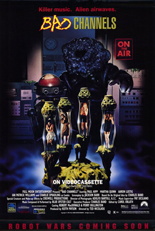
Bad Channels (1992)

On the AM dial, KDUL is gearing up for a big night. The station’s switching formats from polka to rock ’n’ roll, with DJ Dangerous Dan O’Dare (Paul Hipp, The Last Godfather) manning the platters after an FCC-mandated hiatus. The promo plans include an on-site story by a TV reporter (MTV VJ Martha Quinn), but not an alien invasion.

Yet Bad Channels wouldn’t be a Full Moon film without the unplanned. A UFO brings two visitors to the KDUL studio: a robot with baby-blue peepers and a creature with a giant rock head “like a turd with a porthole window.” These alien beings cover the station in fuzzy green mold and abduct female listeners through the airwaves. Because this is a Charles Band production, the ladies shrink as they’re collected into miniature glass tubes.

Bad Channels’ gimmick is that immediately before abduction, each woman — from a sexy waitress (Charlie Spradling, Puppet Master II) to a sexy nurse (Melissa Behr, Ring of the Musketeers) — imagines herself cavorting in a music video, which director Ted Nicolaou (TerrorVision) shoots in full. Although the score comes from 1970s rock dinosaurs Blue Öyster Cult, the videos feature other songs, all unknown, from other bands, all unknown. Showcasing a group calling itself Sykotik Sinfoney, the third clip gives us the Full Moon catalog’s most frightening and/or disturbing sequence. Would you expect anything less from a makeup-dependent metal act whose members include Crusty Udder and Stankly Poozle?

Coming from Full Moon’s golden age — you know, when 45 minutes marked the halfway point, not the end — Nicolaou’s movie is an ambitious mix of science fiction and light satire, like George Pal’s The War of the Worlds meets Roger Corman’s The Little Shop of Horrors — but insipid, because its groupie mom had sex with Trixter in the alley. Still, something dumb can be mighty entertaining, which this is. Watch for an end-credits stinger with Tim Thomerson reprising his Dollman role for a few seconds — all the justification needed to bring Behr’s still-shrunk nurse back for Dollman vs. Demonic Toys the following year, and all the proof Band’s brain was decades ahead of Kevin Feige’s. —Rod Lott

Get it at Amazon.

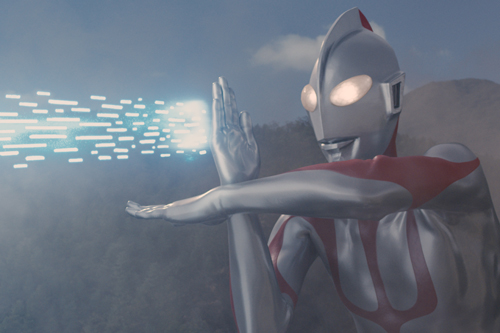
Shin Ultraman (2022)

Gotta give it to the 40-meter silver-shiny superhero Ultraman: He sure as hell doesn’t look 55! It helps that Shin Ultraman is a spit-polished reboot, following the similar sober treatment director Shinji Higuchi gave another kaiju legend in 2016’s Shin Godzilla.

A government agency, the S-Class Species Suppression Protocol (SSSP) works to protect the country against giant monsters, which have a habit of popping up everywhere. Through the eyes of new transfer Hiroko (Masami Nagasawa, Godzilla: Final Wars), we witness how SSSP reacts to the sudden appearance of a mystery metallic man (“Ultraman” to you and me) who emerges from the sky to kick the asses of such destructive creatures as an invisible horned thing that feeds off electricity and a lizardy whatsit with a whirring drill bit for a head.

Under the sneaky pretense of an alliance, an evil electromagnetic extraterrestrial named Zarab (voiced by Kenjirô Tsuda) warns officials against our hero and drafts an Ultraman Elimination Plan. Take a look and let’s circle back to see if we’re aligned, okay?

As fun as Shin Ultraman’s battle sequences are, what sucked me in was the oil-and-vinegar working relationship of go-getter Hiroko and her solitary-minded, no-nonsense partner (Takumi Saitoh, Japan’s Cube remake). They’re essentially the Mulder and Scully of this world — accurate, given the original Ultraman spun off from the Ultra Q sci-fi mystery TV series, a single-season wonder. Their problem-solving and office politics make for the sort of things to which Hollywood would give short shrift.

Almost inconceivable in this Marvel age, Higuchi brings his baby in at under two hours — partly because it’s not awash in mythology requiring viewers to have seen some untold number of movies and series to follow. Whether you have fond memories of running across reruns on your local UHF station (as I do) or you struggle to ID your Ultraman from your Infra-Man (also me, once upon a time), Shin Ultraman is constructed as intelligent, often rousing entertainment for all. It goes without saying the effects are first-rate, as the Toho studio has this style of flick down to a science. —Rod Lott

Get it at Amazon.

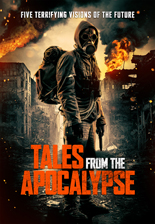
Tales from the Apocalypse (2023)

Although Tales from the Apocalypse is a collection of shorts versus a proper anthology, its five stories share a factor: indifference. At least all but one look fantastic, and that odd man out serves up rust-colored desolation on purpose.

In William Hellmuth’s Gravity-esque Alone, the bunch’s best, the sole survivor of an exploded ship is marooned in a lifepod, sucked close toward a black hole by the second. As she nears certain doom, she converses with a cartographer who picks up her mayday signal. Coming to grips with possible death post-devastation also carries Damon Duncan’s Cradle, so stacking it atop Alone was not the wisest choice, even if it does have a cool robot spider.

Sporting the aforementioned layer of grime is Gabriel Kalim Mucci’s Lunatique, free of dialogue as an armored woman hunts a creature on a windy planet the color of dirt. From Susie Jones, the YA-influenced New Mars posits a future of forced marriages upon teens. Finally, Lin Sun’s Earth 2035 considers the difference between AI and humans: “Humanity,” says a doctor in a moment intended as Deep and Important, but lands as a pretentious punchline with the impact of a greeting card.

Nothing wrong with sci-fi being serious, but the contents of Tales from the Apocalypse (aka Episodes from Apocalypse, despite “apocalypse” being debatable) hold little wonder or imagination. On a purely technical level, they succeed with effects often superb. However, I can’t shake the feeling I was watching calling cards and demo reels rather than shorts where scripting merited as much attention. —Rod Lott

Get it at Amazon.