
Category Archives: Sci-Fi & Fantasy

Jurassic World: Fallen Kingdom (2018)

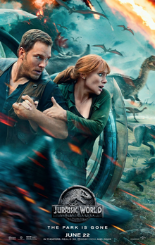
After all the carnage and tragedy that befell so many humans in the events of 2015’s Jurassic World, not to mention three previous adventures, one would think the last thing those survivors would do is go back to that island. Yet that is exactly what they do in Jurassic World: Fallen Kingdom, for a reason returning screenwriters Colin Trevorrow and Derek Connolly do not work hard enough to sell credibly: because 11 species of dinosaurs need to be saved from extinction before an about-to-blow volcano covers Isla Nebula with a thick sheen of lava.

So off go former theme-park exec Claire (Bryce Dallas Howard, Spider-Man 3) and velociraptor whisperer Owen (Chris Pratt, Guardians of the Galaxy Vol. 2), back to the island that very nearly — and often! — served as their gravesite. This time, Claire brings two millennials from her new PETA-esque dino-protection nonprofit: a sassy “paleoveterinarian” (Daniella Pineda, TV’s The Detour) and a systems analyst (Justice Smith, Paper Towns) whose scaredy-cat act gets really old really fast.

Escorting them is a military team whose crusty leader, Wheatley (Ted Levine, The Silence of the Lambs), wields a pair of pliers to extract a tooth from each dinosaur they capture, so you know how that’s gonna turn out. His well-armed crew is tasked with shipping the prehistoric creatures to the palatial estate of infirm philanthropist Benjamin Lockwood (James Cromwell, Species II) for safekeeping, but Wheatley and Lockwood’s right-hand man (a wonderfully slimy Rafe Spall, Prometheus) have other, more personally lucrative ideas.

Although the back half of Fallen Kingdom taking place within the Lockwood mansion is unique to the five-film franchise, Jurassic-newbie director J.A. Bayona (The Orphanage) fails to spatially orientate the grounds to a level of layout that could foster and support suspense among audiences. Where and from what distance predator and prey exist is any viewer’s guess, yet also inconsequential, because any time Claire and Owen back themselves in a corner – metaphorical or otherwise — and face certain doom, Trevorrow and Connolly simply pilfer their cop-out climax from the previous sequel … and Bayona lets them, each and every time. It’s a lazy play on the page, and even more so on the screen.

Sloppy, choppy and as tired as the tranquilizers shot throughout, Jurassic Park: Fallen Kingdom simply goes through the motions, never fully engaging. Toward the end, the film grows as silly as Godzilla on Monster Island, then concludes with a frustrating cocktease of a coda that all but guarantees the worst minute of the next Jurassic movie will be of greater quality than this one’s best. As it stands (read: without tumble gymnastics), Fallen Kingdom is a virtual remake of 1997’s The Lost World: Jurassic Park, no longer the lone disappointment in the Steven Spielberg-produced series — a feat that took 21 years, give or take 65 million. —Rod Lott

Get it at Amazon.

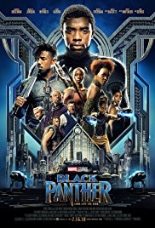
Black Panther (2018)

As the titular superhero of Black Panther, Chadwick Boseman becomes to a generation of children what Christopher Reeve’s revelatory performance as/in Superman became to mine: an instant icon. Making this one all the more remarkable is that while the red-caped son of Krypton already had embodied truth, justice and the American way through decades of comic books, serials, TV shows and the like, Black Panther prowled about the pages of Marvel Comics in relative obscurity.

No more! This cool cat has been unleashed.

Inheriting the role of king of the African nation Wakanda, T’Challa (Boseman, Gods of Egypt) also inherits his late father’s secret identity as his people’s masked protector. Wakanda is masked as well — a village whose advanced technology and vast riches of vibranium (you know, that metal that powers a fellow Avenger’s shield) are hidden under a literal veil that, to an outsider’s naked eye, makes it appear Third World.

Such wonderful toys equip and enable T’Challa to be more than mere superhero — he’s the 007 of the Eastern Hemisphere! With his kid sister (scene-stealing Letitia Wright, Ready Player One) as his personal Q, T’Challa needs all the help he can get as a figure from his unknowing past (Michael B. Jordan, 2015’s less-than-Fantastic Four) attempts to take over the throne, by any means necessary.

While Black Panther’s rapturous success with audiences and critics is not at all surprising, the movie is overpraised. That’s hardly a knock on the film, because it’s still rousing entertainment for most of its two-plus hours. Much as he resuscitated the ailing Rocky franchise with the Oscar-nominated Creed, director Ryan Coogler usurps expectations by leaning heavily into James Bond’s territory. The movie belongs as much to the gadget-gotten spy genre as it does to the sci-fi adventure brand of the Marvel Cinematic Universe, standing on its own while making a snug fit into the MCU’s pre-existing serialized world.

The movie’s mere MCU-ness causes the most problems, with the usual overstuffed finale of foregone conclusions. Coogler and co-writer Joe Robert Cole, however, have a greater hold on their ensemble cast, giving so many talented people — Sterling K. Brown, Martin Freeman, Lupita Nyong’o, Andy Serkis, Angela Bassett, Forest Whitaker — a chance to act, rather than simply collect a nice paycheck. Special praise is reserved for Danai Gurira (My Soul to Take) and Florence Kasumba (Wonder Woman) as T’Challa’s spear-armed bodyguards; they roar and resonate so loudly, they deserve a vehicle all their own. —Rod Lott

Get it at Amazon.

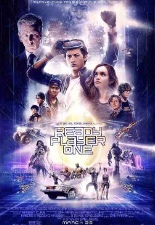
Ready Player One (2018)

Ready Player One is the $175 million embodiment of the adage about wishing to possess cake and consume it. Like a cruel parent with bipolar issues, the film spends two hours sparing no expense to tout its virtual-reality construct as something BuzzFeed might headline “You Guys! This Game Gives Me So Many Feels, I Can’t Even,” only to turn around and abruptly scold its audience for snapping at the cheese, let alone even sniffing it.

And that’s if you buy into the showroom model Ready Player One presents. If you don’t, which is my case, the experience is even worse: an empty vessel of sensory overload.

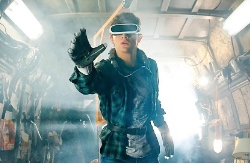
In the vast wasteland that is America 2045 (just you wait!), the populace has become what Pixar’s WALL-E prophesied in 2008: lazy asses. Instead of participating in real-world activities, people strap on goggles and hide behind chosen avatars to spend their days and nights roaming around in OASIS, an immersive, anything-goes environment of VR fantasyland games and high jinks. Drive the Batmobile or the Back to the Future DeLorean! Wage war against Freddy Krueger and the Iron Giant! It’s like Second Life with a thumbed nose at copyright law and intellectual property.

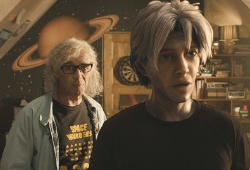
When OASIS’ dippy-hippie founder, Halliday (Bridge of Spies’ Mark Rylance, Oscar-winning porn star), passes away, he does not go gently into that good night. Rather, he makes his death and legacy a game, proactively bequeathing ownership of OASIS to one lucky player, Willy Wonka-style. Whomever can obtain the three keys hidden throughout his pixel-perfect world, wins.

Poverty-stricken teen orphan Wade Watts (Tye Sheridan, Scouts Guide to the Zombie Apocalypse) vies to grab that bounty. His most formidable challenger: the ruthless, bullying corporate CEO/control freak Sorrento (Ben Mendelsohn, Knowing). The innocence of youth and plucky know-how vs. unchecked power and vast resources: We all know how this one will end — fictionally, of course.

The first key goes to the victor of an improbably speedy road race. Coming essentially right out of the movie’s gate, it kick-starts Ready Player One on a propulsive, well-boding note. Then the movie downshifts into narrative banality until the set piece for the second key — without question, the film’s most enjoyable sequence, as Wade and friends (including a love interest played by Ouija’s Olivia Cooke) enter The Overlook Hotel from Stanley Kubrick’s The Shining (Jack Nicholson not included).

From that point on, with roughly half an elongated running time still to come, Ready Player One is a punishing sit. The quest for the third and final key occupies all of Act 3, culminating in an all-out CGI war among indiscernible sides and blink-and-gone pop-culture cameos (Robocop! Chucky! And, um, that guy!) Maybe this Trivial Pursuit: The 1980’s style works on the page — I have not read Ernest Cline’s 2011 best-seller on which this blockbuster is based — but given how the battle is entirely artificial, the effect is pummeling to a point of numbness. Your mileage may vary, dependent on how much you enjoy watching others play video games.

Ironically, the USP of Ready Player One becomes utterly meaningless well before the picture’s end: the four-word phrase “directed by Steven Spielberg.” America’s longest-reigning household-name filmmaker helped define the decade to which this film pays homage, if not worships. In the 1980s, a movie stamped with Spielberg’s name felt like a Spielberg movie, from the ones he directed (E.T., the first two Indiana Jones adventures, one-fourth of Twilight Zone: The Movie) to the ones he did not (Gremlins, The Goonies, Poltergeist,* Young Sherlock Holmes); whatever his capacity, each production bore That Spielberg Touch.

No more. If Ready Player One has a heart, it does not beat. Arguably half-animated, the film could have been directed by anyone, since it sparks no wonder, appears to confuse nostalgia with drama, and wastes the gifts of its actors. It is a chunk of digital plastic — tomorrow’s ColecoVision, today! —Rod Lott

Get it at Amazon.

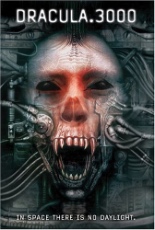
Dracula 3000 (2004)

Any vampire film carrying the tagline “In space, the sun never rises” should be approached with considerable caution. After all, the sun doesn’t need to rise, because where but space does that flaming ball of gas sit? Dracula 3000 is that film, but other reasons exist that encourage avoidance, not the least of which is Casper Van Dien’s name leading the credits.

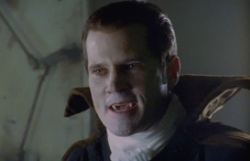
The Starship Troopers himbo stars as Abraham Van Helsing, captain of the spaceship Mother III. After his craft locates a ghost ship missing for years, he decides to investigate; you know how that’s gonna turn out. He and his crew members — stock roles filled by Tiny Lister (The Human Centipede III [Final Sequence]), Erika Eleniak (Tales from the Crypt Presents: Bordello of Blood) and Coolio (China Strike Force), who is saddled with the not-at-all-racist moniker of “187” — accidentally end up resurrecting Dracula (here called Count Orlock) from the ashes.

As played by Langley Kirkwood (Dredd), this Drac is one of the shoddiest-looking Dracs to grace the screen. He looks like an in-costume dad/ financial adviser beamed in from your local church’s “fall festival.” Spend five bucks at your local Halloween supply store, and you’re every bit his equal.

187 is the first among the crew to get bitten, and if you can imagine the rapper fitted with red contact lenses and a pair of fangs, you may have a hint of the kind of unintentional comedy that results. And if you do not, this kind: “Do you know how many times I’ve thought about ejaculating on your bazongas?” a vampiric 187 asks Aurora, before proceeding to talk about “stroking my anaconda.” More people are bitten, while others are staked, and yet you’ll be the only one reeling in pain.

Do not insult the comparative genius of Wes Craven Presents Dracula 2000 by mistaking this as a 2000 sequel. Dracula 3000 looks as if director Darrell James Roodt (Dangerous Ground) shot it in the lower level of a South Africa franchise location of Jiffy Lube. Considering he managed to find a way to include a scene of Coolio taking bong hits, but failed to get Eleniak to strip out of a sailor suit while emerging from a giant cake, Roodt deserves as much scorn as you can muster.

Just when I thought I’d finally found a genre movie with a muscular African-American man who doesn’t exclaim, “Now that’s what I’m talkin’ ’bout!,” Lister pops up in an end-credits stinger to utter those very words directly to the camera, then punctuates them with a slap to Eleniak’s ass. —Rod Lott

Get it at Amazon.

Meteor (1979)

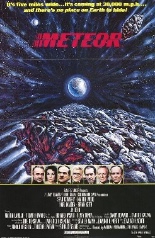
Remember the late-’90s resurgence of that quintessentially ’70s genre known as the disaster film? Although short-lived, audience enthusiasm for it was so strong that in the summer of 1998, two space-rock epics — Deep Impact and Armageddon — competed for cash and both became major hits. But in 1979, Meteor had the space-rock scenario all to itself, yet flopped massively. Not only did its failure signal the death knell of the disaster craze, but also of indie distributor AIP, in way over its otherwise budget-mindful head by deviating from the low-risk/high-rewards model it had perfected for decades. It’s not like AIP hadn’t promoted it; for months, you’d couldn’t glimpse the back cover of a Marvel comic book without being exposed to an ad.

Helmed by The Poseidon Adventure’s Ronald Neame, Meteor opens with a look at Orpheus, an asteroid some 20 miles in diameter. But that’s not the object that gets scientists in a collective tizzy. Now, when a passing comet smashes Orpheus into several pieces, sending a 5-mile chunk hurtling toward Earth, that they worry about — and not without merit, because its touchdown would trigger another ice age. With only a six-day head start on its ETA, what’s a National Aeronautics and Space Administration to do?

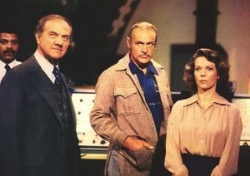
They call in Paul Bradley (Sean Connery, Never Say Never Again), engineer of the U.S. Hercules missile defense system floating in space. Because each of its nuclear rockets packs a one-megaton punch, NASA enlists Paul’s help in realigning Herc to point toward rocks, not Russia. NASA needs Russia to do the same with their missiles, so those Commies come onsite, too — well, two of them: Dr. Dubov (Brian Keith, Death Before Dishonor) and his interpreter, Tatania (Natalie Wood, The Great Race), the latter pulling double duty as Paul’s instant romantic interest. In the face of global cataclysm, America’s real enemy is one of our own: a disbelieving Air Force general (Martin Landau, Ed Wood) who functions as a monkey wrench to the multinational plans; he is to this movie what real-life Sen. Jim Inhofe is to climate change: a buffoon.

Some 40 minutes in, penetration occurs! Not of Tatania by Paul, but our planet’s atmosphere by Orpheus fragments. Disregarding the aged effects, these sequences mark Meteor’s high points, and Neame ensures they avoid repetition by having them play out differently from one another. It’s as if he helmed several types of destructo-flicks within one end-all-be-all package. For example:
• Europe gets an avalanche, complete with sexy skier Sybil Danning (The Concorde … Airport ’79) and footage recycled from the previous year’s Avalanche;
• Asia takes a tidal wave;
• and America has to settle for an earthquake (and the takedown of the World Trade Center, but let’s not go there), leading to a set piece inside a flooding subway car.

Connery is so surly throughout, it’s difficult to know for certain where his performance begins and ends. Did he bark lines “Why don’t ya stick a broom up my ass?” with gusto because the script called for it or because he was disinterested in masking his contempt for the material? At least he exudes more passion than the oddly wooden Wood, who is miscast as a Russian despite being born from Russian parents! While Meteor is not the outright bore its reputation suggests, it’s also not the spectacle we’d expect. Let’s just say Irwin Allen could have Irwin Allen’d the shit out of this material, and call it a draw. —Rod Lott

Get it at Amazon.