Category Archives: Mystery

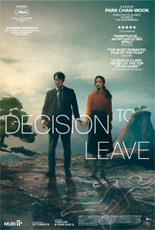
Decision to Leave (2022)

When a 60-year-old man is found dead at the bottom of a mountain, police detective Hae-joon Jang (Park Hae-il, Memories of Murder) has reason to suspect the deceased’s much younger wife, Seo-rae (Tang Wei, Blackhat), may be to blame. As in so many cinematic crime stories, from film noir to erotic thrillers, the more our protagonist investigates, the more he falls in love with this enigmatic beauty. Thus, a dual mystery forms: Did she or didn’t she, and will they or won’t they?

Despite drawing influence from so many films before it, Decision to Leave is hardly derivative — not in the hands of a top-shelf craftsman like Park Chan-wook. The South Korean filmmaker unspools this one at a dizzying pace that makes it as twisty as Oldboy and as visually sumptuous as The Handmaiden, to name two of his best in a long, distinguished career.

Even with those previous pictures setting the bar high, Decision to Leave clears it with seemingly little effort, although we know that’s not the case. Park is in total control of his material, matching the caution and preciseness Hae-joon does in examining crime scenes for clues; even when Hae-joon’s heart causes him to slip, the director never does. If anything, he grasps the reins even tighter as he weaves the remaining threads of a rich Hitchcockian tapestry of passion, peril and tragedy. Getting tangled within that is all too easy, for the characters and their viewers.

Like your Vertigo, the movie is oddly, even achingly romantic — a mix that wouldn’t work if either lead weren’t atop their game. Both actors are excellent, but Tang is the real surprise in a plot brimming with more than its share of them. Marked by masterful composition and transitions throughout, Decision to Leave is a spellbinding knuckle-cracker. Your loss, xenophobes. —Rod Lott

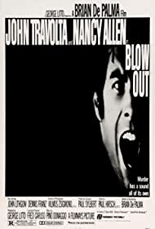
Blow Out (1981)

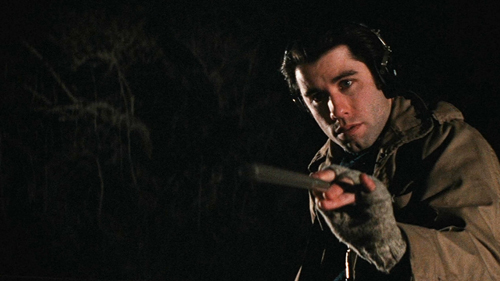
Set in the high-stakes world of a sound-effects designer, Brian De Palma’s Blow Out follows everyman technician Jack (an effective John Travolta) plying his wares in the world of trashy films and outré smut. Late one night, scoring some sounds, he records an accident on the road.

While most people would get a commendation from the police force, Jack suspects foul play. A man obsessed, he goes deeper to excavate the mondo world of sound effects as he’s targeted with political intrigue, cold-blooded killers and sweetly affected Nancy Allen and her baby voice.

As he gets to the deeply overwhelming conclusion, Jack uses his well-trained ears to unravel the mystery and, ever more so, using his wits to catch at killer. Taking inspiration from Michelangelo Antonioni’s 1966 film Blow-Up, the mystery of Blow Out is not the killer, but instead the ramifications of the killer.

A true testament to De Palma’s 1980s brilliance, this is a complex film that weaves a dirty brilliance in its Philadelphia freedom, bringing everything from rote slasher skinflicks of screen to John Lithgow’s eel-like presence as the hands-on strangler; he hits all the buttons. While this well-timed thriller had semi-glowing reviews upon reception, Blow Out seems to be forgotten by most parties; I guess a coke-fueled movie like Scarface will do that do you. —Louis Fowler

Get it at Amazon.

The Chelsea Murders (1981)

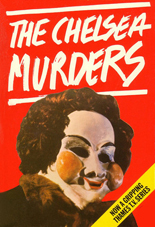
When the body of a barmaid surfaces in a river in London’s Chelsea district, the police realize they have their third murder “in a fortnight” — two weeks to you and me — with no noticeable connection. The dogged investigation by a young detective (Christopher Bramwell, TV’s The Lion, the Witch & the Wardrobe) reveals a theory too whacked-out to be true … except it is: The victim’s initials all match those of famous Chelsea residents.

Also, a homemade “God Bless This Crapper” sign figures into the plot.

Based on the same-named 1978 novel by Lionel Davidson, The Chelsea Murders was made for England’s Armchair Thriller anthology series. Whether you watch it in six episodes at 145 minutes or the feature-length version at 108, the mostly tell-don’t-show procedural of coppers, journos, artistes, dandies and, eventually, a “cuppa tea” is bone-dry.

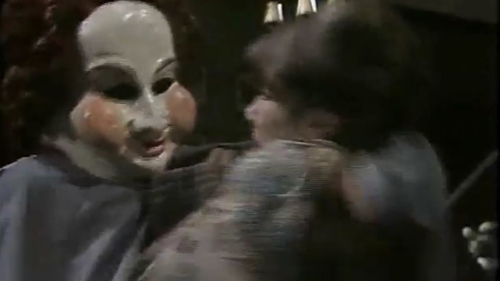
Out of budgetary practicality, the pic is shot on video, except for the infrequent jaunt outdoors, shot on film. To or fro, the switch is never not jarring — certainly not the type of impact director Derek Bennett intended for a murder mystery. Only the killer’s choice of mask — something akin to fitness guru Richard Simmons banging a clown emoji — jolts interest; one sequence with a hapless woman catching its glimpse in the shadowed hallway of her apartment building is truly chilling (as is its opening Thames logo animation, a scarred-for-life fright). The rest is truly boring. —Rod Lott

Get it at Amazon.

Money Hunt: The Mystery of the Missing Link (1984)

When people say, “You couldn’t pay me to watch that,” they probably weren’t referring to Money Hunt: The Mystery of the Missing Link. All of 45 minutes, the made-for-VHS “original mystery movie” asked viewers to attempt to solve it for a chance to snag a $100,000 booty. One wonders if this tape is to blame for Dino De Laurentiis’ Million Dollar Mystery, a legendary bomb somehow more watchable even at double the running time.

Then halfway through his TV gig on Magnum P.I. as the mustachioed guy women didn’t want to fuck, John Hillerman hosts. He tells viewers they’ll need to decipher the clues to come up with three things: a region, a city and a safety deposit box number. What he doesn’t share until the end is they need to watch again to locate the phone number to call with the solution, which is like telling a patient who just had a root canal that a colonoscopy is needed immediately and, oops, the anesthesia tank is empty.

Cut to the “movie,” featuring Beverly Hills Cop’s John Ashton as chain-smoking private dick Cash Hunt. (Ha?) Amid a biz dry spell in a hot Hollywood summer, Hunt gets a case that leads him to the House of Liver restaurant, not to mention a few kuh-raaazy characters like a sexy waitress with a Judy Landers voice (Zane Buzby, National Lampoon’s Class Reunion), a patently ridiculous fortune teller (Ruth Crawford, 2009’s American Virgin) and a blind airline pilot (Newell Alexander, 1982’s Homework), all of whom want a gander at his office’s energy meter.

Despite a decent approximation of the rhythm of hard-boiled pulp narration, Money Hunt makes no sense. That may be by design to call attention to awkward clues and/or red herrings. Either way, Hunt’s as in the dark as we are, so with no true conclusion, it doesn’t work as a mystery. By comparison, the lamentable VCR game Ellery Queen’s Operation: Murder is The Maltese Falcon. (Wait, let’s not go that far. The Maltese Bippy.)

Now, just because the program also plays a self-parody doesn’t mean it works as a comedy; it works against it. Try as Ashton and Buzby might to sell them, the jokes are painful. They might have landed in TV’s Police Squad! (or its eventual Naked Gun movies) — for example, after Hunt says, “I think it’s time we lay all our cards on the table,” the camera fades to … yeah, I knew I needn’t go further — but director David Hemmings (yes, the Blow-Up actor) is neither Zucker nor an Abrahams.

As unappealing as the sweaty wife-beater Ashton wears throughout, Money Hunt features a great deal of hotcha-hotcha-hotcha innuendo, a brief animated dream sequence and end credits that include a list of helpful reference materials, from the Rand McNally atlas to The Dictionary of Calories and Carbohydrates. So who won? You, if you never watch. —Rod Lott

Get it at Amazon.

The Raven Red Kiss-Off (1990)

Unlike fellow pulp gumshoes Mike Hammer, Sam Spade and Charlie Chan, Robert Leslie Bellem’s Dan Turner character failed to make much of a splash on the screen. Despite starring in hundreds of short stories, the Hollywood detective has been adapted only twice: by Bellem himself for 1947’s Blackmail, followed more than four decades later by The Raven Red Kiss-Off.

Incidentally taking place in the year of Blackmail’s release, Kiss-Off finds business at rock bottom for Tinseltown private investigator Turner (Marc Singer, The Beastmaster), reduced to locating lost cats. Then studio executive Bernie Ballantyne (Danny Kamin, Young Guns), “the meanest man in Hollywood,” hires Turner to keep tabs on his va-va-voomy mistress, Vala DuValle (Tracy Scoggins, Demonic Toys), while she’s shooting a new picture; in particular, Ballantyne fears his valentine is being blackmailed.

On the shoot, Turner runs into an old flame (Bethany Wright, Simple Men), and they immediately reignite with a heavy make-out sesh … until she’s shot dead by a gun poking through the curtains. Suddenly, Turner has blue balls two mysteries on his hands. Could they be related? Of course!

Alternately known as simply Dan Turner, Hollywood Detective, the flick was intended to kick-start a TV-movie franchise, all to be lensed in Tulsa, Oklahoma, where director Christopher Lewis had mined VHS gold with his shot-on-video terror trilogy of Blood Cult, The Ripper and Revenge. Unfortunately, his 35mm film noir found no favor with audiences still attuned to the neon vibe of Miami Vice, which had just finished its long run.

Stacy Keach’s Mike Hammer series also had gone off-air, so it’s possible by then, America was all fedora’d out of period-piece P.I.s who didn’t also have a soundtrack album by Madonna. As Turner, Singer overcranks the dial of pulp-dick affectations to the point which Lewis should’ve reminded his leading man they were making a pastiche, not a parody. As his co-stars prove, it can be done without overdoing it.

That’s not to say The Raven Red Kiss-Off is no fun. Although clearly hampered by a small budget and Lewis’ limitations, the screenplay by knowledgeable first-timer John Wooley (co-author of several Forgotten Horrors volumes) casts a spirit-appropriate shadow and offers the occasional inspired sequence — chief among them, an inventive chase through an amusement park, with Turner hopping from ride to ride to escape his pursuer.

Showing up for a scene or two apiece are Clu Gulager, Arte Johnson, Paul Bartel and Eddie Deezen. Can you guess which one of the four is completely incapable of toning down his shtick to fit into place? —Rod Lott

Get it at Amazon.