
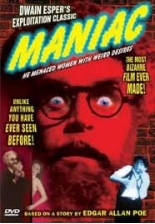
 Dwain Esper’s Maniac is one of the more notorious early exploitation films, but it’s still dreadfully boring, even at 50 minutes. And while you can cut it a little slack for being from the 1930s, the story still doesn’t make a lick of sense. Maniac is amateurish in all aspects, from the actors (sometimes gazing in the camera) to Esper’s direction (sometimes the performers’ faces are blocked by props).
An old, eccentric doctor and his young assistant are experimenting with formulas to revive the dead. When the doctor wants to kill the assistant and then bring him back with a new heart, the assistant shoots the doctor dead. Instead of shooting him with reanimating juice, however, he holes him up in the wall of the basement and then changes his appearance to look like the doctor so no one will notice his absence.
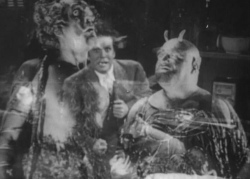 To help mask the illusion, the assistant-as-doctor keeps seeing patients, including a shy, topless chick and one man who goes mad, kidnaps a formerly dead girl, strips off her clothes and rapes her. Meanwhile, the assistant’s wife hangs out with her friends in their bras and granny panties. The nudity in this must have been shocking way back then; now it’s simply comical.
The high point comes out of no-where, when the assistant grabs a cat and pokes its eye out in graphic detail, admires it (“Why, it’s not unlike an oyster … or a grape!”) and pops it in his mouth. Bon appétit! Then the cops arrive and find the doc in the wall, thanks to the cries of a cat accidentally trapped in there with him, thanks to a storyline swiped from Edgar Allan Poe. Then you get to go to sleep, if you haven’t already. —Rod Lott
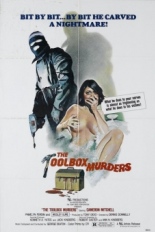
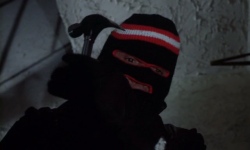 After the ski-masked killer’s rounds of chiseling and hammering tenants, one right after the other, The Toolbox Murders switches into a police procedural, à la Law & Order: Hardware Victims Unit, as the cops investigate. Unlike Tobe Hooper’s superior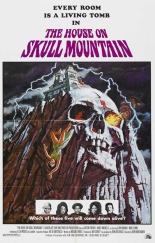
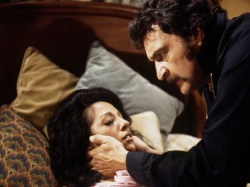 Phillipe is a creepy fool who drunkenly hits on Cousin Lorena; Harriet is a timid housemaid who sees visions of death. Lorena and Andrew quickly form a relationship that may or may not be romantic (I choose “not,” because it allows me to continue judging Phillipe while still liking the two leads), giving this House some appeal that it probably doesn’t deserve. There’s nothing overtly sexual in the way they act around each other; they’re just extremely comfortable in one another’s company and encourage each other in more ways than simply trying to stay alive. There’s a particularly sweet scene where Andrew complains about not knowing anything about himself: “I don’t even know what color I am.”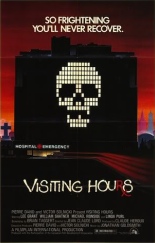
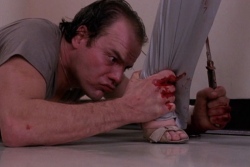 The film stars Michael Ironside as a misogynist maniac on a mission to kill the popular female broadcaster (Lee Grant) who has taken on the cause of a battered woman unjustly convicted of murdering her abusive husband. When his initial attack on her is thwarted, he returns to the hospital to finish the job, but only manages to kill a bunch of other people before she is able to use his own knife to end his deadly spree.
 “So Far” is a quasi-ghost story that goes on too long, with a twist that mitigates any power. It examines what happens when an only child’s parents are killed in a car crash, but return as ghosts, only unable to be seen or heard by the other spouse. “The Poem of Collected Sunlight” stands out, but only because it’s animated. The two-character bit is like the Frankenstein myth rendered as a tonal piece.