 I suspect I’m not the only one who, upon the death of Pulitzer Prize-winning film critic Roger Ebert in 2013, bought his 2006 collection, Awake in the Dark, thinking it to be the definitive summation of his prolific and distinguished career. The University of Chicago Press has proven me wrong, by issuing Awake in the Dark: The Best of Roger Ebert — Second Edition. Roughly half of the original volume was taken up by his best-of-year reviews from 1967 (Bonnie and Clyde) to 2005 (uh, Crash); this newer edition picks up where that left off, from 2006 (Pan’s Labyrinth) to 2012 (um, Argo). While his choices could be suspect, he nonetheless demonstrated an affinity for making his case, and making it sing; most notable — and representative of his power — are his now-famous support for the 1994 documentary Hoop Dreams and the ’98 sci-fi mind-bender Dark City. The book also features sections on docs, foreign pics and underseen gems, as well as assorted essays, including a Pauline Kael tribute, a list of the century’s 10 most influential movies and a round-robin series from the early ’90s on the state of film criticism, in which Ebert gets into it with peers Richard Corliss and Andrew Sarris. This book is as essential as the man is missed.
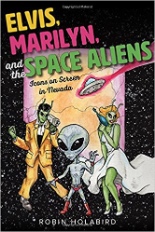 Former Nevada Film Office deputy director Robin Holabird draws upon nearly a quarter-century of government work scouting locations for motion pictures and television shows in the Silver State, for her memoir on those glitzy, glamorous years, Elvis, Marilyn, and the Space Aliens: Icons on Screen in Nevada. With such big movies as Independence Day, Ocean’s 11, Showgirls, Smokin’ Aces, Jane Austen’s Mafia and Casino on the table, one longs for a VIP tour through the making of these flicks, but in that department, the author woefully rolls snake eyes. Readers are lucky to get a quote relayed through her here and there, but most of the content is strictly a rundown of Such-and-Such Project shooting Such-and-Such Scene at Such-and-Such scenic spot. At least Holabird keeps the University of Nevada Press paperback moving at a whirlwind, not to mention spanning the gamut of prestige, from the long-running TV smash CSI: Crime Scene Investigation to the chintzy Stella Stevens project Las Vegas Lady. All in all, though, a missed opportunity.
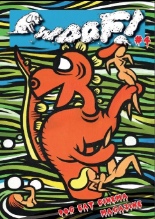 Attention, cult cinemaniacs who like to sniff out zines catering to their peculiar tastes: Hunt down Woof! Dog Eat Cinema Magazine. The damaged brainchild of Hans Minkes, the Netherlands-based publication combines enthusiastic movie reviews with top-notch illustrations, then shoves the oft-ribald results into the size of your standard comic book. Like a Cinema Sewer from the other half of the world, contents lean into the lascivious, yet are wonderfully varied; among the three issues I’ve read (#2-#4), spotlighted titles include Lady Iron Monkey, Pete Walker’s The Comeback, the infamous atrocity pic Men Behind the Sun, a Django porn parody and Albert Band’s Ghoulies II, the latter as part of each issue’s “Whatever Lola Wants,” in which Minkes’ young daughter randomly selects a VHS tape for Dad to cover. Another recurring feature is Hans Van Den Broeck’s “Fur on Film,” with each installment exploring a werewolf subgenre, whether Asian, X-rated or good ol’ Andy Milligan. From my POV, Woof’s two best articles savaged the films of Draculina publisher Hugh Gallagher (Goregasm, et al.) and the post-apocalyptic roller-skate movie, of which there are more than you think (mostly “thanks” to Donald G. Jackson). Interested pups should email woofmagazine at hotmail dot com for ordering deets!
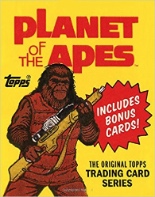 Presumably tied to this summer’s highly anticipated release of War for the Planet of the Apes, Abrams ComicsArts continues its exquisitely packaged series of Topps trading-card retrospectives with Planet of the Apes: The Original Topps Trading Card Series. The hardback devotes a full page to each card’s front and back, numerically going through the entire stack — not just the one based on the 1968 classic film, but also the short-lived TV show and the Tim Burton remake (and its numerous limited-edition cards), with author Gary Gerani contributing commentary as we go. (His introductory essay is fascinating; for example, Charlton Heston initially balked at being pictured on those damn, dirty bubble-gum cards.) As with Abrams’ other Topps books, a sealed pack of cards is glued onto the inside back cover. For Apes fans — and especially collectors of the franchise’s memorabilia — it’s a madhouse of pop-culture preservation! —Rod Lott