
All posts by Louis Fowler

The Wiz (1978)

WTF

Growing up, I didn’t watch The Wizard of Oz. Sorry.

I know that sounds weird, but in our house, my mother and I watched the overlooked The Wiz on home video. It was our preferred version of L. Frank Baum’s tale of Dorothy Gale and her trip to the marvelous land of Oz.

So whereas people sang along to “If I Only Had a Brain,” I was grooving to “You Can’t Win.” Where some old man was the Wizard, I knew that Richard Pryor — the dude in Superman III — was the Wiz. Plus, the Quincy Jones score can’t be beat!

Muddy VHS and somewhat muddy DVD transfers haven’t helped The Wiz. Thankfully, its Criterion Collection upgrade makes it seem like a brand-new movie with a new heart. And brains. And courage.

The story gives the world of Oz a car wash, a buff and a shine. A winter storm transports Dorothy (the electrifying Diana Ross) and her dog, Toto, from Harlem to a magical land, where she accidentally kills the Wicked Witch of the East and eventually becomes a freedom fighter. Along the way, she encounters a bevy of choreographed friends — including the Scarecrow (a teenage Michael Jackson, truly magnificent), the Tin Man (Nipsey Russell, Wildcats) and the Cowardly Lion (Ted Ross, Police Academy) — who help her defeat the Wicked Witch of the West (Mabel King, TV’s What’s Happening!!).

Obviously crossing The Wizard of Oz with mid-1970s Noo Yawk-era films, The Wiz is more than a street-smart take on the material, taking societal concerns and  giving them a fantastical sheen that made them all more revolutionary. Director Sidney Lumet (12 Angry Men! Dog Day Afternoon! Network!) lets the story breathe, slowly letting all the magic of the movie out until the finale.

There, Ross sings the one-two punch of “Believe in Yourself” and “Home,” and there’s not a dry eye in the house. That stellar soundtrack makes The Wiz so special. With cuts like “Slide Some Oil to Me,” “I’m a Mean Ole Lion,” “Don’t Nobody Bring Me No Bad News” and the timeless “Ease on Down the Road,” it’s one to own and play regularly.

Like that old East Coast electronics store’s advertising slogan, nobody beats The Wiz. No one. —Louis Fowler

Get it at Amazon.

Light of Day (1987)

WTF

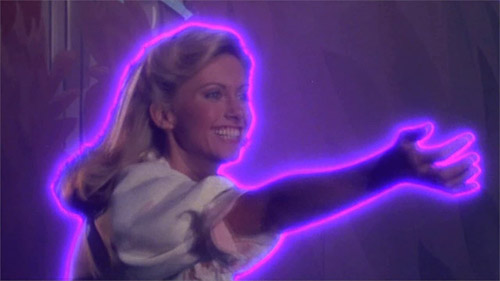
After the one-two punch of Back to the Future and Teen Wolf, with all their time-traveling and van-surfing going on, Michael J. Fox went for the box-office hat trick with a film that, sadly, had none of those fantasy leanings: the rock ’n’ roll drama Light of Day. He failed.

That said, I never considered Light of Day a Michael J. Fox movie. Instead, I viewed it as a Joan Jett film detailing her fictional rocky road to ill-fated stardom. With her gloriously raspy voice belting out the mid-’80s hard-rocking tunes within the context of a late-phase cancer drama, it’s an uphill battle for the entertaining devil-signing hordes of the decade’s lost children. By God, it works for me, but for others? Woof.

In Light of Day, Jett’s a single mom collecting cans around town while her brother Fox “works on the line,” whatever that is. As the sun goes down, they’re in a band called the Barbusters, the kind of band only movie people can make. Fox is on guitar and works a steady job, while Jett is the type of musician who believes “music is all that matters.” Together, they go on the hardest road imaginable. It’s a bad scene, cumulating with her using kid in a shoplifting scheme that tears them all apart. Sad!

After a label-mandated Fabulous Thunderbirds show — they are tuff enough! — their overbearing mother (Gena Rowlands) is diagnosed with late-stage ovarian cancer. As depressing as that is, Jett and Fox play the terrific Bruce Springsteen-penned title tune at the close, so everything is all right in the end.

Directed by Paul Schrader — the guy behind Hardcore, Cat People and, um, Dominion: Prequel to the Exorcistis a fine director, sure, but he is way out of his element here. Like a Michael Bolton biopic, it seems like he wants to create a rock movie with plenty of drama … with little to no rock involved.

In her film debut, Jett is not the best dramatic actress. But she’s better than most erstwhile rockers in their debut, creating real gravitas and a rocking performance. Who could do it: Alice Cooper? Ozzy Osbourne? Jon Mikl-Thor?!?

On the other hand, the supporting cast of Fox, Rowlands and Jason Miller are good actors, but likely terrible musicians. (Supporting player Michael McKean is passable in that Spinal Tap way, so he gets a pass.)

Light of Day could have been a real rock drama with a good screen story, impassioned performances and the best soundtrack around. Instead … well, the music is pretty good. As a staid Fox vehicle, it’s pretty flawed and very rundown. But if hard-rocking, screaming-metal sirens of filth and fury are your spiked bag, it’s the best Joan Jett movie around! —Louis Fowler

Get it at Amazon.

Son of Dracula (1973)

Of all the wavering output of the early 1970s independent studios, most of the Apple Films catalog have been the hardest movies to find. Usually, I have to go for bootlegs, downloads and other shady dealings.

That’s strange, because it was part of the Beatles’ far-reaching Apple Corps, a freewheeling production company investing in records, books, electronics, and numerous Pop Art items that have filled the dumpsters of time. In the end, Apple Corps was a good deal gone bad, with really only the music remaining. Apple Films’ only big hit was Yellow Submarine, maybe also Let It Be. Other films like Born to Boogie and The Concert for Bangladesh are essentially forgotten.

Which brings me to Son of Dracula, the apparently world’s “First Rock-and-Roll Dracula Movie!” according to the advertisements. It’s a take on the vampire mythos starring songster Harry Nilsson and ex-Beatle Ringo Starr, who also produced. But that’s not the most surprising thing about this — instead, this is: It was produced by Jerry Gross, the guy behind Mondo Cane, Teenage Mother and The Black Godfather. The father of the backbeat and the father of cinematic slime, together again!

One dark and ultimately confusing night, Count Dracula is assassinated by an unseen hand and his midget friend. Afterward, Merlin (Ringo Starr, in perhaps a prequel/sequel to Magical Mystery Tour?), the guardian of the netherworld, is summoned to his vampiric concubine to give birth to an immediate scion.

A hundred years later, Nilsson’s new count, Count Downe —ugh — comes to town in a stylish motorcar wanting a lay of the land. After going over some astrological charts with Merlin, he heads to Piccadilly Circus, performs a rousing cut of  “At My Front Door” for the bar patrons and, appropriately, sucks the blood of the buxom maiden. So far, so good!

In case you were wondering, the backing band has Ringo on drums, as well as rock luminaries Peter Frampton, Leon Russell, Keith Moon and John Bonham. Where was that supergroup in the early ’70s and beyond? That’s the movie I’d like to see.

Son of Dracula instead shows Count Downe wanting a life-changing operation to make him a mere human. He does it, of course, to find his one true love. To mark the occasion, Downe has a party, with his hit song “Jump in the Fire” riding up the charts and heating up my speakers. During his preliminary operation, Dr. Van Helsing pulls Downe’s vampire teeth and commits other somewhat-laughable tortures.

This is where the movie loses me: Frankenstein’s monster attacks the Count, aided by a werewolf, a black cat, and, once again, a midget, for, I’m guessing, some revenge plot that seems to try everything while doing nothing. Look, by this time, I don’t know what’s happening, but the music is really good! True to form, it’s truly top-notch, top-shelf and above-board, as it should have been.

Directed by famed cinematographer Freddie Francis, the story and screenplay, the production values and the very bad acting — Nilsson’s nonexistent on-camera talent should live without you — is why most audiences avoided this in droves.

While Dracula and Frankenstein fanatics are not in any way clamoring for this home release, Son of Dracula has never been distributed on any home media format, leaving Beatles completists and Nilsson apologists in the lurch. It’s not very good, but I’d take a big box set with a pristine copy of the film, a 180-gram vinyl soundtrack and other associated memorabilia, like a swatch of Count Downe’s cape to make our own solo-Ringo dreams come true. While we’re at it, how about getting Ravi Shankar’s Raga reissued for my own personal edification … please? —Louis Fowler

The Sacred Spirit (2021)

Between the unsettling visions of the great beyond and an unwavering devotion to depicting a dark, sad reality, The Sacred Spirit rides the line between unexplained phenomena and drastic sobriety. And not in the way you might think.

You see, Spirit is about the innocent layers of a fractured soul. Eventually, it gets to a rotten core that slashes and burns everything around. It’s a reverse ugly-duckling scenario that still shakes me after the credits rolled.

José (Nacho Fernández) is a simple guy who works at a small-time tapas bar with quirky regulars and personable clientele. After closing, he’s part of a UFO cult that believes spacemen are coming back — and very soon. While the community wrestles with finding a missing girl — José’s niece, mind you — he comes off like a somewhat dopey, but harmless crackpot.

Meanwhile, lamenting the loss of their beloved leader, the cult members trek to his grave on the town outskirts to pay their respects. There, José drops a child’s pink-bunny backpack into the river. While the police investigate, José takes his other niece, the missing girl’s twin, to an “astral plane” discussion, telling her stories about a UFO coming to take them away that evening to live in paradise.

It doesn’t happen, but what does is far worse.

At first, Spirit is about crazy UFO culture and their followers’ belief systems. But as the New Age group Sacred Spirit’s “Yeha-Noha” plays over the end credits, it’s methodically razed the whole area to ash in beauty and shame, purification and purification.

Chema García Ibarra’s bait-and-switch direction is close to the crazed realism depicted in Jose’s UFO books, with the Sphinx and other Egypt-centric items he imagines in his life. If you go into this wanting a flying saucer debate among the backroom crazies, sorry, it’s not here. The Sacred Spirit is a calm, almost mumblecore depiction of analog beliefs in a broken world. —Louis Fowler

Get it at Amazon.

How to Get Ahead in Advertising (1989)

In the early ’90s on the most basic of cable, I saw Withnail and I, Bruce Robinson’s acerbic dramatic comedy that’s basically an acid-laced coming-of-age tale, except the protagonists are failed actors already-of-age in their late 20s.

Along with The Young Ones, Time Bandits and a supple diet of Benny Hill, this film gave me the basic groundings of British comedy, one I fell in love with over its “God Save the Queen” pathos that embrace the rigid anarchy of the UK punk subculture I wished I were a part of.

Growing up in Blooming Grove, Texas, I reached for the entertainment section of each Friday’s Dallas Morning News. It ran small ads for an indie, esoteric and outré theater called the Inwood, which showed titles so outrageous and provocative, it made me wish I had cool parents with a sense of pop culture but, you know, whatever. The ad for How to Get Ahead in Advertising always stuck with me, wondering about this monstrous movie from the guy behind Withnail.

This week, these two life-influencing greats came together in a way I wasn’t expecting: I finally got to screen Advertising. It’s a semi-monstrous monster film — as much as brash, witty and brazen indies could be then — about slick ad exec Bagley (Richard E. Grant) and the somewhat sleazy ways his marketing campaigns become successful.

He’s working on a pimple cream campaign with no luck — until a small pimple fortuitously grows on his neck. The zit develops eyes, a mouth and, eventually, a speaking voice. Of course, it makes Bagley’s life hell. Like David Cronenberg’s The Brood, but far more stiff-upper-lipped with a starched white collar, the living canker sore engulfs Bagley and his whole persona. “Boils,” he says, “are beautiful.”

Like many things in 1980s Britain, How to Get Ahead is a rancid, devious take on the politics of Thatcher (which I was far removed from then and now) and the dark policies of coke-sniffing, ink-suffering capitalism that smothers every man, woman and child in a drowning pool of commercials.

Grant is more nuanced than usual as the staid Bagley, then becomes more manic as the film goes on, looking like Rik Mayall’s older, calmer brother. With machine-gun barbs, his performance is so cutting, it’s better than Withnail and I. I’m glad I finally saw it.

Today, the Inwood is still a movie theater, but mainstream, with screenings of A Minecraft Movie and other non-indie films. I guess How to Get Ahead in Advertising‘s selling-out prophecy came through in spades. That, I can truly say, is the worst. —Louis Fowler

Get it at Amazon.