
When I was a kid and didn’t know any better, I was enthralled with Texas-area, Texas-born wrestlers the Von Erichs and their contribution to the (fake) sport of pro wrestling. Back in the day, you could actually believe in their superheroic leaps and bounds, no matter how trashily presented.
In our small town in Blooming Grove, my father would buy The Dallas Morning News on Sundays, when the sports section had posters on the last page, giving us prime opportunities for experiencing the Saturday night fights, all without pay-per-view. To hell with the WWF!
I had switched to watching Saturday Night Live and its comical ephemera around ’86 or ’87, around the time the brawny Von Erich brothers had some “trouble” in the extreme sense of the word. They and, for the most part, wrestling became a Lone Star-sized blip on the cathode tube, never to be seen again.
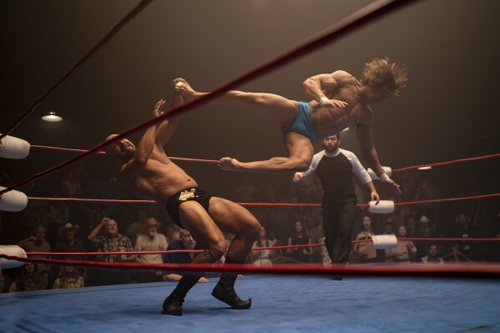
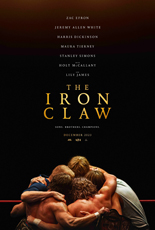
Now, some 40 years later, The Iron Claw brings those memories flooding back.
The biopic sets us sometime in the early 1980s, with the thudding boom of the small-time wrestling Von Erich family. The depressive Kevin (a very buff Zac Efron) leads his equally fit brothers to total takedown victories in the ring — only for all it to be taken by cruel fate, which comes for each of them in the saddest way possible.
Besides sparring with the family’s own demons, their dad is former wrester/then-current WCCW owner Fritz (Holt McCallany). Emotionally abusive, he grinds his sons into the dirt, saying their shortcomings are for their “own good.”
While I knew about the Von Erichs’ mythical stories when their dynasty ruled, I wasn’t privy to much of what’s detailed in the film. From drunken amputations to shame-based suicides, it’s a truly sad story that director Sean Durkin peacefully delivers.
As shown in the epilogue, Kevin was able to break through and turn his life around; for that, I am happier. While some people need to know the whole story, warts and all, The Iron Claw does the legend justice. Even better, I don’t need to watch wrestling again to know it. —Louis Fowler