
All posts by Daniel Bokemper

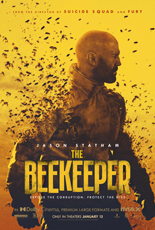
The Beekeeper (2024)

Between moonlighting as a smuggler, hitman, mercenary, peasant turned warrior and Megalodon-killing marine biologist, any of the machismo-brimmed hats Jason Statham has worn shouldn’t surprise us. In Suicide Squad director David Ayer’s The Beekeeper, however, he dawns a mask. (At least for the first six minutes.) Regardless, the film’s initial impression as a Great Value John Wick doesn’t work against it, instead amplifying its gun-toting buzz.

The film follows Adam Clay (Statham), a physically imposing beekeeper who rents a shed from his elderly neighbor, Eloise (Phylicia Rashad, Creed). One night, a phishing scam — secretly run by Derek Danforth (Josh Hutcherson, Five Nights at Freddy’s), the god of insufferable tech bros — drains Eloise’s savings and a community trust account, spurring her to suicide.

Clay discovers her body right before Verona Parker (Emmy Raver-Lampman, Netflix’s The Umbrella Academy), an FBI agent and Eloise’s daughter. After tense introductions, Clay contacts “the Beekeepers,” a secret organization he retired from that specializes in keeping the peace with a lot of guns. Clay obtains an address for an assuming office in Massachusetts, and the body count starts rising.

As you could imagine, not a lot happens under The Beekeeper’s hood — and that’s the beauty of it. Beyond the recurring use of the phrase “protect the hive” and the increasingly concerned looks of Jeremy Irons (Justice League), what a Beekeeper actually does is never explained. Though arguably oversimplified, the lack of a monolithic organization like the Continental, Kingsman or Expendables keeps the action’s focus exactly where it needs to be: on Statham.

Unfortunately, effectively dumbing down the secret society angle also means The Beekeeper noticeably lacks substance when its lead wanders off-screen. Most of the banter between Parker and her partner falls flat, as if their wit is the only thing preventing the movie from diving headfirst into a vat of ridiculous honey. The action’s set pieces emerge through an equally uninspired formula:

  1. Clay kills the bad guy(s).
  2. Bigger bad guy(s) called in to retaliate.
  3. Clay kills them, too.
  4. Repeat approximately five times.

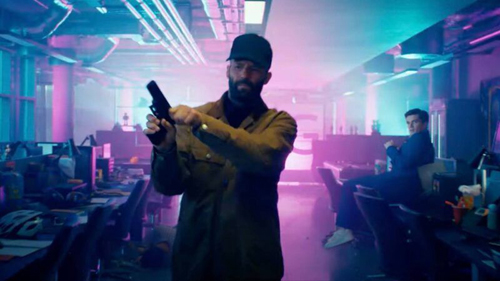
That being said, how we get to the shootouts and explosions isn’t nearly as important as how they’re orchestrated. Fortunately, The Beekeeper finds Statham in peak, stoic form. Even if the violence lacks any permanence, it’s still a joy to see Clay outmaneuver a minigun or take out a team of commandos with some ratchet straps and an elevator.

The Beekeeper doesn’t offer much more than B-roll for an inevitable Statham documentary, but it doesn’t really need anything more than that. It’s not like The Transporter or Crank franchises offer substantially different experiences, yet they still persist as (vaguely) quintessential 2000s action flicks. Between this and The Meg, we could be closing in on the twilight of Statham’s generously prolific career. Check The Beekeeper out, and don’t stop bee-lieving in its star. —Daniel Bokemper

Get it at Amazon.

When Evil Lurks (2023)

Who knew the season’s best possession film released last month wouldn’t be The Exorcist: Believer? Probably everyone who’s familiar with David Gordon Green. Still, between Talk to Me from earlier this year and now Demián Rugna’s When Evil Lurks, the subgenre still has plenty to give — and take, considering all the pets and kids that meet their end in this Spanish-language ride through hell.

Life moves slow for brothers Pedro (Ezequiel Rodríguez) and Jimi (Demián Salomón, Rugna’s Terrified) in their quiet farming community. That is, until the dismembered corpse of a state-appointed exorcist (aka a “cleaner”) winds up on the border of their property. With their neighbor (Luis Ziembrowski), the siblings investigate a nearby home, only to find an old acquaintance afflicted with a demonic possession under the care of his family. The trio resolve to drive the “rotten” hundreds of kilometers away and dump his body into field. Problem solved … until the demonic influence spreads throughout the town, kick-starting a shitstorm of homicide and suicide.

The film hemorrhages chaos and desperation. Dread creeps in the first act. One untimely goat possession later, and the pace hits a nonstop sprint. Rodríguez almost single-handedly carries this feeling, as if he’s been dragged through an abyss, simultaneously frantic and hopeless. Once the protagonist’s children join the mix, the unending violence strikes a different tone. Even as the film starts to lose itself in the second half, the stakes only climb.

The possessions themselves take an especially sadistic turn. You won’t find demonic voices or fiery visions of doom, but cold-hearted deception, self-harm and good ol’ fashioned cannibalism. The film carefully lays out logic for how possessions spread, like through animals and by gunpowder. Thankfully, Rugna refrains from clearly answering what the rotten looks like. It lures us into thinking the plight can be understood, only to quickly pull the rug out from under us with a rabid dog or a schoolhouse of manipulative children.

This disarray carries most of the film, but fuels its biggest weakness, too. Pedro’s knee-jerk response in the climax — to take advice from a possessed kid — makes little sense in retrospect. At least, it doesn’t without the appropriate build. Despite fleshing out the disaster in spades, Rugna doesn’t rein it in enough to earn an otherwise emotional conclusion. Yes, the film is bleak, but stoking what little hope it has just a little more could’ve made what should be a gut-wrenching finale also poignant and memorable.

When Evil Lurks is far from perfect, but its intensity, breakneck pace and unflinching brutality make it a great companion to high-octane gorefests like Yeon Sang-ho’s Train to Busan and Jung Bum-shik’s Gonjiam: Haunted Asylum. Check it out — and don’t let your bulldog lick the rambling man’s jeans. —Daniel Bokemper

Get it at Amazon.

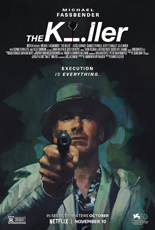
The Killer (2023)

Through no real fault of his own, Michael Fassbender’s past decade hasn’t exactly been stellar. His standout performances in Steve McQueen’s Shame (2011) and 12 Years a Slave (2013) came close to making him a household name. That is, until he was unable to save a trilogy of lackluster misses in 2016 with X-Men: Apocalypse, The Snowman and the video-game adaptation no one asked for, Assassin’s Creed.
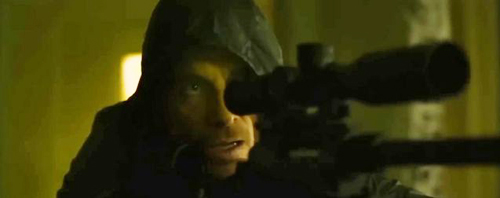
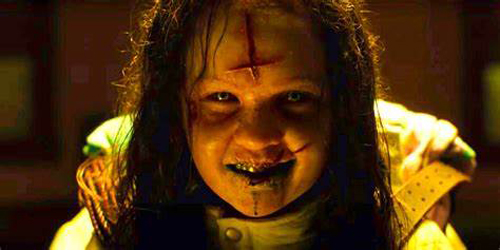
It’s enough to make anyone to step away from the limelight, become a Formula One racer, return for an abysmal X-Men sequel in 2019 before finally driving a Porsche into the sunset. So what could possibly bring Fassbender back into the cinematic fold? A lack of championships — and maybe a lead role in David Fincher’s most cerebral film yet, The Killer.

Fassbender plays a high-dollar hitman with a set of aliases for every country. He’s got his routine down to a science, but still, killin’ ain’t easy. After a rare botch in Paris, the assassin books it back to his secluded mansion in the Dominican Republic. He finds his girlfriend near death, the victim of a beating intended for him. Telling himself it’s strictly business, the killer goes on an international spree hunting down everyone involved — including his employer.

The Killer doesn’t quite reach the heights of Fincher’s best work (Seven, Zodiac), but that’s hardly a slight. Though the cold-blooded protagonist isn’t terribly relatable, his on-the-job frustrations scratch close to the same itch as Office Space’s first act. Weirdly, however, the revenge plot does little to endear the character. Of course, that’s not vital, but it raises some emotional hurdles that the film never really dodges.

Even so, fans of the opening scene from Nicolas Winding Refn’s Drive will appreciate this feature-length equivalent. Plus, the would-be insufferable voiceover narration shines thanks to a clever, intimate and misanthropic monologue. And where there’s Fincher, there’s masterful sound editing. Capping off the nihilistic voyage is an ideal score from the filmmaker’s frequent collaborators Trent Reznor and Atticus Ross — with a welcome sprinkling of The Smiths for good measure.

The film also excels with a rawness that escapes most blockbuster action choreography. It only has one fistfight, but it captures a visceral, desperate exchange where every blow clearly weighs on Fassbender’s character. It takes the house fight in the second season of HBO’s Barry up a few notches, without protecting the protagonist with some unrealistic invulnerability. He can’t shed the scars, and the hitman bears the bruises of the encounter until the credits roll.

The sum of The Killer’s parts doesn’t equal its whole, but it still mostly satisfies where it counts. No, you won’t find a relatable lead or a very satisfying conclusion. But if you’re in it for gunplay, beautiful brutality and sociopathic musings, this flick finds its target. —Daniel Bokemper

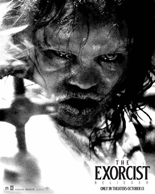
The Exorcist: Believer (2023)

It’s hard to believe in David Gordon Green, let alone any follow-up to William Friedkin’s traumatizing classic. Unlike horror franchises with a gratuitously marketable villain — like Halloween, Friday the 13th or C.H.U.D.The Exorcist has to make do with a concept. And you can’t exactly trademark demonic possession, hence the wave of exorcism films that erode the legacy of the original. (Hell, just Google “the exorcism of” and you’ll stumble upon so many uninspired films, you’ll question why it took until 2021 for someone to finally produce The Exorcism of God.)

Even though The Exorcist influenced a heap of bargain-bin fillers, you also could argue it’s responsible for iconic flicks like Hereditary, The Evil Dead and Amityville Karen. It makes sense The Exorcist series persists. What doesn’t make sense, however, is putting Green at the helm of its revival — even more so after the director proved his recent Halloween trilogy should’ve ended before we endured two half-baked sequels. Unfortunately, The Exorcist: Believer doesn’t rid Green of whatever curse haunts him.

Thirteen years after his wife’s death, Victor (Leslie Odom Jr., Glass Onion) struggles to raise his daughter, Angela (Lidya Jewett, Black Panther), in a secular household. At the same time, devout Baptists Miranda (Sugarland vocalist Jennifer Nettles) and Tony (Norbert Leo Butz, 2010’s Fair Play) prepare for the baptism of their daughter, Katherine (newcomer Olivia Marcum). The week before the ceremony, Angela and Katherine disappear for three days when they ditch school to try and commune with Angela’s mother. Once found, the two act out by wetting their beds, masturbating during a Sunday service and psychically levitating furniture. (You know, teen stuff.)

Notice anything missing from that premise? Maybe, I don’t know, an exorcist? Ann (Ann Dowd, Compliance), a would-be nun turned nurse, plays the new Damien Karras. She even has a compelling background, as the shame of an abortion before her confirmation sets her up for a redemption arc. Tragically, Green makes no conscious effort to explore this beyond rushed exposition dumps.

What the filmmaker misses — and will probably keep missing — is what most imitators fail to capture, too. The Exorcist doesn’t earn its staying power through the gratuitous and demonic possession, but with compelling characters. In Believer, Green and co. almost get it with Victor and Ann’s background, but they repeatedly avoid exploring people in favor of cheap thrills and frankly boring sequences. At the same time, they reaffirm the idea of faith (specifically, Christianity) so much, there’s no room for doubt to emerge as a meaningful theme.

Beyond revenue, it’s hard to imagine what gave Green (or anyone involved with this garbage fire) the confidence to move forward with Believer. It’s as if the demon of boring horror requels — let’s call it “Pasnoozu” — has grown more powerful.

Granted, Believer is so bad, it might make the rest of the trilogy better by extension. After all, when the bar’s so low it’s basically in hell, 2025’s The Exorcist: Deceiver can’t be worse, right? Right?! —Daniel Bokemper

Get it at Amazon.

Talk to Me (2022)

Horror hasn’t needed a hand for the past decade. Thanks to the likes of It Follows, The Babadook, Hereditary and too many more to reasonably list, the genre has been recognized lately for what it’s always been: clever metaphors that speak to our experience. It’s just a little less exploitative now. And, by extension, a lot harder to get a foot in the door.

Fortunately, Talk to Me from Danny and Michael Philippou (aka YouTubers RackaRacka) has pretty much nothing to do with feet. Still, despite exceptional acting and a refreshing take on possession, the film’s premise is spread too thin to be an instant classic.

As Mia (Sophie Wilde) grieves the death of her mother, her best friend, Jade (Alexandra Jensen), invites her to a party with their friendly neighborhood drug dealers. Naturally, this means Jade’s little brother (Joe Bird) tags along. Tragically, the gathering isn’t just a bunch of harmless Aussie teens doing whippets. Their drug of choice is instead an amputated, embalmed hand that lets a ghost possess anyone who holds it. The catch? Exposure to the hand for more than 90 seconds risks long-term possession.

Talk to Me shines in its possession sequences. The film showcases menace, perversion and everything else fucked-up from the great beyond in its first act. Powerful and involved performances ground this otherwise hokey jaunt through the backlog of vengeful spirits. Bird and Otis Dhanji stand out, the former becoming some kind of prophetic passenger from hell who’s eerily similar to Harvey Scrimshaw in The Witch.

Mia’s desperation and compulsion for the hand realistically carry the plot. Unfortunately, the film lets the rules of the hand overshadow an otherwise tragic and emotionally jarring arc. It doesn’t seem to realize its power comes from of its compelling cast of characters. Instead, Talk to Me backpedals into conventional approaches as soon as it loses anything more to say about addiction. To put it bluntly, it feels like the filmmakers understand addiction — maybe they even watched Requiem for a Dream — but they weren’t confident enough that it could sustain a full movie.

Instead, the Philippous lean hard into the franchise paint. Which mostly makes sense. It would be almost a shame not to explore the iconic hand in some other way, but that’s the beauty of a cursed object: You can move it into any number of situations and chances are, its presence alone is enough to justify what transpires. Instead, the protagonists can focus more on their very real, compelling problems, rather than how the thing — be it a monkey’s paw or a demonic puzzle box — connects to some ancient power.

Talk to Me is solid and its already announced sequel should be, too. Hopefully, the filmmakers will be more hands-off when it comes to the human drama already baked into the story. —Daniel Bokemper

Get it at Amazon.