All posts by Rod Lott

Two Witches (2021)

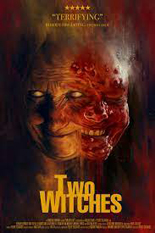
Pierre Tsigaridis makes a knockout directorial entrance with the two-fisted Two Witches, a wickedly delightful pair of interlocked tales involving the devil herself — yes, her — and the titular women who do her bidding. To paraphrase the kid at the Gas ‘n’ Sip on a Saturday night in Say Anything …, “Witches, man!”

Not since Rosemary’s Baby has a young, pregnant woman gone through as much trimester trauma as Sarah (Belle Adams, The Manor), the center of chapter one. After an unkempt “boogeywoman” (Marina Parodi) gives her “the evil eye” in a restaurant, Sarah grows more anxious and nauseated, not to mention plagued by nightmarish visions. It’s all made worse by a visit to friends who dig out the Ouija board.

The second chapter illustrates why having roommates is a living hell. For grad student Rachel (Kristina Klebe, 2007’s Halloween reboot), her difficulties amount to the waifish Masha (Rebekah Kennedy, 2011’s Season of the Witch) being needy, manipulative and, well, a witch.
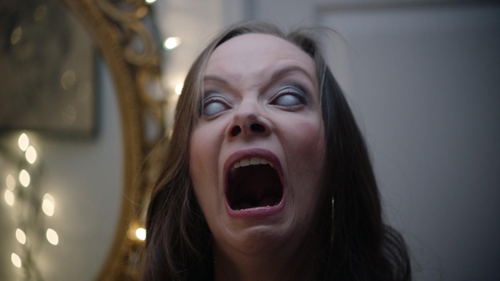
One of Two Witches’ strengths is Tsigaridis’ script isn’t concerned about explaining the witchery, which makes it all the more chilling. Another is how far mere facial expressions can go in creating fright in viewers; he relies on that as much as the ol’ standby of contact lenses that make its wearers look as though their eyeballs have been swapped with freshly peeled hard-boiled eggs. (I only wish he had more trust in his audience; we don’t need flashbacks to understand characters appearing in the second story are the same key supporting players we just saw a few minutes before in the first.)

Highly influenced by Eurohorror, the witches are terrifying, fitting alongside the coven from Dario Argento’s Suspiria. Going further, in emphasizing scares over style, this is the witch movie you likely hoped Luca Guadagnino’s 2018 remake would be. I can see it becoming a perennial favorite from Halloween to Christmas, given the second half takes place at that supposed most wonderful time of the year.

From subliminal flashes to unflinching scenes of violence and the vile, Two Witches works hard and pays off, begging to be seen in a crowded theater. Bow to the new queen. And stick around after the credits. —Rod Lott

Get it at Amazon.

Miracle Valley (2021)

As Infrared recently showed, with the right role, The Room sidekick Greg Sestero can act. While Miracle Valley isn’t his greatest showcase, he proves he can direct, too — on his first outing, no less.

With girlfriend Sarah (model Angela Mariano, doing just fine in her acting debut) down in the dumps due to a gravely ill mom, David (Sestero) takes her on a weekend road trip to an out-of-the-way ranch in the unforgiving Arizona desert. Besides, he’s trying to snap a pic of the elusive, never-before-photographed “silver hawk.”

Birds should be his least concern, given the area’s bats: the members of a cult settled in the area. When a menacing motorcyclist (scene-stealing live wire Rick Edwards, Skatetown U.S.A.) invites them to an event — Father Rick’s Awakening — a spiritually thirsty Sarah talks David into going.

Upon their departure, David’s pal jokes, “Don’t drink the Kool-Aid!” As we’ve established before, the noxious beverage he’s referencing was Flavor Aid. Still, the sugar-powder shoe fits; with Miracle Valley being about a cult, the friend’s barb soon no longer lands as funny.

So you think you know where Miracle Valley is going. And you’re right … but also not. Sestero’s script follows the well-tread path of all krazy-kook movies before it, until he chooses where to head next seemingly by throwing a stack of old Marvel Comics in the air — The Incredible Hulk and The Tomb of Dracula in particular — and letting the fallen pages guide him.

That’s largely a compliment. While he doesn’t always make the right choice, he at least makes a different choice. In doing so, Miracle Valley upends your expectations while fulfilling your hunger for exploitation, and leaves a good-looking corpse. With the epilogue at Frank Lloyd Wright’s iconic Fallingwater home, how could it not? —Rod Lott

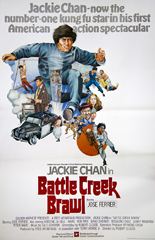
Battle Creek Brawl (1980)

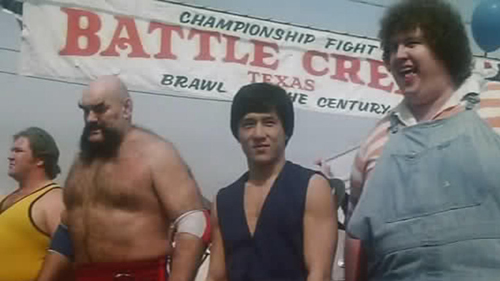
Also known as The Big Brawl, the not-set-at-Kellogg’s-HQ Battle Creek Brawl represents Jackie Chan’s first — and ill-fated — attempt to break into American cinema. Although it shows signs of his trademark humor and acrobatics, it’s not a fitting vehicle for his talents.

In 1930s Chicago, which looks every bit 1980, Chan’s Jerry Kwan protects his father’s restaurant from the neighborhood mob — a premise lifted wholesale from Bruce Lee’s Way of the Dragon. Scraping to get by, he and his sexy American girlfriend, Nancy (Kristine DeBell, Meatballs), enter anything-goes roller-rink contests to score quick, easy cash.

Liking what he sees, local goon Dominici (José Ferrer, Exo Man) kidnaps Nancy, forcing Jerry to participate in Texas’ annual Battle Creek free-for-all street fight — a “brawl,” if you will — in which he must punch and kick his way through a succession of burly men. This includes the ever-dreaded bald dude with a handlebar mustache and the fright-inducing, knee-quivering name of Kiss (H.B. Haggerty, Hollywood Vice Squad’s Tank).

Decent action sequences exist, from the aforementioned roller-skate madness (making for a crazy 10 minutes) to an early scuffle in which Jerry tries not to fight, but fails (trust me, that makes sense when you see it). Despite that, this Brawl doesn’t benefit from an utterly cheap look and color palette limited to every shade of brown. Can you believe director Robert Clouse is the same guy who gave us a martial arts all-timer in Enter the Dragon?

You sure can, if you’ve seen Clouse’s in-between work, like Force: Five, Golden Needles and/or The Ultimate Warrior. As Battle Creek Brawl stands — and wobbles — it’s a most minor entry on Chan’s filmography, yet not the all-out disaster its nil impact may have led you to believe. —Rod Lott

Get it at Amazon.

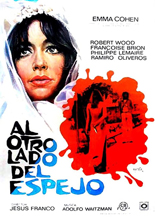
The Other Side of the Mirror (1973)

WTFAfter announcing her engagement, the sheltered Ana (Emma Cohen, Horror Rises from the Tomb) is shattered to learn how her widowed father takes the news: by squeezing his head through a noose and taking one giant leap off a chair. (Dramatic much, Pops?) Given the dead dad is played by the bug-eyed Howard Vernon (Revenge in the House of Usher), the sight of him hanging with tongue jutting makes him look like an emoji.
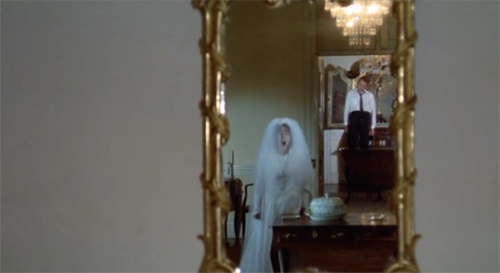
It’s not intended as funny, of course, nor is the Jess Franco film another of his bugaboo fright fests. Instead, The Other Side of the Mirror is a Euro-arty examination of grief with brief touches of the psychosexual and briefer hints at the supernatural.

Unable to marry after tragedy, the guilt-ridden Ana flees her comfy, seaside mansion life to hobnob with the Portugal art crowd in the city. Falling into bed with a number of partners, however, proves deadly, with each man meeting the business end of well-kept cutlery. She’s like a black widow without the vows … but is dear ol’ Dad bidding her post-bedding acts? That one of her victims is the director (Ramiro Oliveros, The Swamp of the Ravens) of a production of Medea is not accidental; in fact, it’s Oedipal.

Classy yet spotty, Mirror finds Franco showing restraint from his usual zooms-and-wombs affairs. The movie ambles; one scene holds a hypnotic power, while the next dissipates into apathy. In many ways, it reads like a less-effective revisit of his Venus in Furs, complete with jazz. And therein lies Mirror’s highlight: Cohen’s cooing rendition of “Madeira Love,” backed by a live band and thankfully shown in full. If only the whole were as groovy. —Rod Lott

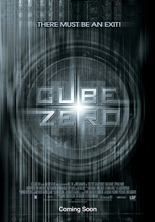
Cube Zero (2004)

Vincenzo Natali’s minimalist sci-fi cult hit, 1997’s Cube, had such a killer concept — people wake in an apparently escape-free maze of cubes, many of which are booby-trapped — it didn’t need repeating. Proving lightning doesn’t strike twice, the Natali-less Cube 2: Hypercube simply tried to do the same thing again, leading to disappointment. Turns out, you can’t follow Cube.

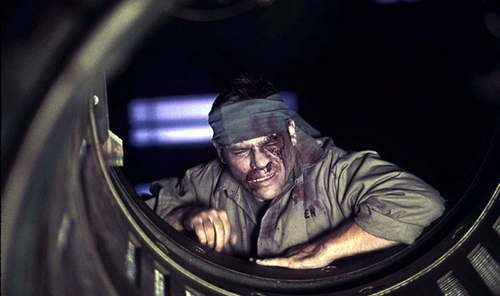
So for Cube Zero, writer/director/producer Ernie Barbarash (Stir of Echoes 2: The Homecoming) goes backward and behind the scenes. As a prequel, it’s only partly concerned with an all-new group of anonymous, amnesiac prisoners trying to navigate through the high-tech hell without being burned, chopped, melted or turned into ground beef. Instead, the focus is on the cube’s employees who carry out orders from management they know will cause harm to the maze dwellers without knowing the “why.”

One technician (Zachary Bennett, The Boondock Saints II: All Saints Day) starts to question his job and the morals behind it — and hey, what took ya so long? After believing one attractive participant (Stephanie Moore, Urban Legends: Final Cut) is there entirely against her will, he takes an extreme measure that seems out of character, but action is action.

Even with a one-eyed supporting character who’s way over the top and a last-minute plot twist that veers toward the silly, Cube Zero emerges as a much better series entry than Cube 2 could ever dream of. It’s also notably gorier than either of its predecessors, and builds upon the mythology without getting caught in the abstraction of it all. Now, whether the original film needed further explanation … —Rod Lott

Get it at Amazon.