

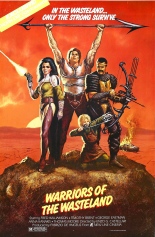
 Nobody can rip off Mad Max quite like the Italians.
In Warriors of the Wasteland — taking place in a post-apocalyptic future, it should go without saying — a small band of peacenik survivors is tormented by the Templars, an evil gang that roams the desert (or the fringes of a construction site) on cool motorcycles and customized cars loaded with deadly gadgetry. They also have names like Shadow and One, sport Mohawks and mullets, and dress like George Lucas’ Stormtroopers as made over by the Queer Eye for the Straight Guy team.
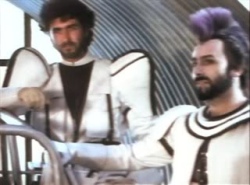 Stepping up to right wrongs and challenge the Templars is Scorpio, a disillusioned former member who looks like a hunky Peter Riegert. He’s joined by a vacant female love interest, a rock-slinging, tow-headed ugly kid and, best of all, crossbow-wielding Fred Williamson and his girly headband, rightfully playing a guy named Nadir.
The action scenes are what make this movie, alternately known as The New Barbarians. People explode in slow-motion into bloody chunks, get screwed by the Swiss Army car implements and even decapitated by a slowly whirling blade on the lead bad guy’s go-cart. There are several chase scenes like this — all set to a cool Claudio Simonetti score — so you’d think the carmageddon would get old, but nope, never does! —Rod Lott


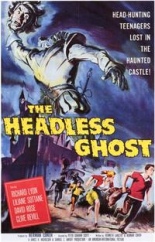
 Then and only then do the spirits of the royalty leap from their paintings and converse with them. One of the ghosts is — and, oh, I do so hope the title of the film didn’t spoil this for you! — without a head. In order to bust an ancient curse wide open, he sure could use that noggin. The payoff scene finds the headless body running around like a loon as his melon hovers overhead.
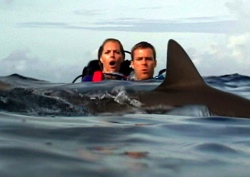 I wasn’t sure if the movie was going to work, because Ryan and Travis didn’t seem like they were doing acting. Then I realized that’s the point: This is shot in a quasi-documentary style, with fly-on-the-wall glimpses into this couple’s ordinary life. It’s supposed to feel real, rather than theatrical, and does.
 Director/co-writer Chris Morris’ film has the feel of a documentary, and reminds one of last year’s similarly scoped and structured