

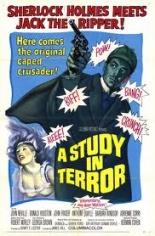
 Years before Bob Clark did the same with Murder by Decree, director James Hill pitted Sherlock Holmes against Jack the Ripper in A Study in Terror, a more-than-servicable entry in Holmes pastiche cinema. Strange how it was promoted with a campaign comparing it to TV’s campy Batman, because the master detective is neither a superhero, nor is this film campy.
It is, however, surprisingly bloody for its time. And pretty good, although slow by today’s rough-and-tumble standards. In his lone appearance as Holmes, John Neville does a terrific job, almost as if he knew this was his one shot; Donald Houston is his Watson, and Robert Morley and Judi Dench are among the supporting players.
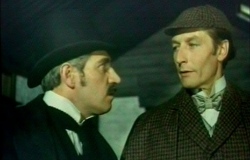 Plot? We’ve pretty much already said it. Like From Hell, it’s all about the Ripper ripping up — or stabbing, to be precise — London’s prostitutes. Here, their cups runneth over their corsets, and they’ll all pretty hot. Not so much once they get a knife through the neck, although some people are into that sort of thing.
Producer Herman Cohen cuts some corners, but not when it comes to splashing on ever-vibrant color. The game is afoot … and fun! —Rod Lott

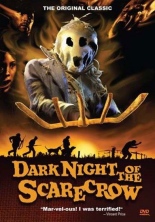
 Bubba’s mom hides him in the scarecrow on their farm field, but the vigilante mob finds him and shoots him dead. And for nothing: Bubba saved the little girl’s life; ’twas a vicious dog to blame for her bloodiness. D’oh! Just desserts arrive as a scarecrow comes a-knockin’ for vengeance, one by one. You might say they get the short end of the straw. (Insert rimshot here.)
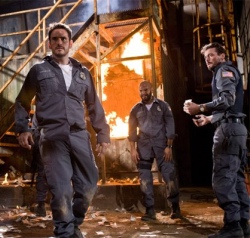 Needing money so child welfare can’t split him from his orphaned little brother, who likes to graffiti owls on their kitchen wall, Ty agrees, even though Skeet is involved. All goes according to plan until some asshole hobo has to fuck everything up, and, well, money corrupts, especially when we’re talking enough Benjamins to fund a Dillon vehicle.
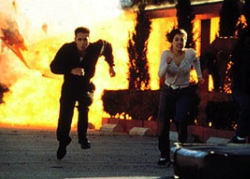 Drive is so much fun that not even Hardison or Murphy — neither a reliable presence — can kill it. Directed by Steve Wang (
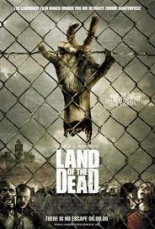
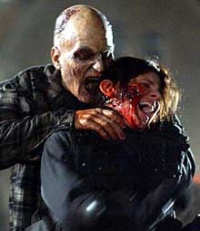 A thin story emerges: In one major metropolitan area, survivors live in a well-fortressed downtown area surrounded by rivers, barbed wire, electric fences and armed guards to keep the undead out. The rich among them live in a palatial skyscraper filled with fine dining, shopping and housing, all owned by the wealthy Dennis Hopper. He’s hired armies to roam the streets for the sole purpose of killing zombies.